

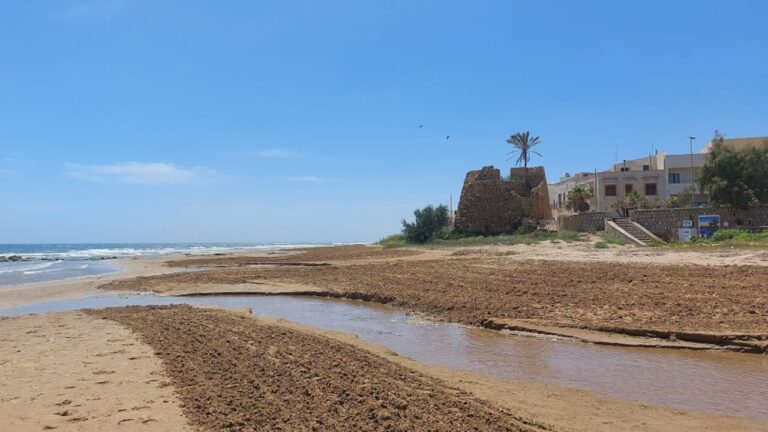
A house 150 meters from the beach. In the Deep South. Raphael, 32, and Luisa, 33, have made their dream come true. But the price to pay was high. It’s not a metaphor. To make the house habitable they had to shell out a lot of money. Yet they did not regret it. “Today we can say that we are happy with our decision” they say in an article written in the first person plural in Der Spiegel.
Luisa and Raphael have three children aged between five months and five years. They come from the surroundings of Braunschweig, Germany, in the Land of Lower Saxony. He is a manager in a multinational company with a salary of 105 thousand euros a year, she is a psychotherapist with a parental allowance of 1,400 euros a month. Furthermore, 777 euros of family allowances are added to the family budget. Small detail: when they started looking for their dream home, about five or six years ago, their income was half of what it is today.
The dream house in Italy, a stone’s throw from the sea
Unable to afford to buy in Germany, the two took a gamble. Why not focus on a property abroad, perhaps in a Mediterranean country? “A house in a tourist destination had to offer us two things: wonderful summers and, in the long term, a profitable investment” says the couple. The idea is to use the house for holidays, but make it an income during the periods when it is uninhabited.
In the spring of 2022, the two travel extensively in Italy, from North to South. “When we arrived in Sicily, we weren’t entirely sure what we were looking for. A house by the sea? A property in the mountains? The island offers both: beautiful coasts and spectacular mountain landscapes.” Eventually they fall in love with the small coastal village of Tre Fontane, a hamlet of Campobello di Mazara, in the province of Trapani. Here they find the house they were looking for. It is a stone’s throw from the sea and can accommodate up to 10 people, yet the price is affordable: only 80 thousand euros (plus 10 thousand in expenses and taxes).
Buy a house in Italian villages before prices explode: where they still cost less than 40 thousand euros
Not bad. However, there are two small problems: the house is almost “unfinished” and what’s more it was built illegally, only to be later condoned. The two know they’re about to embark on an adventure, but they dive in anyway. In the meantime, while the negotiations continue, Luisa also learns Italian. “We met the previous owners, we went to dinner together and got a first impression of the place and the people who lived there. In December 2022 – they say – we signed the purchase contract”.
“Our house shouldn’t even exist”
“At that point, we already knew that things were about to get adventurous. Strictly speaking, our dream house shouldn’t even exist” they always explain in Der Spiegel. Moreover, the amnesty does not erase all the obstacles. “We can renovate the house, but not expand it. Even reconstruction after complete destruction, for example due to an earthquake, would only be legally possible under very specific conditions.”
Luisa and Raphael are not two naive people. They know they’re taking a risk: “But we said to ourselves: These houses have been around for decades. And at that price, we wouldn’t find anything like this anywhere else.” On the other hand, they are perfectly aware that building violations were quite frequent a few decades ago. So they carry on.
The restructuring and the 210 thousand euros in loans
The trouble begins after buying the property. The renovation promises to be particularly costly. And no Italian bank wants to give a mortgage to a foreign couple who has bought a building that is not yet completed. In the end they obtained two loans of 74 and 35 thousand euros in Germany. But they soon realize that that money is not enough. “The concrete was seriously damaged by the proximity to the sea and the steel reinforcement had already crumbled in many places” they say. “We had to carry out extensive renovations to the load-bearing structure and repair much of the structural integrity.”
Even the bureaucratic process proves exhausting. We are still in Italy. “It took almost two years to get the building permit,” they explain. “By the end of 2024 we had negotiated fixed prices with all craftsmen. The costs included renovation, interior finishes and technical equipment.” All for the modest sum of 210 thousand euros. “Demolishing and rebuilding would have been decidedly cheaper” the two spouses bitterly note. Who for a while also cultivated the idea of taking advantage of the 110% Superbonus, but the trap decided by the Meloni government puts an end to their dreams of radically lowering costs.
So they start chasing money again. “In the end we managed to raise the 210,000 euros through private loans and our savings.” Today the work is well underway. By the end of the year Luisa and Rapahel will have their dream home in Sicily. For a total expense of 300 thousand euros. Few? Many? Be that as it may, the two can now count on a much higher family budget, which will grow even more when Luisa returns to work after maternity leave.
The couple estimates they will earn 30 thousand euros from renting the property
The two plan to use the property for their holidays in Sicily in the low season, and then rent it in the summer. “We have staff on site to look after guests and housekeeping. We estimate an average nightly rate of around €250 and an occupancy rate of 35%. This would translate into an annual turnover of around €30,000. After all management costs and taxes, we hope to generate a profit of around 30% in the long term.”
Buying a house by the sea with the “30 minute” trick
Of course, there are still debts to repay. But the two don’t regret the decision at all. “Our advice to all those who dream of owning a holiday home: be brave. Many people talk about this dream, but only a few are truly willing to take the risks it entails.”
Even though they were aware that they had done it thanks to their network of contacts, in the end the result was brought home. “Thanks to unconventional financing methods and great trust in our community and the locals, we have come a long way. Even if the house is not yet completely finished, today we can say: we are happy with our decision – assure the two spouses – and we can’t wait to spend many wonderful days at the seaside with our children”.