

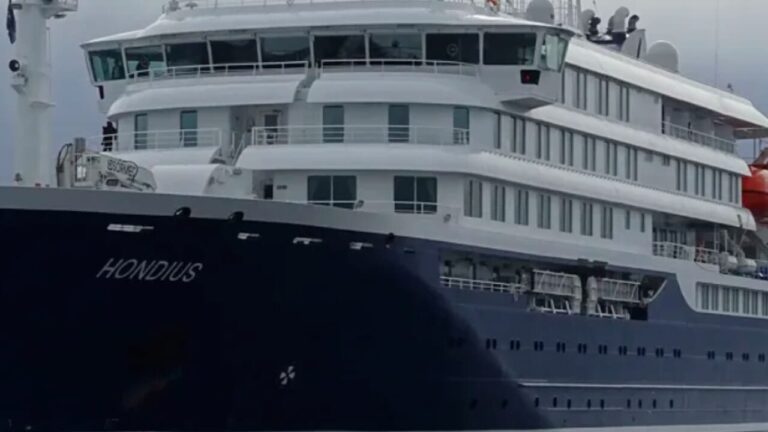
Developments on the health situation on board the Mv Hondius, the cruise ship blocked off the coast of Cape Verde with a suspected hantavirus outbreak that is becoming increasingly clear. The World Health Organization has in fact confirmed the latest data: three deaths and at least six people involved, including confirmed and suspected cases. Meanwhile, the hypothesis of an evacuation of passengers is gaining ground, while strict isolation measures remain in force.
The WHO lens on the virus
The WHO confirmed two cases of hantavirus and five suspects that remain under investigation. Three deaths so far and three sick people, one of whom is hospitalized in Johannesburg. There is also a possible new case on board, with mild feverish symptoms, currently under evaluation. The situation is considered delicate, prompting health authorities to plan a medical evacuation. A team sent from Cape Verde has already boarded the ship to manage the emergency. The plan provides for the transfer of the most at-risk passengers by ambulance to the airport and subsequently their repatriation or hospitalization in appropriate facilities. However, the operation is still awaiting authorization from local authorities.
The hypothesis of the landing in the Canary Islands
At the same time, a second option is being evaluated: moving the ship to the Canary Islands, in particular Las Palmas or Tenerife, where more in-depth health checks could be carried out and the necessary medical assistance guaranteed. The Spanish authorities have already started contacts with international health channels to prepare for a possible docking, as part of the protocols envisaged in the event of health emergencies. On board the vessel there are 149 passengers of 23 nationalities, as well as more than 50 crew members. The shipping company confirmed the activation of stringent precautionary measures, including the isolation of suspected cases and continuous health monitoring.
The Dutch couple, then the German victim: the reconstruction of the infections
The reconstruction of infections remains at the center of epidemiological investigations. The first case dates back to mid-April, when a 70-year-old Dutch tourist showed symptoms such as fever, headache and gastrointestinal disorders, dying a few days later on board. His 69-year-old wife later fell ill and died in South Africa after being evacuated. The third death is that of a German citizen, who died on May 2 on the ship. Among the most serious cases there is also a British passenger, hospitalized in intensive care in Johannesburg.
The methods of infection remain to be clarified: the health authorities are trying to understand whether the infection occurred before boarding or during the cruise. Hantavirus is a rare disease, generally transmitted through contact with infected rodents or their biological fluids, while transmission between humans is considered uncommon.
Despite the seriousness of the situation on board, the WHO urges caution: the risk to the general population is considered low and no travel restrictions are currently recommended. Meanwhile, laboratory analyzes and epidemiological investigations continue, while the organization coordinates the international response together with the countries involved. With the emergency still ongoing and evacuation under study, the next few hours will be decisive in defining how to manage such a complex health case.