

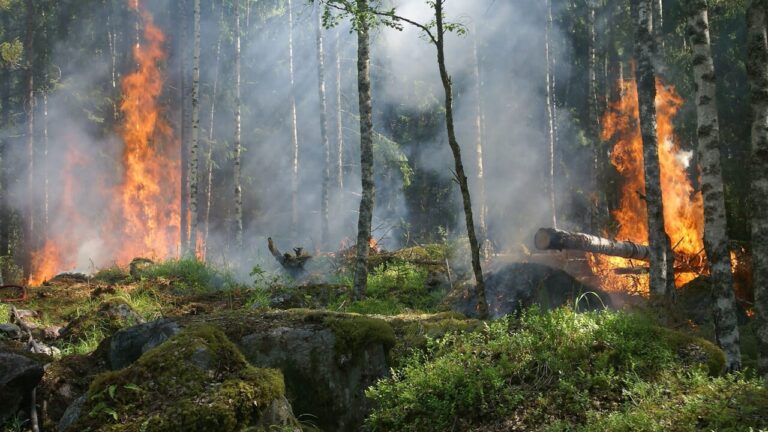
The grip of the heat shows no signs of loosening its grip on Europe. From the United Kingdom to Italy, millions of Europeans are dealing with record temperatures (especially for the period), and with the resulting inconveniences, electricity blackouts and health problems. We are not alone, however: the natural environment also suffers from the heat, with even catastrophic effects that depend on the specific fragility of ecosystems, and on the intensity and duration of heat waves. In general, however, the longer the heat lasts, the greater the risk of damage to forests, agricultural crops, marine ecosystems and wildlife, which in the long run can produce lasting changes in the environment around us.
Terrestrial ecosystems
On land, the greatest dangers to the natural environment are linked to drought. But even extreme heat alone can produce damage: when high temperatures are prolonged, they necessarily induce physiological stress in all life forms not adapted to deal with intense heat: plants close their stomata to reduce water loss, but in doing so they also limit photosynthesis and suffer damage caused by the increase in internal temperature; animals, however, may experience dehydration, lower thermoregulation capacity and, in the most serious cases, direct mortality.
The dangers depend on the type of ecosystem: it takes just a few days to see a lawn turn yellow; but to cause tangible damage to a forest, temperatures must remain high for weeks. At that point, especially if the heat is accompanied by drought, we can witness a drying of the tree foliage, a loss of vitality and, in extreme cases, the death of the plants. Furthermore, visible symptoms often arrive late, even long after the heat wave, because the failure of the system occurs cumulatively.
For animals the risks are even greater. A study published in Global Change Biology coordinated by the University of Milan together with the Cnr-Irsa, it highlighted, for example, the dramatic and immediate impact of extreme heat waves on the biodiversity of the Mediterranean, taking a colony of lesser kestrels in Matera as a case study. During temperature peaks of more than 37 degrees recorded in 2021 and 2022, researchers showed that heat stress in unshielded artificial nests (where internal temperatures exceeded 44 degrees) caused widespread chick mortality, reducing reproductive success to only a third of eggs laid, compared to the normal 70 percent. A phenomenon which, according to researchers, reflects a widespread risk to many wild species that inhabit our country.
Marine ecosystems
In marine environments the picture is particularly insidious, because the heat from the water accumulates and discharges slowly. Marine heat waves, unlike those on land, often last weeks or months, and are particularly dangerous for all species that live in environments where temperatures are already close to their thermal limit: corals, marine plants such as seagrass and kelp forests can suffer bleaching, necrosis, habitat loss and mass mortality. When these habitats degrade, food chains also change, fish and crustaceans risk finding themselves without food, and more generally the ability of the marine ecosystem to provide so-called “ecosystem services”, such as fishing, coastal protection and carbon absorption, changes.
How long does a heat wave have to last to cause damage?
The longer temperatures remain high, the more ecosystems are damaged. However, there is no univocal time threshold: some species are more fragile than others, and damage can begin almost immediately on a physiological level, but become visible and measurable after days, weeks or even seasons. Temperatures are also not the only danger facing the environment. And the effects of multiple sources of stress are cumulative: an ecosystem already weakened by drought, fires, pollution or previous thermal events can collapse with heat that, alone, would not have been sufficient. This is why ecologists are increasingly talking about cumulative stress and the “memory” of extreme events, that is, the effect that the past leaves on the vulnerability of the present.
If the heat of these days continues for a short time longer, the most probable risks are therefore loss of photosynthetic efficiency in plants, greater mortality of insects and birds in already dry areas, stress for crops in the flowering phase or which are now starting to produce fruit, suffering of aquatic species in lakes, rivers and along the coasts. If high temperatures continue to accompany us throughout the summer, as seems plausible, the risks of forest desiccation, fires favored by drought will increase, and we could see the collapse of seagrass meadows and coral reefs.
In other words, the real issue isn’t just how hot it is, but how long the system stays under pressure and whether or not it gets a recovery break. A short heat wave can be tolerated by many ecosystems; a long one, especially if associated with drought and hot nights, can leave immediate damage, and stress that weakens ecosystems and can produce devastating effects even months or years later.
Dossier is the exclusive subscription investigative section of The Vermilion. If you would like to support our journalistic work and subscribe, visit our showcase by clicking here.