

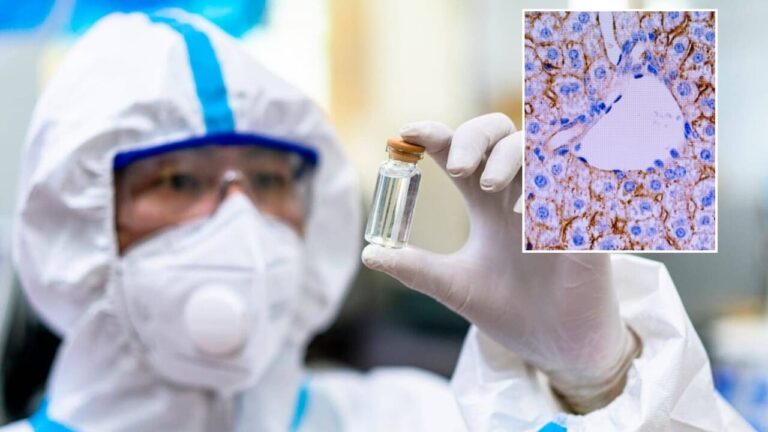
The technology of mRNA vaccines which transformed Moderna into one of the symbols of the pandemic could now open a new path in the fight against cancer. The US company and Merck have announced positive results in the phase 3 clinical trial of Intismeran, a personalized therapy tested against melanoma. The news caused an impressive reaction on Wall Street: in the session on Wednesday 19 August, Moderna shares closed with a rise of around 177%, while Merck gained around 12%.
Moderna and @Merck today announced positive topline results from the Phase 3 INTerpath-001 trial evaluating adjuvant treatment with autogenic intismeran, a novel investigational mRNA-based individualized neoantigen therapy jointly developed by Merck and Moderna, in combination… pic.twitter.com/v4DjH0r823
— Moderna (@moderna_tx) August 19, 2026
Behind the market euphoria there is an important scientific result, although to know exactly how effective the treatment is we will have to wait for the publication of the complete data.
What the new study showed
The phase 3 study, called INTerpath-001, involved 1,137 patients with high-risk cutaneous melanoma. The patients, whose tumor had already been completely removed surgically, were divided into two groups. The first received Intismeran together with Keytruda (pembrolizumab), Merck’s immunotherapy drug; the second Keytruda alone. The customized vaccine was administered every three weeks for up to nine doses, while Keytruda was administered every six weeks for up to nine cycles, for a total therapy of approximately one year.
The interim analysis showed that the combination achieved both the main objective of the study, i.e. improvement in recurrence-free survival, and one of the main secondary objectives, survival free from distant metastases. In other words, patients treated with Intismeran plus Keytruda went longer without the cancer coming back or spreading than those treated with Keytruda alone. The advantage, explain the two companies, was statistically significant and clinically relevant.
On the safety front, according to the companies, no new signals emerged compared to those already observed in previous studies. The full data will be presented at an upcoming international medical conference.
Why it’s called a “cancer vaccine”
Intismeran is not a preventive vaccine like those against Covid, flu or measles. It is given after the tumor appears and after surgery, with the aim of helping the immune system recognize and eliminate any cancer cells remaining in the body. And it’s different for every patient.
The genetic mutations characteristic of those cells are analyzed from a sample of the tumor. An algorithm then selects up to 34 neoantigens, i.e. targets recognizable by the immune system. Moderna then produces a synthetic mRNA molecule with the instructions necessary for the body to present those targets to immune cells and stimulate a specific response against the tumor.
In fact, therefore, each patient receives a different drug, designed on the particular genetic “fingerprint” of their tumor. This is one of the most innovative aspects but also one of the industrial difficulties of the project. For each patient the tumor must be sequenced, the mRNA sequence designed, a single batch produced and delivered to the hospital. Moderna has built a highly automated plant dedicated to Intismeran in Massachusetts and says it has managed to bring production times to the order of a few weeks.
Unlike the cell therapies such as CAR-THowever, it is not necessary to take the patient’s immune cells, modify them in the laboratory and then reinfuse them. However, the tumor sample to be sequenced is needed: this is where the construction of the personalized vaccine starts.
That 49% risk reduction
The new results reinforce what had already emerged in a previous study which involved only 157 patients with high-risk melanoma in stages III and IV. After a median follow-up of five years, the Intismeran-Keytruda combination showed a 49% reduction in the risk of recurrence or death compared to Keytruda alone and a 59% reduction in the risk of distant metastases or death.
It is precisely that initial signal that pushed Moderna and Merck towards the much larger phase 3 study that has just concluded with a positive outcome.
When it might be available
Intismeran is not yet authorized in the United States or Europe. However, the combination had already received Breakthrough Therapy Designation from the US FDA in 2023, a procedure that can accelerate the development and review of promising drugs against serious diseases. In Europe it had obtained access to the Prime program from the EMA.
Moderna and Merck have already started discussions with regulatory authorities and intend to use the results of phase 3 to submit authorization requests.
The president of Moderna Stephen Hoge has indicated 2027 as a possible year of arrival on the market, but it is therefore not yet a certain date. Not even the price has been decided. And it will be a central issue, because producing a different batch for each individual patient makes the model much more complex than that of a traditional industrial drug.
The bet goes far beyond melanoma
The real reason the result is being watched so closely is that Intismeran may not stop at skin cancer. Moderna and Merck are already testing the same platform in several other tumors. The INTerpath program currently includes nine phase 2 and 3 studies and covers, among others, non-small cell lung cancer, bladder cancer and kidney cancer; other studies are also exploring pancreatic and stomach cancer.
Success in melanoma does not automatically prove that the technique will work in other tumors as well. But it offers the first large-scale confirmation that an mRNA therapy built on individual patient-specific mutations can add benefit to an already highly effective immunotherapy.
And it is above all this prospect that has unleashed investors.
Moderna’s boom on the stock market
After difficult years following the pandemic, Moderna experienced one of the most sensational sessions in its history. The stock closed on August 19 with a rise of around 177%, returning to the highest levels in recent years. Merck also recorded a double-digit jump. Part of the acceleration was probably amplified by the rush to close bearish positions: before the announcement, approximately 13.5% of Moderna shares available on the market were sold short.
The recovery is enormous, but it does not erase the collapse following the Covid era. Moderna’s historical closing high remains in fact $484.47, reached on August 9, 2021, when the group had become one of the great economic winners of the pandemic. In November 2025, the stock fell to a low of $22.28.
However, the outcome of the study changes the industrial perspective of the company. Moderna needs to demonstrate that mRNA technology can become a platform capable of generating products even outside of vaccines against seasonal infectious diseases.
For Merck the stakes are equally high. Keytruda generated more than $30 billion in sales in 2025, but the company is bracing for possible competition from biosimilars in the U.S. starting in late 2028. Intismeran could allow it to extend and broaden the value of its presence in immuno-oncology just as that deadline approaches.
Why it matters
It is still early to talk about a revolution in cancer treatment: complete numbers from phase 3, data on overall survival, examination by regulatory authorities and proof that the production model can work on tens of thousands of patients are missing. But the result obtained in melanoma still marks an important step: for the first time a personalized mRNA cancer therapy has successfully passed a large phase 3 study. And it is precisely the demonstration that Moderna has been looking for for years to prove that the technology that became famous with Covid can have a second life, this time against cancer.