

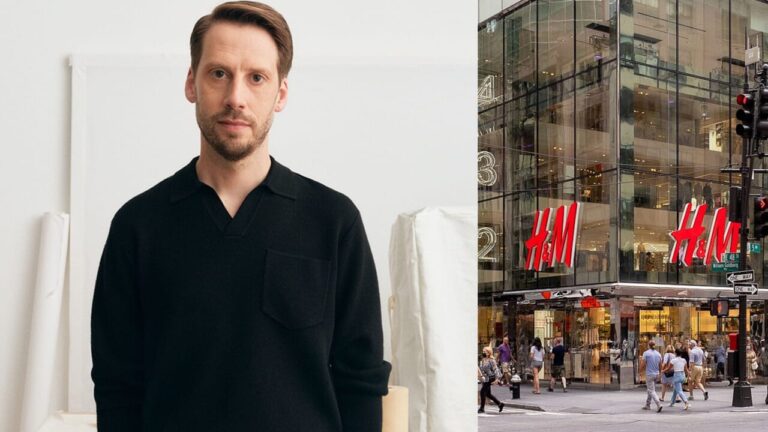
H&M (Swedish low-cost fashion giant) has started a global downsizing plan which involves the closure of 160 stores during 2026. It will address this, the company specifies The Vermilionthe opening of 80 new stores. The reorganization, dictated by a 10 percent drop in revenues in the first quarter (despite a good finish to 2025), also directly affects Italy with the disposal of the Rome Tuscolana store. Despite higher-than-expected profit growth, the Swedish group is reducing its physical presence in mature markets to focus “on digital sales and operational cost efficiency”.
Global accounts and the French case
In the first quarter of 2026, revenues fell to 49.6 billion Swedish crowns (approximately 4.6 billion euros). Operating profit instead rose to 1.512 billion crowns (around 140 million euros), marking an increase of 26 percent compared to the previous year. But the very ‘tepid’ outlook for March led the stock to collapse (-8 percent) on the Stockholm Stock Exchange. At the same time, the company decided to close the Parisian atelier of the & Other Stories brand to move its activities to Stockholm. The choice will lead to the cutting of around thirty jobs, almost all occupied by women with long experience.
Closures and investments in Italy
In Italy, the confrontation between the Nordic giant and the unions focused on the closure of Roma Tuscolana, scheduled for May 10th. The operation will involve 17 permanent employees. H&M has, however, confirmed its intention to invest in the renovation of the stores in Bari and Conegliano (Treviso). If the renovation times will be short for the Venetian shop, the Apulian shipyard will require more structural interventions. The attention of the acronyms Filcams, Fisascat and Uiltucs remains high on employment stability.
Performance bonuses and precariousness
The negotiations between the parties also concern the performance bonus, the economic coverage of which is ensured until March 2026. The unions are asking for a new long-term agreement to take advantage of the current tax breaks. During the meeting at Confcommercio it emerged that in 2025 the use of on-call work affected 16 percent of the total workforce. Workers’ organizations have asked to overcome this form of contract to promote stabilization and greater quality of employment.
Sustainability and logistics chain
The group continues to focus on sustainability, declaring a reduction in emissions of 34.6 percent compared to 2019. On a logistical level, the strategy involves optimizing flows towards the Casalpusterlengo hub (Lodi) to better serve Southern Europe. The company is also closely monitoring tensions in the Middle East, seeking to limit air travel to maintain flexibility in the supply chain.
Crushed between Shein and Zara
The crisis has deep roots. The Swedish group finds itself caught between two fires: on the one hand the aggressiveness of the Chinese Shein, which dominates the lower price range with an unbeatable production speed, and on the other the Spanish Zara, which has been able to elevate its brand towards a perception of greater quality and fashion. This “middle ground” has made H&M’s offering less impactful for consumers, leading to a steady decline in market shares in Europe and North America.
Operating costs
A second determining factor concerns supply chain management and logistics costs. Bloomberg analysis highlights how H&M has suffered more than its competitors from interruptions in trade routes and the increase in raw material costs. Unlike more flexible competitors, the Swedish giant has accumulated excess inventory for years, forcing the company into massive discount campaigns that have eroded profit margins. The closure plan for 2026, therefore, is an attempt to correct this physical overcapacity in favor of a more streamlined and digital model.
The transition towards sustainability
Finally, the difficult balance between the fast fashion business model and the new sustainability regulations weighs heavily. H&M has also invested heavily in green communication, but this step has led to higher production costs without guaranteeing an immediate return in sales. “GThe investments of SEK 2.8 billion in 2025 are not attributable to communication activities but intended for decarbonisation and material innovation – specifies the company in a statement -. H&M has in fact highlighted that in 2025 Il 91% of the materials used were recycled or from sustainable sources. The share of recycled materials alone was 32%exceeding the 30% target set by the company for 2025. Also in 2025 we reduced greenhouse gas emissions by 41%.
But according to GlobalData analysts, the attempt to reposition itself as an ethical brand has not yet fully convinced Gen Z, who continue to prefer the ultra-competitive prices of online platforms or the superior quality of premium brands, leaving H&M in an identity crisis that the new CEO Daniel Ervér is trying to resolve by cutting costs and optimizing the retail network.