

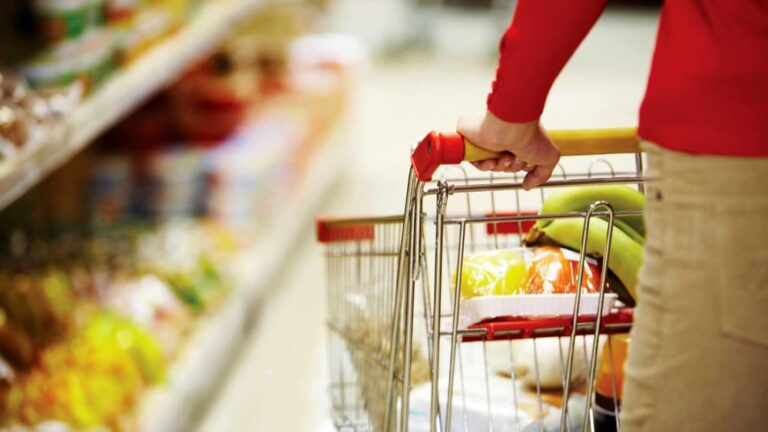
In 2025, Italian families spent an average of 552 euros per month on food and non-alcoholic drinks, 19 euros more than in 2024. The 3.6% increase leads this item to absorb 19.8% of the family budget, almost a fifth of the total.
Twenty years earlier, in 2005, the monthly amount for food and drinks was 456 euros. But how much does it cost to fill your cart today? According to the reports Istat on household consumption expenditure, the overall average monthly expenditure reached 2,782 euros, compared to 2,755 euros in 2024 (+1%). Among the products that recorded the most marked increases were coffee (+14.6%), water (+8.3%), fish (+7.8%), oils and fats (+6.7%), tea and infusions (+6.7%), meat (+5.4%) and milk, other dairy products and eggs (+4.2%).
The weight of food expenditure, however, varies significantly from one area of the country to another. In 2025, the share allocated to food and non-alcoholic drinks reached 25.4 percent of total spending in the South and 24.1 percent in the Islands, while in the North-West it stopped at 17.7 percent. To confirm the difficulties of the families in containing the costs to supermarket there is further data from Istat: in 2025, 29.4 percent of families admitted to having reduced their spending on food compared to 2024, decreasing the quantities purchased or choosing lower quality products.
The living context also affects spending. In 2025, the highest average outlay was recorded among families residing in the centers of metropolitan areas, with 2,991 euros. Followed by those who live in peripheral municipalities of metropolitan areas and in centers with at least 50 thousand inhabitants, with an average expenditure of 2,804 euros per month. The figure drops to 2,704 euros in municipalities with fewer than 50 thousand inhabitants, where spending is 9.6 percent lower than that recorded in the centers of metropolitan areas.
The prices of essential products
To understand how much it costs to go shopping, it is useful to start from the essential products, i.e. the everyday foods that make up a family’s basic trolley. The balance of the domestic budget, however, can prove fragile, especially when available resources are limited. It’s a difficulty well told in the film.”The tightrope walkers” (2012) by Ivano De Matteo, in which Valerio Mastandrea plays a father struggling with economic and family problems, forced to deal with the difficulty of maintaining stability (photo below).
Likewise, the cost of food, especially when purchases are repeated every week, can impact the family budget. According to the findings of the National Observatory of the Italian Consumer Center, in September 2026 the average price of bread it stood at 4.99 euros per kilo, that of pasta at 2.19 euros per kilo and that of milk at 1.75 euros per litre. Extra virgin olive oil reached 11.50 euros per litre, while lemons and carrots recorded prices of 3 and 2 euros per kilo respectively.
For other food products, the Price and Tariff Observatory of the Ministry of Business and Made in Italy has published findings reporting minimum, maximum and average prices. The average price of fresh bread in this list is 3.98 euros per kilo, that of chicken breast is 13.78 euros per kilo, while for first cut beef it reaches 25.51 euros per kilo and for Parmigiano Reggiano 27.83 euros per kilo. The differences between minimum and maximum prices are significant. This is the case of cooked ham, which varies from 18.50 to 38 euros per kilo, and chicken breast, whose price varies between 10.90 and 16.99 euros per kilo.
How much does the daily cart cost
Bread, pasta, milk, meat, fruit and vegetables make up the daily cart. Knowing the average prices per kilo and per liter helps to understand how much they affect the final bill, especially when purchases are repeated regularly. The impact of food purchases on the household budget does not only depend on the price of individual products, but also on the quantities purchased and the composition of the family unit. This link is confirmed by an analysis by Altroconsumo, according to which the average annual expenditure at the supermarket goes from 5,740 euros for a single person to 8,360 euros for a couple, up to 9,450 euros for a family of four.
The annual saving varies based on the brand and type of trolley chosen: it can reach 3,790 euros by focusing on the cheapest products, 3,305 euros by choosing supermarket brand products (“private label”) and 2,790 euros by opting for a mixed cart at the discount store.
The savings instead go down to 420 euros for those who purchase branded products and to 245 euros for those who choose a mixed cart in traditional hypermarkets and supermarkets. As emerges from the Altroconsumo analysis, the greatest savings opportunities are obtained by more decisively changing one’s purchasing habits.
Dossier is the exclusive subscription investigative section of The Vermilion. If you want to support our journalistic work and subscribe, Click here.