

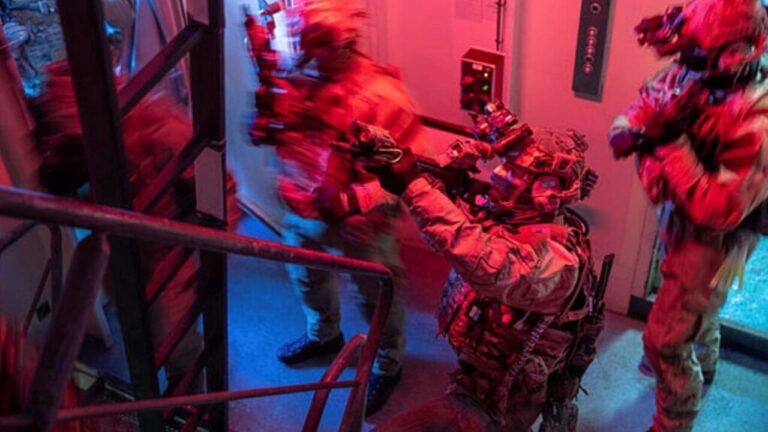
The British marines non the early hours of Sunday 14 June they intercepted an oil tanker flying the Cameroon flag, the Smyrtos, in the English Channel, believed to be part of the network of shadow ships used by Moscow to continue exporting oil by circumventing international restrictions.
The operation was carried out by Royal Marine commandos and specialist agents from the National Crime Agency, with the support of the RAF, aircraft from the Maritime Air Group and the Royal Navy units Hms Sutherland and Hms Ledbury.
According to the British Ministry of Defence, this is the first operation led directly by the United Kingdom against a tanker from the Russian “shadow fleet”. London maintains that the action was conducted within British territorial waters and in compliance with national and international law.
Prime Minister Keir Starmer claimed the raid as “another blow to Russia”, warning those who help finance the war in Ukraine that “they will not be able to hide”. Defense Minister Dan Jarvis is along the same lines: “Russia relies on its shadow fleet to finance the conflict in Ukraine and this ban hits Putin’s illegal war.”
What is the Russian “shadow fleet”?
The “shadow fleet” is the collection of oil tankers, often with opaque ownership, flags of convenience and difficult-to-trace insurance, used to transport Russian crude oil and petroleum products while bypassing Western sanctions, price caps and controls. According to London, this network has over 700 vessels and is responsible for transporting a large share of restricted Russian oil.
The Smyrtos was already included in the list of ships sanctioned by the United Kingdom. The measures ban entry to British ports and prevent British companies and citizens from providing financial, insurance or brokerage services related to ships carrying Russian oil.
London’s hard line
The raid comes after the decision announced by Starmer in March, when the British government authorized armed forces and police authorities to board sanctioned ships transiting UK waters. The declared objective is to reduce Moscow’s energy revenues and “dry up” one of the sources of financing the war in Ukraine.
The operation was conducted in coordination with France, after London had already provided support to allied operations against vessels suspected of being part of the same network in recent months. The political message is clear: the English Channel, one of Europe’s busiest shipping lanes, must no longer be safe passage for sanctioned oil tankers working for Russia’s war economy.