


In the midst of a very delicate phase for the government, inaugurated by the victory of the “no” vote in the referendum and continued with a succession of heads falling, Giorgia Meloni leaves Italy. The reason has to do with an issue even more critical than the stability of his majority: national energy security.
The mission, awaited for days, has the aim of strengthening additional gas supplies from Algeria, in the face of an international crisis that is putting the Italian energy system, and beyond, under enormous pressure. The war in Iran has drastically reduced gas exports from the Persian Gulf, particularly affecting Qatar, one of Italy’s most important suppliers.
Qatar stops gas exports: supplies at risk
The most critical phase arrived in the last few hours: after the Iranian attacks on the gigantic Ras Laffan plant, a crucial hub of the global LNG market, Doha began to limit exports, going so far as to invoke force majeure on long-term contracts with some countries including Italy. A step which, in practice, means the possibility of suspending deliveries.
For Italy, the interruption of supplies from Qatar represents a problem that is anything but marginal. In fact, around 10% of imported gas comes from this country, but the weight becomes much more significant – around 30% – if we consider exclusively liquefied natural gas (LNG).
It is therefore not surprising that the suspension of deliveries forced Rome to move quickly in search of alternatives. The issue is particularly delicate because gas occupies a central role in the Italian energy system: it covers around 37% of overall consumption and fuels almost 40% of national electricity production, a share more than double the European average. In this context, every interruption of supplies is not just a matter of supply, but directly puts pressure on the entire energy balance of the country.
Skyrocketing prices and the burden of gas for Italy
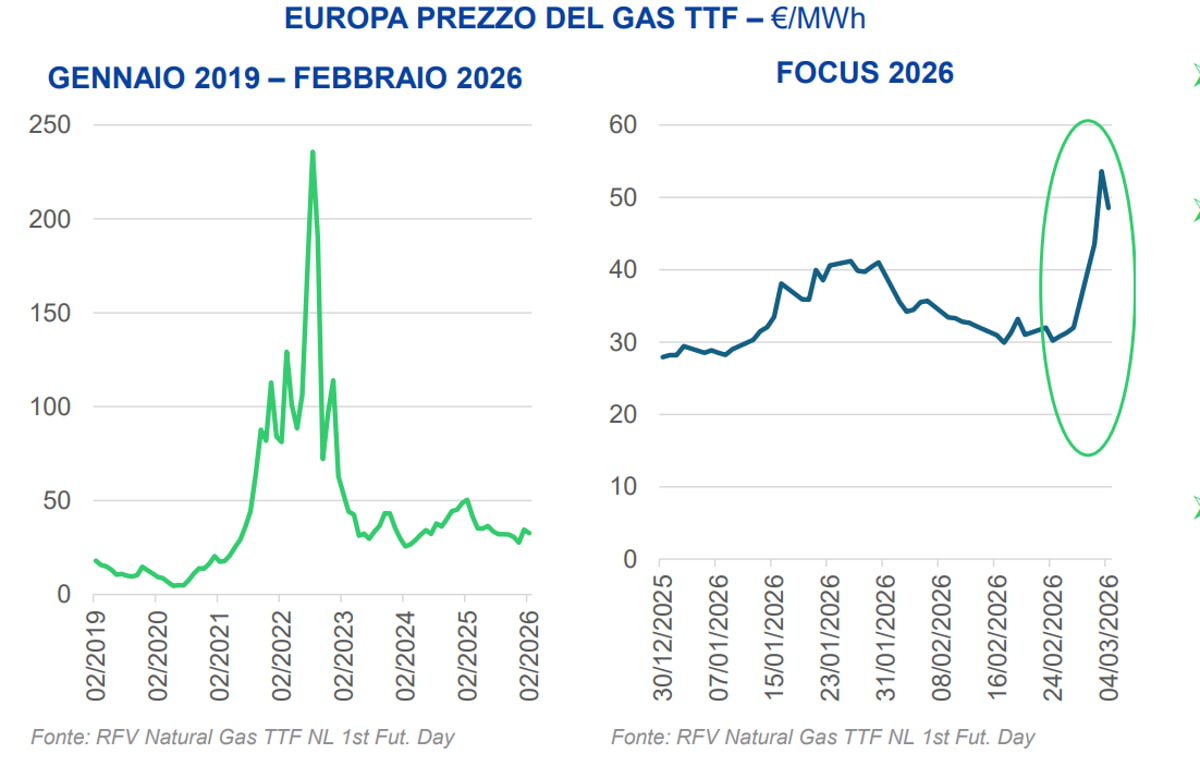
The effects can already be seen on the market, where gas prices are starting to rise again, with direct repercussions on families and businesses. After the exceptional peaks reached in 2022, prices had progressively reduced thanks to more solid inventories and new sources of supply.
Today, however, the trend has reversed. In the first weeks of March 2026, prices in Europe increased by more than 60%, exceeding 50 euros per megawatt hour. These are levels still far from the peaks of summer 2022, when on the European market they exceeded 300 euros per megawatt hour, but the recent rise signals a return of tensions.
The role of Algeria
In this context, Algeria confirms itself as Italy’s main energy partner. In 2025 it exported approximately 20.1 billion cubic meters of gas to our country, still covering approximately 31% of overall imports. Algiers’ central role is linked above all to the Transmed gas pipeline, a key infrastructure but with limited room for expansion in the short term. Added to this is an element of uncertainty: the long-term contracts between Eni and Sonatrach, already the subject of renewal negotiations, will expire in 2027.
Alongside gas via pipe, the still secondary contribution of liquefied natural gas is growing: in 2025, 47 cargoes arrived by ship, an increase compared to 31 the previous year, a sign of a progressive diversification of routes. However, further increasing the quantities available is not easy.
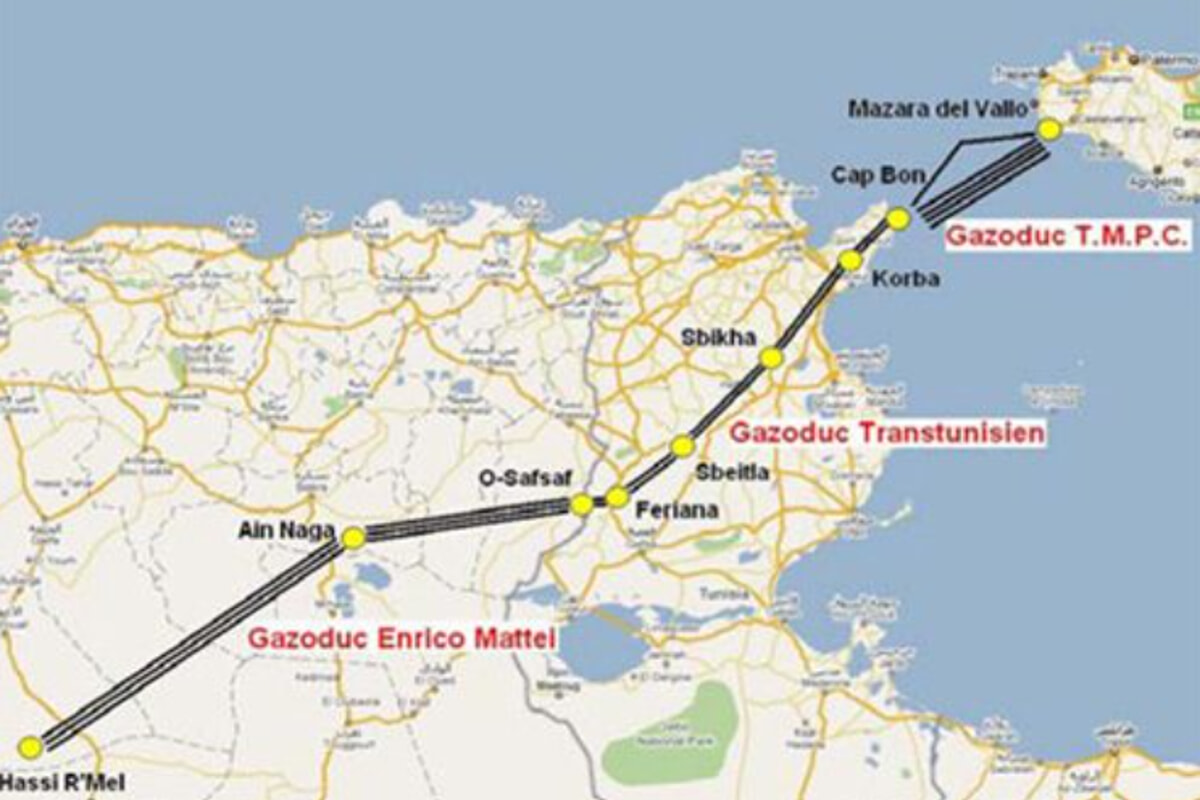
Domestic production covers around half of Algerian consumption and, according to some rumours, Bloombergthe Algerian state company (Sonatrach) would have made it a condition for Eni that any extra volumes be purchased on the spot market, which is less convenient for Italy.
The spot market is more flexible, because it allows you to quickly buy extra volumes outside of pre-existing contracts, but also more expensive and volatile. In essence, the additional quantities should be purchased at the current market price, which can be much higher, and it is not certain that Italy will accept these conditions.
Meloni’s mission
Meloni’s visit represents a strategic race against time and international competition. In fact, Spain is also looking to North Africa to strengthen supplies through the Medgaz gas pipeline and the Italian government would seem, at least for now, to have “burned” the Spanish government of Pedro Sanchez. Spanish Foreign Minister Manuel Albares announced a visit to Algiers in recent days, but the Prime Minister brought it forward, consolidating a privileged bilateral relationship with Algerian President Abdelmadjid Tebboune.
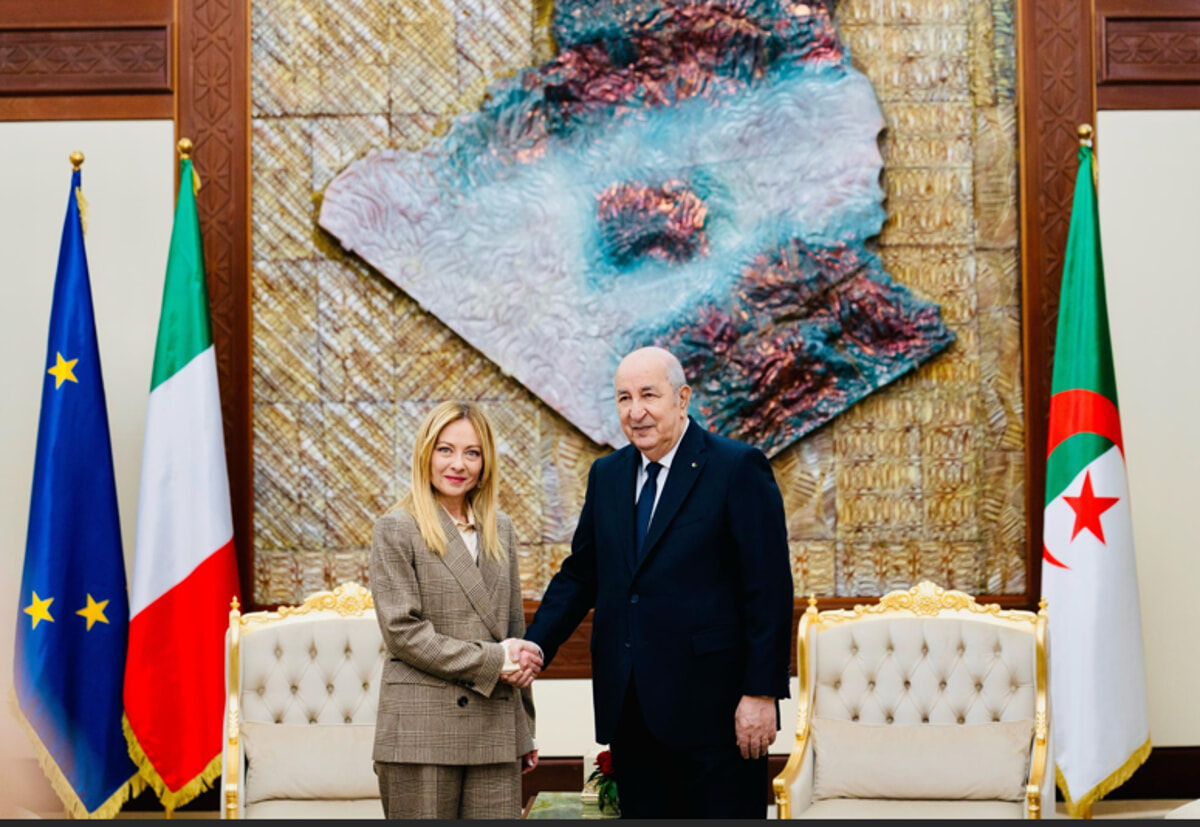
The competition between Rome and Madrid is the most visible example of Europe’s growing rush for Algerian gas, at a time when member countries seek to reduce dependence on the Middle East and volatile global markets.
Renewables are not growing fast enough
Italy remains particularly exposed also because the growth of renewables is not proceeding rapidly enough to reduce the weight of gas. In 2025, approximately 6.2 gigawatts of new capacity were installed, a figure slowing down compared to the previous year and signaling a pace that is still insufficient compared to the energy transition objectives.
This is highlighted by Anie Rinnovabili’s Fer observatory: more than a contraction, a problem of integration in the system emerges. According to several operators, in fact, the development of the plants is proceeding faster than the network’s capacity to absorb them. In this context, Terna finds itself having to manage the connection of new renewables without compromising the balance of the grid, with the result that some of the projects remain awaiting connection.
Stocks: how we are in Italy
Meanwhile, gas supplies at European level are limited, but Italy stands out positively in this regard. According to the latest data from Gas Infrastructure Europe, the EU’s overall reserves have fallen to 28.51% of total capacity.
The situation varies significantly from country to country: Germany stands at less than 22%, while Italy has a filling level of around 44%. Other countries show higher values, such as Portugal (81.62%) and Spain (55.49%). Below, a graph (processed by Prometeia based on Bruegel data) on the filling of gas storage in EU countries as of 1 March 2026, expressed in billions of cubic meters and as a percentage.
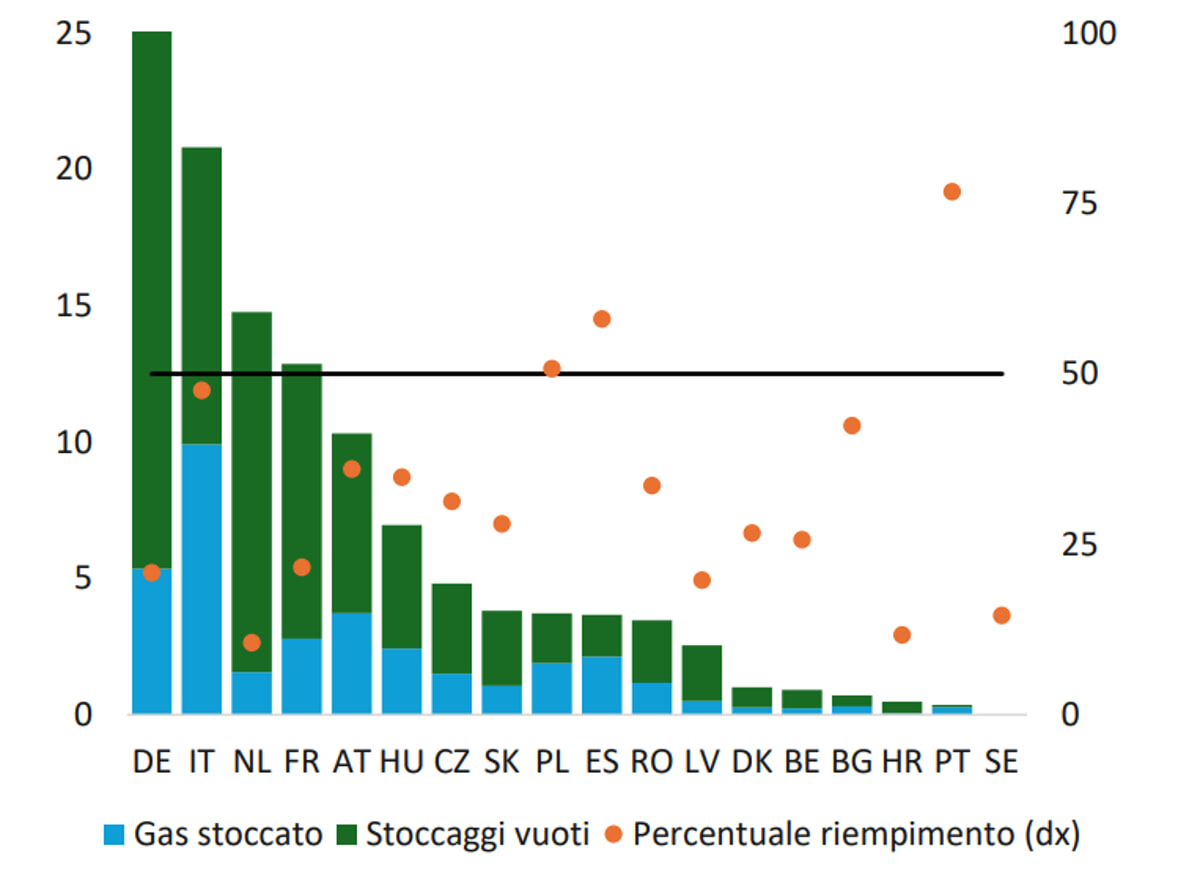
In recent years, Europe had strengthened storage management, increasing overall capacity and maintaining relatively high levels to reduce dependence on external supplies. However, current European reserves appear far from the average for the two-year period 2023-2024. Although Italy has a relatively solid position, storage may not be sufficient to deal with prolonged shocks or sudden interruptions.
Algerian hope (and what we will give in return)
All these factors highlight the absence of significant margin to cover sudden disruptions and accentuate the urgency of closing concrete agreements with Algeria. In 2025, Italy imported around 20 billion cubic meters of gas from the North African country, but with the crisis in the Middle East the additional requirement is urgent and cannot be postponed.
Obtaining extra volumes does not only mean guaranteeing energy to families and businesses, but avoiding price tensions and stabilizing the internal market. Meloni’s mission, therefore, lies between emergency and geopolitics. Algeria is Italy’s most important card, but not without complexity: limited margins, expensive spot market, European competition. It is not a given that the negotiations will be successful, even though Italy enjoys a privileged relationship with the North African country. And, above all, it will be necessary to understand what the government will promise Algeria in exchange for more favorable conditions.