

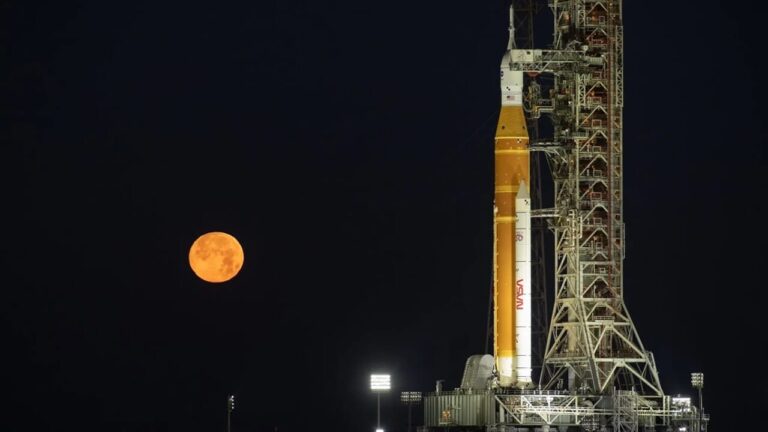
The return of man to the Moon may have undergone a new, abrupt slowdown. Certainly, what has been announced by NASA is a profound strategic review, which almost sounds like a reality check for the American agency after the repeated postponements of the Artemis 2 mission due to the losses of the propulsion system. The American lunar program has in fact been recalibrated, transforming the Artemis 3 mission – initially conceived as the great return of a human crew to the lunar surface – into a crucial operational test, but confined to Earth orbit.
According to the agency, the change of course is not just a technical variation, but marks the return to a methodical approach, inspired by the pragmatism and prudence of the Apollo program, at a time when geopolitical pressures and technological challenges are putting Washington’s ambitions to the test.
The background to this choice is written in the folds of years of delays and engineering difficulties, which made it clear that the original calendar was, in all likelihood, too optimistic. The Artemis program has in fact struggled to keep pace: from the very long process of Artemis 1 to the continuous postponements of the second crewed mission (now scheduled for April), up to the well-known obstacles in the development of commercial landing systems: SpaceX’s Starship and the new lander recently commissioned from rival Blue Origin.
NASA must therefore have become aware of the fact that attempting a moon landing with procedures that are still partly theoretical represents a risk that it can no longer assume, and has decided to break the deadlock, distorting the program so as not to ruin it. The watchword is now “standardization”: building a solid architecture for the mission, obsessively testing each component before venturing into the void of open space.
For this reason, Artemis 3, now scheduled for 2027, will be a sort of big dress rehearsal: it will take place in Earth orbit, and will test the docking maneuvers of the Orion capsule with the private landers that should take it to the lunar surface in the future. It will be used to validate communication systems, propulsion and new extravehicular suits. All critical steps which, after the problems of recent months, were evidently deemed too dangerous to test for the first time during the direct mission to the surface.
Once these tests have been archived, NASA’s program is to complete the moon landing with Artemis IV, and then proceed with missions on the surface on an almost annual basis. The date of return to the surface remains the one previously established, 2028, but at this point it is inevitable to doubt the ability of the American space agency to respect the timetable. Especially since for now neither of the two private companies called to develop the lunar lander have achieved tangible results. Meanwhile, on the horizon, the specter of China looms, which continues to get closer: the Asian giant is planning a human mission to the Moon for 2030, and unlike the Americans, it continues to grind out one success after another.