

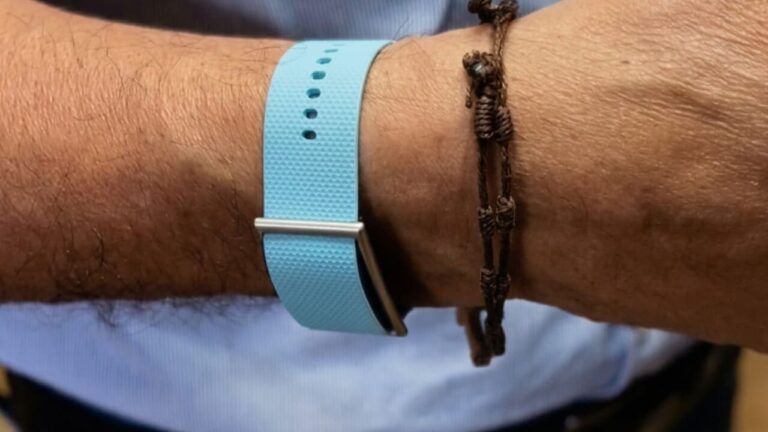
In the province of Cosenza there is a small mountain town of 2,400 inhabitants, Longobucco, which has hit the headlines for having started a trial involving three patients monitored 24 hours a day through electronic health bracelets, connected in real time to the hospital center via aapp. Having entered the operational phase, the project telemedicine “Sila Protetta” marks a significant step in Italy in the remote management of chronic and fragile patients.
This is a unique experiment of its kind because, for the first time in our country, an advanced monitoring device, already tested in a hospital setting by the US company Medtronic at the Policlinico Umberto I in Rome, is used outside of a hospital. The geographical context makes the project even more significant: the closest emergency room in Longobucco is approximately 40-45 minutes away by car, making the remote monitoring system a potentially crucial tool for ensuring timely intervention.
“Through the evaluation of the app, the doctor can view the patient’s main vital parameters at any time and, above all, receive any alarm signals, which are also received by the clinic. Allowing for timely intervention”, explains Serena Pignataro, head of the Cosenza emergency medicine unit.
His words are echoed by those of Giovanni Bisignani, coordinator of the cardiology network of the ASP of Cosenza: “The data collected by the devices are displayed on a central console, from which all patients wearing the electronic health bracelet are monitored. It is possible, for example, to follow the trend of the heart rate: if an anomalous peak is recorded, the operations center reports it. At that point the patient is contacted, an electrocardiogram is performed and the trace is transmitted remotely to the cardiologists of the ASP, who they analyze and report it.”
Family doctor crisis
Today Longobucco establishes itself as a territorial experimentation laboratory and a “best practice” model for inland and mountain areas. The electronic health bracelet system in fact represents an integrated telemedicine ecosystem, capable of both reducing territorial distances and improving the quality of life of citizens. Suffice it to say that, before the start of the project, many residents were forced to travel tens of kilometers to reach health facilities.
And it is precisely in the small towns, far from hospitals, that the other side of medicine is observed: that of the clinics which, often, also due to the depopulationconstitute one of the last State garrisons in the area. They are made operational by general practitioners, who guarantee healthcare to a population that, in most cases, is over 60 years of age. But what happens when they are in short supply?
According to the Gimbe foundation, since January 2025 in Italy there has been a shortage of over 5,716 family doctors and more and more citizens are struggling to find a professional who is able to provide assistance. And the picture is destined to get worse: according to data from the Italian Federation of General Practitioners (Fimmg), between 2025 and 2028 as many as 8,180 family doctors have reached or will reach the age limit for retirement, set at 70 years, barring exceptions.
Telemedicine in mountain areas
Technology can come to the rescue, through digital healthin an attempt to make up for it with the new means available: from telemedicine to remote diagnostics. This outlines a new vision of healthcare, capable of guaranteeing even the most marginal areas access to essential services, fundamental to guaranteeing the permanence of communities in their territories.
This was the objective of the “e-Rés@mont” project, in Valle d’Aosta, created to strengthen health security in mountain areas through the development, implementation and promotion of innovative and local medical services based on telemedicine technologies. Among these, teleconsultation plays a central role, which allows doctors of different specializations to discuss clinical cases remotely, to the advantage of shared diagnoses and therapeutic decisions.
Funded under the program “Interreg VI-A Italy-France Alcotra 2021-2027“, the project – active until 2018 – was aimed at both the inhabitants of the side valleys and people who frequent the mountains on an episodic basis, such as tourists, hikers and mountaineers. In addition to testing a health care model based on a teleconsultation service, “e-Rés@mont” included, among other things, the use of an app that allowed access, at any time and even without an internet connection, to information content on acute mountain sickness (AMS).
Not only less time and less travel: the use of telemedicine in rural and mountain areas offers flexibility and continuity in access, albeit remotely, to doctors. One confirms it study international published on Bmc health services researchcreated by a group from the Valley vein health center in Turlock (California), led by Eliseo Garcia. According to the researchers, the use of telemedicine services can also help increase patients’ adherence to visits and improve the program of periodic checks and tests they undergo after the conclusion of treatment.
The digital divide in Italy
Alongside the opportunities, however, several critical issues remain to be addressed. The first concerns connectivity, which is still insufficient in many internal and mountain areas. The data paints a complex reality, with some European regions struggling to keep pace with the growing use of Internet. According to a study by Eurostatconducted in 196 regions of the European Union and published in 2024, 18 of these recorded a decrease in daily use of the network. Among them, a significant fact emerges: two of the ten regions with the lowest Internet use are located in Italy, namely Sicily and Calabria itself.
The Calabrian region, led by Roberto Occhiuto, it ranks second among the European regions with the lowest percentage of daily internet users and first in Italy, with only 68 percent of the population between 16 and 74 years old regularly accessing the Internet. The gap affecting regions such as Calabria can be attributed to various causes: from the lack of infrastructure investments in rural areas to the limited diffusion of technologies fordigital innovation.
Furthermore, it should not be forgotten that many of these regions in the South, where aging is more difficult than in the North, as shown by the “Passi d’Argento 2016-2018” surveillance data published by the Higher Institute of Health, have a high percentage of elderly population. A segment that may not have the digital skills needed to leverage online resources.
The privacy issue
Well beyond the numbers on the quantity and quality of the Internet connection in Calabria, the issue of the management of sensitive data and the protection of privacy emerges. privacy. To Dossier The Vermilion, Nicola Bernardi, president of Federprivacy, explains: “Certainly today telemedicine allows us to provide effective healthcare even to patients who live far from hospitals and emergency rooms. An example of this is the experiment carried out in the small village of Sila”. At the same time, he underlines, “we must not forget that these devices transmit sensitive data via the Internet, and it is therefore essential to protect not only the health of patients, but also their privacy, since hackers, the curious and malicious people are always lurking”.
In this regard, Bernardi remarks, “il GDPRthe European legislation governing the protection and processing of personal data, requires the organization that intends to make use of new technologies similar to those used by the Calabrian healthcare system to carry out a careful impact assessment in advance to identify the potential risks and the corresponding security measures to be adopted to protect the data, also consulting the Privacy guarantor to have an opinion that confirms the adequacy of the project”.
How to distinguish an illness from a night of sex
But there’s more. “Privacy legislation always requires compliance with the principle of necessity: these services can only be activated for people who really need to be monitored 24 hours a day. However, it is forbidden to extend them to entire populations, because otherwise it would constitute a form of indiscriminate mass surveillance, which would also include healthy subjects who, reasonably, do not require continuous monitoring”.
Bernardi then gives an example: “Just think of a sudden increase in heart rate and blood pressure in the middle of the night: for a sick patient it can be the sign of a sudden illness that requires immediate medical intervention, but for a healthy person who is having sexual intercourse with their partner it is instead a completely normal physiological response”.
Finally, to the question of whether every patient should be able to voluntarily choose whether or not to use these devices, Bernardi replies: “That’s exactly how it is. After having been adequately informed about the risks associated with their use, the patient must be able to freely express his or her consent to the processing of personal data which, however useful, still affects the individual’s private sphere.”
Dossier is the investigations section of The Vermilion. If you want to support our journalistic work and subscribe, visit our showcase by clicking here.