
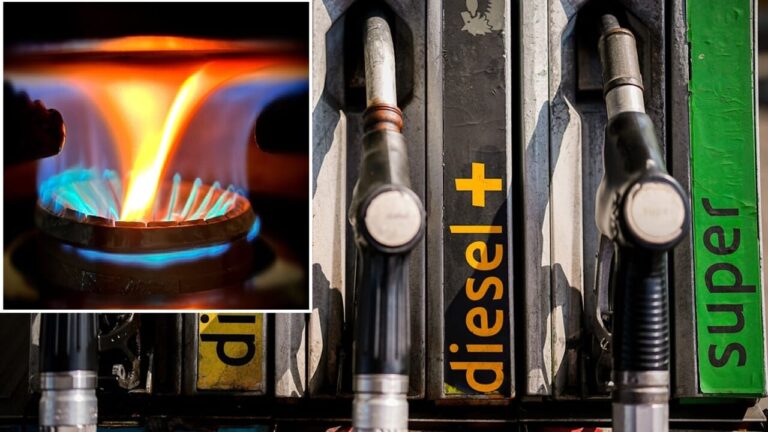
On the eve of the war against Iran, in February, European gas was trading at around 32 euros per megawatt hour. The price of the Brent oil index was below 70 dollars a barrel. Now, oil is close to 112 dollars and natural gas has exceeded the psychological threshold of 90 euros per megawatt hour. The crisis in the Middle East is once again shaking global energy markets and the consequences are already visible in Italy too, where fuel prices remain high and families face the start of the heating season with increasingly expensive bills.
Hormuz, two oil tankers on fire: what’s happening
The new declarations of the Iranian Revolutionary Guards are reigniting the tension. The Pasdaran claimed that two oil tankers hit mines placed by Iranian forces in the southern part of the Strait of Hormuz, a focal point for the passage of oil tankers and LNG carriers for the global economy, along a route that Tehran considers unauthorized.
According to the Iranian statement, the explosions caused fires and immobilized both boats. The UK maritime security center Ukmto has documented numerous attacks on commercial vessels in the region. The situation remains extremely tense. According to data from the specialized company Kpler, cited by Reutersat least 18 boats were reportedly attacked in the space of two weeks.
Most expensive bills in Italy: the increases already decided by Arera
The blocking of the passage therefore has consequences that go far beyond the Persian Gulf and the markets have reacted to the new escalation with strong price movements. But the consequences of the crisis are not limited to finance. In Italy a significant increase in electricity bills has already come into force on 1 October. The Regulatory Authority for Energy, Networks and the Environment (Arera) has established that in the fourth quarter of 2026 the electricity bill of the typical vulnerable customer – there are around 3 million – served under Greater Protection increases by 37.3% compared to the previous quarter.
Dear bills, because we Italians risk paying the Germans for gas
Arera explained that the increase is linked to the higher costs of electricity supply, conditioned by wholesale prices and the trend in natural gas prices. Even for methane the consequences are already measurable. In the latest available update, relating to September, the typical user’s spending on the gas vulnerability protection service increased by 12.7% compared to August. For the 2.3 million customers affected, the value of the raw material component alone reached 78.80 euros per megawatt hour.
Those who risk new increases in their bills
The impact of the price increases will depend on the contract signed. Families with variable price offers are exposed to the performance of the reference indices envisaged by the contract, such as the PSV for gas and the Pun for electricity.
At these prices, winter gas can cost us as much as 1,400 euros: how to save 157 euros
Those who have a fixed price contract, however, do not automatically suffer the daily fluctuations in wholesale prices on the energy component covered by the blocked price, as long as the agreed economic conditions remain valid. In case of renewal with modification of the economic conditions, the seller must send written communication with at least three months’ notice. The proposal indicates the new prices and related conditions, allowing the consumer to evaluate any alternatives.
Where are we at with high fuel costs?
The oil crisis also finds concrete evidence in Italian distributors, while hauliers protest and block roads and motorways. Now a full tank of a heavy vehicle can cost up to 500 euros more than before. Diesel continues to cost significantly more than petrol, with a difference of 23.1 cents per liter on the ordinary road network.
| Fuel | Average price per litre | 50 liter full |
| Gas | €2,027 | €101.35 |
| Diesel | €2,258 | €112.90 |
| Petrol on the highway | €2,045 | €102.25 |
| Diesel on the highway | €2,292 | €114.60 |
It is not just crude oil that is weighing on prices. The prices of refined products, refining and distribution costs, transport, commercial margins and the tax component also count. Furthermore, on 5 October, the extraordinary reduction in the excise duty on diesel fuel provided by the government decree ended, which in the last phase guaranteed a tax discount of 6.1 cents per litre, including VAT.