

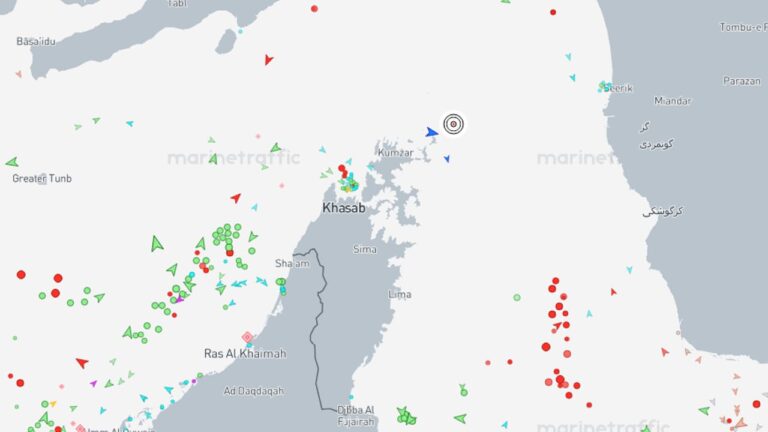
The announcements of a reopening of the Strait of Hormuz are enough to cause the prices and prices of energy products to collapse. Since the beginning of the war in Iran, oil and gas have undergone significant increases, especially products derived from crude oil: we have noticed this at the petrol pumps and many have become aware of this by reading their bills. The situation does not yet seem definitive, the US navy blockade remains active, but it is a step forward which is certainly cooling the markets to date. However, unknowns remain.
Because it is a semi-unblocking of the Strait of Hormuz
We must immediately specify that it is a reopening, yes, but temporary. The original announcement by Iranian Foreign Minister Abbas Araghchi specified that the passage for commercial ships in the Strait of Hormuz was “fully open” for the remainder of the ceasefire in Lebanon. So at least until next April 25th.
In any case, to cross the Strait you will need coordination with the Guardians of the Revolution, the Iranian Pasdaran: their authorization for passage is required. At the same time, the US Navy blockade of all ships moving to and from Iranian ports remains active “until the definitive conclusion of our agreements”, explained Donald Trump.
Gas and oil react to the reopening of the Strait
We must remember the importance of Hormuz for the global trade of energy products: between 15 and 20 percent of global consumption of petroleum liquids passes through this strip of sea, and 20% of global LNG trade, especially from Qatar, an important supplier to Italy.
Billionaire earnings and everyone is looking for them: who is behind the oil tankers that the world cannot do without
Today, Brent – the international benchmark – fell by around 9-11%, to the area of 88.8-90 dollars a barrel, while the WTI fell to around 81.5-83.9 dollars. In the same movement, the stock markets rose and the euro strengthened against the dollar. For European consumers this matters a lot: less tension on crude oil means less pressure on fuels, transport, logistics and imported inflation.
European gas futures on the Amsterdam stock exchange are also reacting to the news from the Middle East: the Ttf index is plummeting to 38.4 euros per megawatt hour (-9.5%), marking the lowest price since the end of February. The market interpreted the news as a sign of de-escalation, reducing supply concerns.
The effect on fuel prices and bills
From price lists the benefit shifts to consumers. But not immediately: the average price at the fuel pumps is 1,776, while on the motorways it is 1,810. One day of declines isn’t enough: the cheaper crude still has to translate into deliveries, refining and distribution.
The Italian gas index shows an average for April of between 48 and 48.63 euros per megawatt hour, below the average level of March. Consequently, the latest declines in the European market give rise to hope. Arera informed that in the second quarter of 2026 the electricity bill for vulnerable customers in greater protection increased by 8.1% and linked the increase to the “rise in prices of energy products on international markets”, speaking of a “direct impact on bills”.
LIVE: EU leaders ready for a peaceful mission. Meloni: “Italy will do its part”
This means that the reopening of Hormuz comes after part of the electricity increase has already been incorporated into the quarterly values. Thus, the reopening of the Strait alleviates the risk for the next tariff updates and for those who have an indexed type offer in their bills – linked to the trend of the indices – In general, Bank of Italy has predicted that, in the adverse scenario of long-term high oil and gas prices, inflation would rise to 4.5 percent this year, to 3.3 in 2027 and to 2.2 in 2028.
How long it will take to return to normality: flight fuel unknown
Not everything changes overnight. The US energy agency itself explained that a full recovery of trade flows will take months. Even assuming a gradual reopening, the return to pre-conflict levels would only occur later in 2026. For Europe, the market will still remain tense due to the effect of sailing times towards Rotterdam, while in the maritime sector there remains operational uncertainty regarding safety, possible tolls and the real willingness of shipowners to resume normal transits.
Then there is the risk on travel: the reduction in refinery activity globally has direct effects on jet fuel and diesel. The IEA had already indicated that, at current levels, kerosene supplies would be sufficient for around six weeks. In some countries, he warns, this can translate into inconveniences in air transport up to the cancellation of flights, while the industrial sector remains exposed to diesel shortages.
Air flights at risk in Europe: “Jet fuel shortage”. What happens to fuels in May
An alarm also shared by the aviation sector. “The IEA’s assessment of possible jet fuel shortages is worrying. We have estimated that within six weeks we could start to see cancellations in Europe due to lack of jet fuel. In some parts of Asia this is already happening,” said Willie Walsh, director general of IATA, calling for the need to strengthen alternative supply routes and calling on authorities “to put in place clear and coordinated plans, in the event that it becomes necessary to introduce forms of rationing, including the management of airport slots”.