

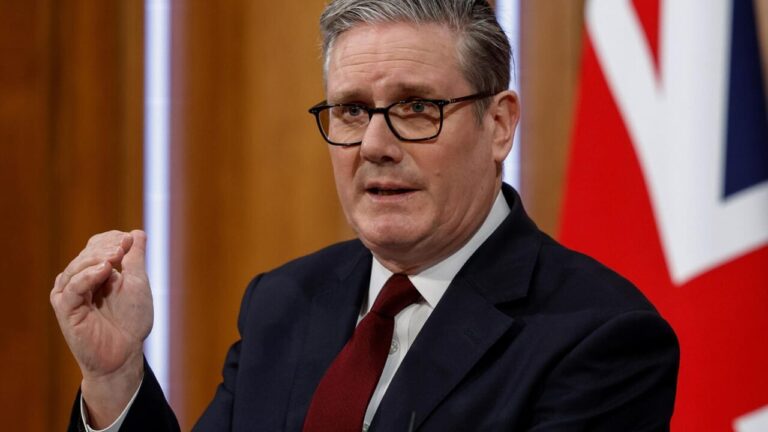
A real earthquake that is upsetting British politics. Keir Starmer’s leadership enters its most serious crisis since Labor returned to government in 2024. More than seventy Labor MPs have called for the prime minister’s resignation and many members of the government have left their positions in protest at Starmer’s failure to step back. Who, despite the growing pressure, continues to exclude the possibility of resignation and openly challenges his party.
“I intend to continue to govern”, he declared at the end of the meeting of the Council of Ministers on Tuesday, claiming the “mandate” received from voters for the 2024 elections. A line of resistance which, however, is transforming the internal conflict within Labor into an increasingly open showdown.
Who are the ministers who resigned in controversy with Starmer
The first to leave the executive was Miatta Fahnbulleh, minister for communities. His resignation represented the first concrete sign of the political crisis that had been brewing in the party for weeks. A gesture interpreted in Westminster as a direct distrust of Starmer’s leadership and the direction taken by the government.
Immediately afterwards came the second resignation, that of Jess Phillips, Minister for Child Protection and a well-known figure in the progressive wing of Labour. In the letter to the Prime Minister, reported by Sky News, Phillips explained that he “cannot continue to serve as a minister under the current leadership”, adding that he “does not see the change I need”.
Harsh words, accompanied by implicit accusations of Starmer’s political management. “I believe she is fundamentally a good person, who cares about the right things,” Phillips wrote, “however I have seen firsthand how this is not enough.” According to the former minister, the constant attempt to avoid confrontation and discussions would have ended up paralyzing the government: “The desire to avoid a discussion means that we rarely engage in one, blocking and delaying opportunities for progress.”
Phillips then accused the executive of a lack of political determination in a historical moment which, in his opinion, would require much more energy. “I am not sure we are seizing this rare opportunity with the necessary enthusiasm,” she wrote, explaining that she no longer wanted to wait for “a crisis to accelerate progress.”
What made the climate even worse was the third resignation: that of Alex Davies-Jones, Minister for Victims and Violence against women and girls. Also in this case the message to the prime minister was explicit. “I implore you to act in the interest of the country and set a timetable for your exit,” he wrote in a letter published after the announcement of his step back on X.
The weight of Labour’s collapse in the local elections
Three resignations in rapid succession which illustrate a government that is now openly divided. It is no longer just a matter of internal discontent or isolated criticism: a growing part of Labor seems to believe that Starmer is no longer capable of leading the party or relaunching the executive’s action.
Also weighing on the political climate are the disastrous results of the local elections on 7 May, considered by many Labor deputies to be the true origin of the internal revolt. Labor lost over a thousand seats in English local councils and also suffered a heavy setback in Wales, where it was overtaken by both the Welsh nationalists of Plaid Cymru and Reform UK, the party led by Nigel Farage. In several historic strongholds of the British centre-left, especially in the north of England, Reform UK has recorded significant advances, fueling fears of a collapse in popular support for the government.
The prime minister, however, continues to challenge the party at the moment and rejects any possibility of resignation. A choice that risks further fueling tension in Westminster. In front of the members of the government, the English Prime Minister reminded that “the Labor Party has a procedure for challenging a leader, but this has not yet been activated”. A clear challenge to the internal rivals who have been plotting more or less in the shadows for months to weaken its leadership, to come out into the open.