

Some energy big names allegedly obtained extra earnings thanks to “doped” prices, causing manipulated increases in bills and unfairly profiting from consumers. In the summer of 2025 the hypothesis was put forward by Arera itself, the state authority that regulates energy markets. After a year and a half, doubts increase and – in new documents – Arera reports ongoing investigations into similar situations. The leader of Action, Senator Carlo Calenda, spoke out on the topic, denouncing “market manipulation” of around 3 billion euros in increased prices. Which pockets did they end up in? Let’s go in order.
Calenda’s accusations: “Market manipulation that costs us 3 billion”
Calenda has repeatedly pointed the finger at the energy sector. International context aside, prices would be pushed upwards due to “manipulative” behavior. What does he mean? During a parliamentary question to the Minister of the Environment and Energy Security Gilberto Pichetto Fratin, the Action leader spoke of a “real scam against Italian citizens”.
The accusation, according to his reconstruction, is directed at some large producers who “manipulate the electricity market”, thanks to the combined action of hydroelectric and gas power plants in their possession. In practice, they would retain part of their gas production capacity, and then propose hydroelectric energy to satisfy the demand they themselves created, pushing prices up and consequently increasing profits. Hydroelectric power is often among the most expensive sources.
Calenda gives the example of a hydroelectric offer, which during peak hours is offered at 300-350 euros per megawatt hour, against production costs which, according to his estimates, would be 35-40 euros. The senator then reiterated his theses as a guest on Porta a Porta and on social media, announcing complaints to the Antitrust and the Public Prosecutor’s Office, also contesting the timeliness and effectiveness of Arera’s control activity.
After last night’s debate at Porta a Porta, I’m still waiting for Igor Taruffi to explain to me how the PD intends to lower the cost of energy. On the other hand, we have said this hundreds of times to the government, with proposals and questions, without ever having a real answer. Because neither the right nor the left have any independence from large public companies.
— Carlo Calenda (@CarloCalenda) October 21, 2026
In the last four months alone, these behaviors would have generated greater outlays for citizens quantifiable at 3 billion euros. “What I am not satisfied with is that the Government does not at least acknowledge market manipulation,” Calenda said in the Senate.
Arera’s simulations on manipulated prices and the paradox of fines
Already in July 2025 Arera had published a report – which Dossier had shown first – on the ways in which operators presented their offers in the electricity market. Through simulations, the authority compared the observed prices with those that could have been determined using expected marginal costs. The power plants that caused the most “unfair” prices were the gas ones.
The average differences found in the hours affected by the simulations reach 17-22 euros per megawatt hour in 2023 and 15-24 euros in 2024. Numbers which, translated, would have led to potentially significant differences for the overall cost of electricity, up to six billion in the two-year period considered.
The instrument was precisely the “economic retention of capacity”. Some energy producers would push the price high, declaring that they could not produce energy that would actually be within their capabilities. Scarcity thus increases prices and the remuneration for those who produce. But that scarcity would only have been provoked.
In the same report, Arera recognized the lack of more precise data: for this reason “the general and cognitive nature of the investigation, which as seen required the adoption of simplifying hypotheses, does not, however, allow us to automatically attribute an abusive connotation to the aforementioned conduct”. As a result, it was impossible to fine anyone, also because the fines would be too low compared to the benefit obtained. Furthermore, “the length and uncertainty of the administrative dispute” could have reduced its deterrence as well as producing a late and partial compensation for the damage suffered by the buyers. Additionally, the 2025 analyzes covered combined cycle gas, wind and photovoltaic. Modular hydroelectric plants were excluded from the main simulations, because there was a lack of sufficiently detailed information to evaluate their opportunity costs.
What Arera discovered in the latest investigation
With different words, Arera has now reiterated the concept. In the latest memorandum sent to the Productive Activities Commission of the Chamber, the Authority writes that “the assessment of any phenomena of market manipulation, for example, through capacity retention, requires further detailed analyzes and refinements, which the Authority is already carrying out, even on a case-by-case basis”.
The document also describes the two ways in which retention of production capacity can occur. The first is the physical one, when an operator takes capacity away from the market through unmotivated unavailability or unnecessary technical limitations. The second is the economic one, when energy is offered at prices higher than the sum of the variable cost and the opportunity cost, without being selected by the market.
Dear bills, because we Italians risk paying the Germans for gas
In the memorandum, Arera explains: “Withholding capacity can, therefore, be seen as a form of market manipulation and, consequently, can lead to inefficiencies in the wholesale market, influencing the price that is formed upwards.” And precise. “Although at the moment the necessary elements on which to base conclusions in this regard are not yet available, it appears reasonable to hypothesize that any manipulative phenomena will have (upward) effects on prices.”
Who really drives the (high) price of energy in Italy
“However, it is good to remember – we read in Arera’s memory – how the high prices on the wholesale market in Italy are, to a large extent, deriving from the current mix of national electricity generation, in which production from natural gas still plays a preponderant role and, consequently, from natural gas prices”.
Gas purchased by the state in 2022 and resold at lower prices: 3 billion hole
In the transition from the winter to the summer months of 2026, the Authority records a “reduction in the contribution of gas combined cycles to price setting; a reduction which, in addition to supply from abroad, benefits peak technologies”. Among these, the most expensive is hydroelectric.
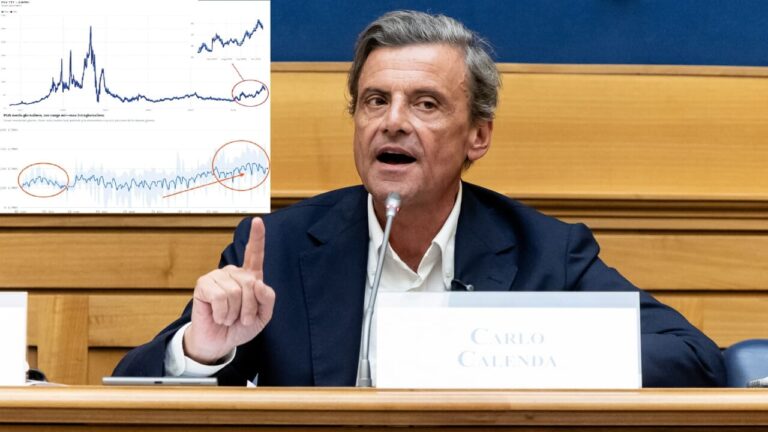
The graph contained in the Arera document shows that, in the first nine months of 2026, the average price of electricity in the hours in which gas plants were marginal was 141.9 euros per megawatt hour. When the modulated hydroelectric plants set the price, the average value rose to 175.2 euros. For pumped systems it reached 177.1 euros.
What Minister Fratin says and what happens now
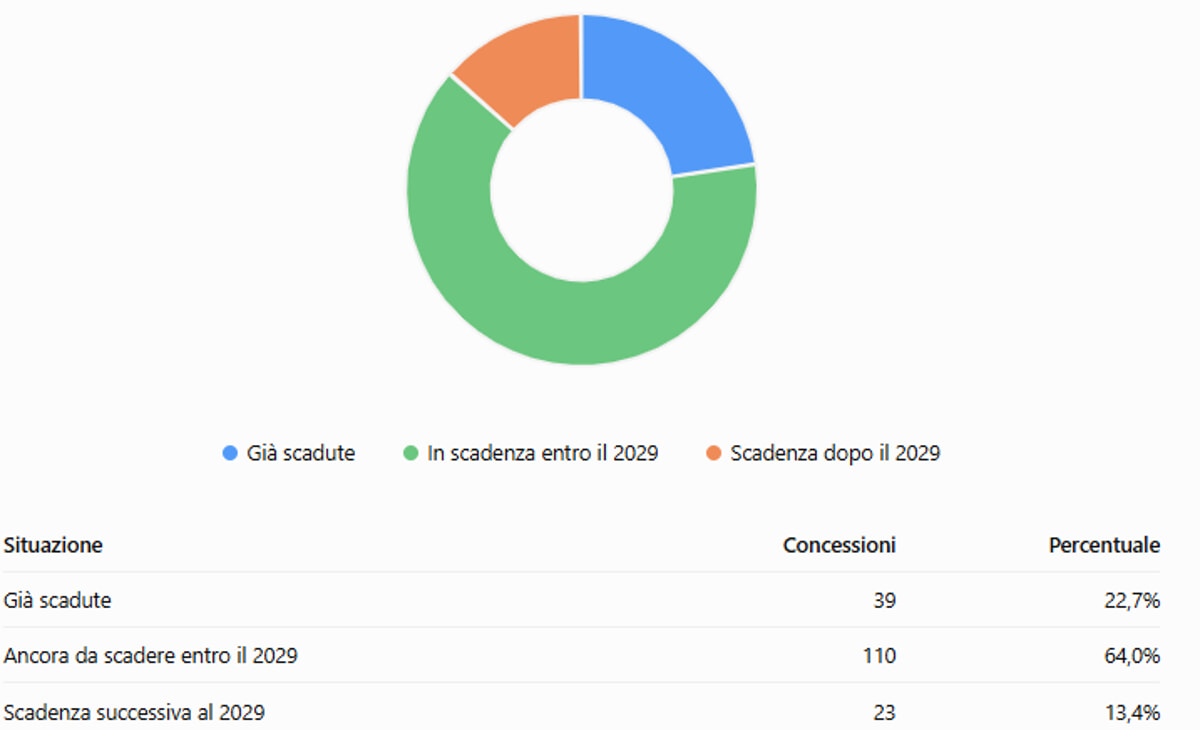
Minister Gilberto Pichetto Fratin responded by underlining that it is “essential to have suitable tools to distinguish legitimate price signals from any abusive behavior by operators”. Then there is the issue of hydroelectric concessions, 80 percent of which are expiring and need to be put up for tender, as required by European regulations.
The Authority believes that, in the medium to long term, the structural reduction in prices must pass above all through a greater diffusion of renewables and storage systems, capable of reducing the use of gas generation at times of greatest demand. But checks will be needed in the short term. What is certain is the increase in the cost of energy for consumers and businesses: something that needs no investigation.