

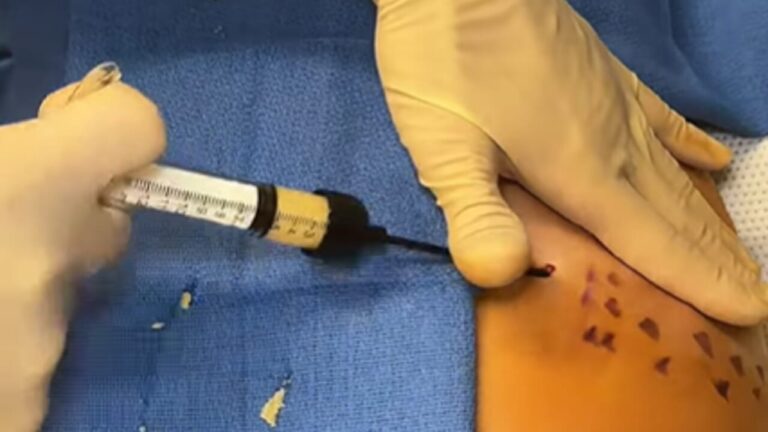
Injectable human fat to firm, revive, lift and round the body wherever needed. It seems to be very effective, but it has a skeleton in the closet: it comes from deceased donors. Or corpses. It is a quick and less invasive alternative to more traditional plastic surgery techniques. And it is so tempting that many, at least in America, are ready to turn a blind eye to its origin: according to the manufacturing company, Tiger Aesthetics, since May last year – when the product called alloClae became available to the general public – more than two thousand patients have undergone the treatment. A success largely linked to that of another novelty of recent years: the new anti-obesity drugs based on Glp-1 receptor agonists, so effective that it often leaves patients with sagging skin and areas such as breasts, face and buttocks “empty” of fat.
The technology
The idea of using fat to fill areas of the body that need more volume is not new. It is routinely done, for example, using a procedure known as “autologous lipofilling”, which consists of the removal and purification of the patient’s fat, and the subsequent transfer of the adipose tissue to the area to be reconstructed. This technique is extremely effective for patients requiring large volume interventions. But it requires hospitalization, is invasive and not suitable for very thin people, who do not have enough excess fat for sampling.
The alternative is allochthonous transplant, i.e. from a donor. The first to develop it were researchers from the NGO MTF Biologics, who for almost a decade have been offering syringes containing extracellular matrix – the scaffolding of macromolecules that provide support for cell growth – taken from adipose tissues of deceased donors. The product, marketed as Renuva, is designed to stimulate the growth of fat tissue in the areas where it is injected, and therefore does not provide instant visible effects. The situation is different with the latest arrival, alloClae: the treatment contains a mix of fat (60 percent) and extracellular matrix (40 percent), and therefore acts both as a scaffold to encourage the growth of new adipose tissue and as an immediate source of lipid material with which to give volume to the desired area. Precisely for this reason, it is rapidly spreading as a “ready-to-use” alternative.
How alloClae works
The new filler is composed of decellularized human adipose tissue, obtained from deceased donors who have chosen to dedicate their bodies to research or donation of biological tissues. The manufacturing process involves the complete removal of the donor’s cellular components and genetic material, leaving a sterile, purified lipid matrix that acts as a three-dimensional scaffold once injected into the recipient. According to the surgeons who use it, the procedure takes less than an hour and does not require general anesthesia. The product is inoculated into the areas to which volume is desired, and once inserted into the tissues the decellularized alloClae matrix acts as a filler and at the same time stimulates the patient’s body to colonize the biological scaffold with new adipose cells and blood vessels. In this way, it promises more stable and long-lasting results than synthetic fillers based on hyaluronic acid, while reducing the risk of rejection thanks to the complete removal of donor cells during the purification phase.
The Ozempic effect and ethical issues
As we were saying, the commercial rise of alloClae is closely intertwined with the spread of new anti-obesity treatments with Glp-1 analogues, which, according to a recent Gallup poll, are now used by over 10 percent of American adults. Caroline Van Hove, president of Tiger Aesthetics, also admitted this when interviewed by CNN: “What many patients discover is that after losing a substantial amount of weight they also find themselves with areas of the body that, in their opinion, define their femininity, and which completely lack volume.”
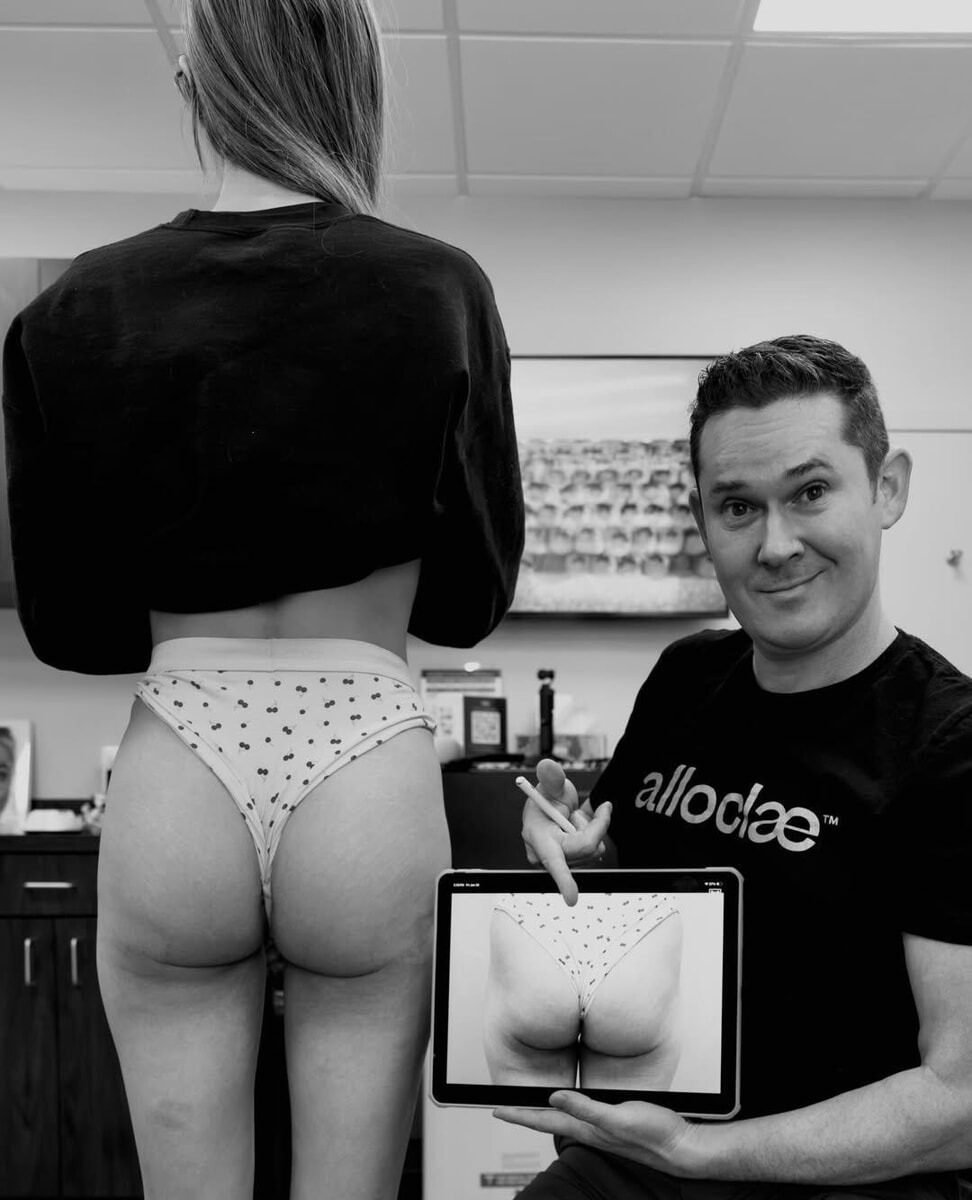
Commercial interest, therefore, is not lacking. Like the doubts: clinical, because the procedure, although considered safe by many specialists, is not without side effects, even potentially serious ones, such as necrosis of the adipose tissue once injected; and above all ethical, given that the material used by Tiger Aesthetics comes from altruistic donations, that is, from people who decide to leave their bodies to science upon death, without any type of remuneration. The form certifying consent to the donation of the entire body (and not just the organs, in which case the body is returned for burial) requires authorization for a “for profit” use of the tissues to be possible, but does not specify what this will be. And for many bioethics experts this is not enough to justify a business which, in most cases, is purely aesthetic in nature and has little to do with health.
In Italy, for the moment, the problem does not arise: European regulations regarding the use of tissues from deceased donors are much more rigid, and currently a product like alloClae is not approved, nor will it most likely be so at least in the near future.
Charlize Theron, the most criticized body on the Odyssey red carpet and a silence worth a thousand words