

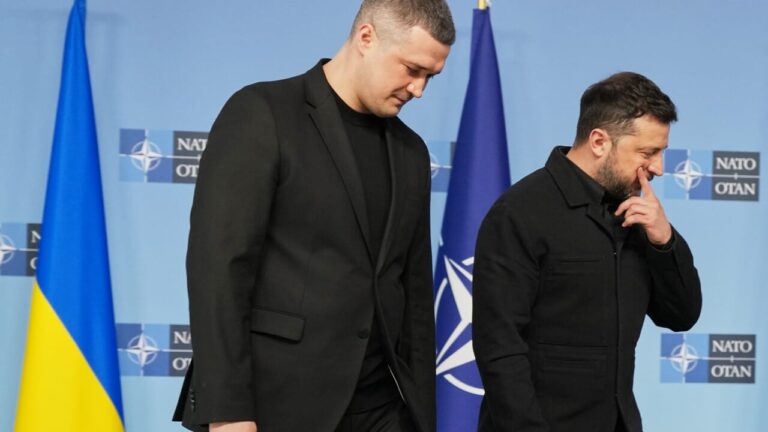
Ukraine changes government in the midst of the war, but what shakes Kiev is not so much the arrival of a new prime minister, Serhii Koretskyi, – until today CEO of the state energy company Naftogaz and now the third prime minister since the beginning of the Russian invasion – but rather the controversial exit of the Defense Minister, Mykhailo Fedorov. In the space of a few hours, Ukraine witnessed demonstrations in dozens of cities, the resignation of a senior Air Force officer and the departure from the ministry of some of the main drone and electronic warfare experts called by the minister. But let’s go in order.
The appointment of Serhii Koretskyi
The government reshuffle had been indicated directly by President Volodymyr Zelensky, who had presented Koretskyi as the man best prepared to face one of the emergencies of the coming months: guaranteeing energy, gas and heating to the population during another winter marked by Russian bombing of power plants and infrastructure. The handover at Government Palace, however, was overshadowed by the removal of Fedorov, thirty-five years old and former Minister of Digital Transformation, who remained in Defense for just six months. While deputies voted for the new prime minister, over a thousand people gathered in front of the presidential office in Kiev. Other demonstrations were organized in Dnipro, Odesa and in several Ukrainian cities: protests against political power that are very rare since the beginning of the war in a country subjected to martial law.
Fedorov had built his popularity by accelerating the use of drones, digitizing procedures and purchasing, cutting some bureaucracy and trying to make military procurement more transparent. During his tenure, Ukraine increased long-range attacks against Russian refineries, warehouses and logistics links. The former minister also claimed new contracts for Patriot systems, expanded drone production and tests of ballistic missiles developed in Ukraine.
Not all promises had been kept. Fedorov admitted that he had failed to complete the transformation of the ministry according to NATO standards, to transfer all purchases to competitive tenders and to create a full culture of responsibility. He had also been criticized for the slow pace of recruitment reforms, while the army continues to suffer from a serious shortage of men.
The showdown with General Syrskyi
The latest news released by the Ukrainian media confirms that behind Fedorov’s failure to be reappointed there is above all a clash over the direction of the war. During a briefing held on July 16, the former minister revealed that he had proposed “radical decisions” to Zelensky at the top of the Armed Forces, including the replacement of Commander-in-Chief Oleksandr Syrskyi and Chief of Staff Andrii Hnatov. But the president reportedly rejected the request.
It has been a great honor to serve the Ukrainian people as the Minister of Defense.
Here is what our team managed to achieve:
1. Disabled Starlink access for Russian forces.
2. Took over a Ministry of Defense with zero budget, took a risk, reallocated funds from payroll from… pic.twitter.com/18B5QQaeqL
— Mykhailo Fedorov (@FedorovMykhailo) July 15, 2026
Fedorov maintained that he accepted the decision and declared himself ready to work with Syrskyi. From that moment, according to his reconstruction, the ministry’s proposals were systematically hindered and numerous documents remained unsigned. The former minister denied having posed an ultimatum of the “either me or Syrskyi” type, instead accusing the general of having transformed a discussion on military strategy into a power struggle.
The contrast concerns two different army models. Fedorov focused on drones, collection of data from the field, autonomy of commanders, evaluation of the effectiveness of units and rapid replacement of technologies that have become obsolete. Syrskyi advocates a more centralized structure, in which the military command retains control over operations and the distribution of resources.
The successor is not yet there
The candidate indicated to replace Fedorov is Ihor Klymenko, currently Minister of the Interior and former head of the national police. Zelensky explained that he considered it suitable above all to address the mobilization crisis, coordinate the army with the government and put an end to the most disputed episodes of forced recruitment.
After the removal, Fedorov refused the offer to become an advisor to the president. Speaking to journalists, he also confirmed the existence of a clash with Syrskyi, accusing the commander of the armed forces of having blocked various initiatives of the Ministry of Defense. The minister would have antagonized sectors of the state and military apparatus after trying to reorganize procurement and interrupt opaque spending circuits.
While Ukraine remains formally without a Defense Minister, the first concrete consequence of Fedorov’s ouster came from the top of the Air Force. Colonel Pavlo Yelizarov, deputy commander of the air force and one of the main perpetrators of the Ukrainian drone war, announced his resignation, calling the removal of the minister a serious damage to the country’s defense. Yelizarov, known by the nom de guerre “Lasar”, was appointed by Fedorov in January with the task of developing a new air defense based on interceptor drones, mobile units and technologies less expensive than traditional anti-aircraft missiles. He previously commanded the Lasar’s Group, considered one of the most effective Ukrainian units in precision attacks against Russian vehicles, artillery and logistics systems.
The domino effect in drone ministry
Fedorov’s departure has already dispersed part of the network of experts he had built around the ministry. Serhii Sternenko, activist and head of one of the largest voluntary organizations for the supply of drones, announced that he is no longer an advisor to the minister. Serhii “Flash” Beskrestnov, a communications and electronic warfare specialist, did the same. Sternenko was working on defining new tenders for FPV drones and developing the necessary infrastructure for deeper strikes.
The problem is not just the loss of a few people. In electronic warfare, a drone can become obsolete in a matter of months. Frequencies, guidance systems, interference protection and warhead capabilities are continually modified by both armies. Fedorov had tried to build a direct link between those who fight, those who raise funds, those who develop technologies and those who sign public contracts. The objective was to evaluate which tools actually worked at the front, reward the most effective departments and producers, quickly update tenders and reduce intermediaries. Dissolving this network can lengthen the time it takes to turn an effective prototype into a widely purchased product.
The political risk for Zelensky
Fedorov was not just a minister. He was one of the last remaining members of the original team with which Zelensky had won the presidency in 2019 and had become the most recognizable face of the digital modernization of the state. Dismissing him after six months at Defense, without having a successor ready and without an initial public explanation, allowed his opponents to present the decision as the victory of the more conservative military apparatus over the reformers.
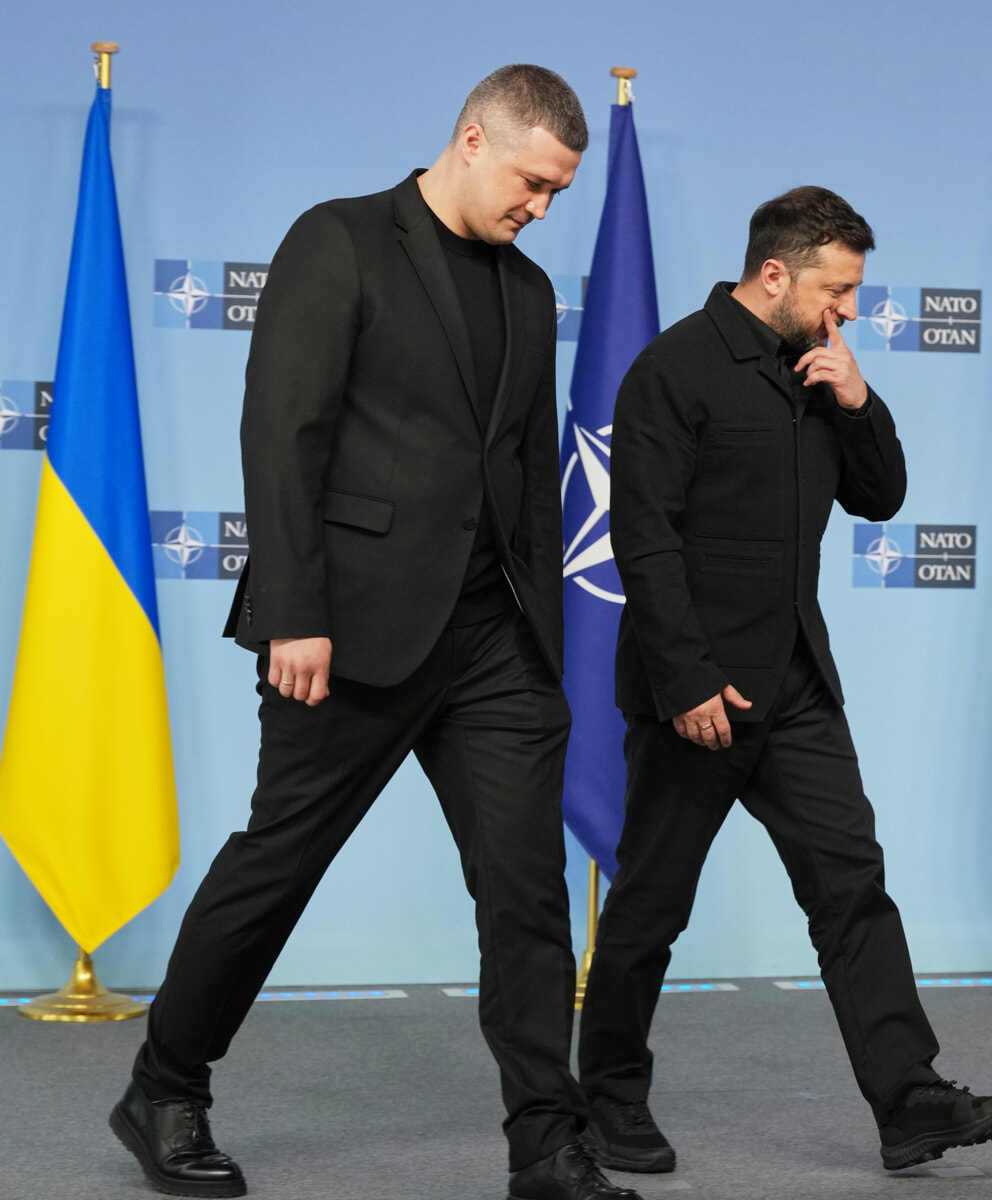
Zelensky wanted to end the internal war between the ministry and the General Staff. For the moment it has had the opposite effect: the conflict has become public, reached the streets and entered directly into the chain of command. The consequences of the removal will therefore depend on the decisions of the next few days. The greatest damage would come not from the replacement of a single person, but from the simultaneous disruption of programs, contracts and networks of expertise.