

Russian oil still lives in Europe, but not along all the old routes. Crude oil returns to the heart of Central Europe with the reactivation of the southern branch of the Druzhba, the “friendship pipeline”, which crosses Ukraine and feeds Hungary and Slovakia. In the meantime, however, a new front of disruption is opening up on the northern branch of the infrastructure, affecting Germany and, consequently, also the fuel for airline flights: from May 1st, Kazakh crude will no longer arrive at Pck Schwedt, the most important German refinery. But the Kremlin decided it.
How much Russian oil is arriving in Europe
The European Union has banned the import of much Russian oil and related products by sea, but has maintained a temporary exemption for crude imported by pipeline in countries that had no immediate alternatives, such as Hungary and Slovakia.
Before the sanctions, Europe was heavily dependent on Russia not only for crude oil, but for already refined products, including middle distillates. To replace them, the EU has had to turn to the Middle East and Asia, but the war in Iran has blocked routes passing through the Strait of Hormuz and the entire chain is experiencing supply disruptions and shipping delays. The shock will still last: Goldman Sachs analysts have updated their forecasts for the Brent and WTI indices in the fourth quarter of 2026 upwards to 90 and 83 dollars, compared to the previous 80 and 75 and expect a normalization of Gulf exports by the end of June, compared to mid-May indicated previously.
Thus, the southern branch of the Druzhba pipeline can return to serving Budapest and Bratislava. It was built in the 1950s during the Soviet era and passes through Ukraine with the record of being the longest in the world. After the restart, Hungary lifted its veto on the 90 billion financial package intended for Kiev, allowing it to be approved, along with new sanctions against Russia. They will reach around 200,000 barrels per day, for two countries almost entirely dependent on Russian oil.
The stop to Germany
The northern branch of the Druzhba passes through Belarus and reaches Poland and Germany. It is through here that Kazakhstan’s oil shares directed to Germany pass, equal to approximately 2.14 million tons per year, increased by 44 percent in 2025 to compensate for the farewell to Moscow’s crude oil.
Formally it is Kazakh oil, but it was the Russian deputy prime minister himself, Alexander Novak, who announced it for “technical” reasons, declaring that oil volumes “will be redirected to other available logistical routes”. The Kazakh Energy Minister, Erlan Akkenzhenov, also confirmed the Kremlin’s decision, as well as Rosneft Deutschland, the German branch of the Russian state oil company Rosneft, which communicated that, “on the indication of the Russian Ministry of Energy” from May 1, 2026, the transit of Kazakh crude oil through the Druzhba pipeline will no longer be allowed.
Crude oil supplied the most important German refinery, Schwedt, still 54 percent owned by the Russian Rosneft. In 2025 the plant had received 2.146 million tonnes of Kazakh crude through the corridor, plus another 730 thousand tonnes in the first quarter of 2026, equal to approximately 17 percent of the refinery’s needs.
What changes without Kazakh crude at the German refinery
The German Ministry of Economy has indicated the ports of Gdansk and Rostock as replacement options: the Merz government has announced that it has started talks with Poland to increase crude oil supplies through the port of Gdansk, an alternative already being evaluated to partially replace the lost volumes.
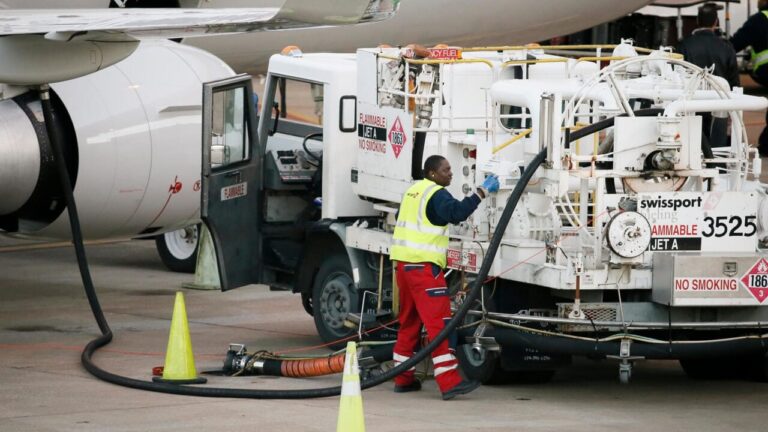
This is not good news: the refinery supplies 90 percent of the Berlin region’s fuel, including the vital supply of jet fuel for the airport. From a chemical and economic point of view, when crude oil is scarce, refineries are faced with choosing what to focus on in the “middle distillates” range. An IATA report explains that faced with tight markets, refiners systematically choose to prioritize diesel production over jet fuel, due to wider profit margins and automotive and industrial demand.
The effects on jet fuel and flights in Europe
We are already noticing the cascade effects. Europe depends relatively little on the Middle East for crude oil, but much more for distillates, i.e. mainly diesel and jet fuel. First due to the war and tensions over Hormuz, then due to the closure of the “side door” which allowed the arrival in Europe of fuels refined in third countries starting from Russian crude oil. In fact, from 21 January 2026, European restrictions on refined products obtained from Russian oil in third countries came into force, a measure that mainly affects the circuits that had involved refineries in countries such as India and Turkey.
Jet fuel crisis: refund rules and the risk of “ghost flights”
Fears about fuel for flights also come from the institutions: the director of the International Energy Agency, Fatih Birol, told theAssociated Press that Europe had six weeks of “maybe” remaining supplies of jet fuel. Second ReutersGermany is not yet reporting any immediate problems, but has strengthened its monitoring of the situation.
And the airlines are moving: Lufthansa has formalized the cancellation of 20,000 flights between May and October, in a move aimed at saving around 40,000 tonnes of fuel, the Dutch company KLM has reduced flights from Amsterdam, SAS has canceled 1,000 departures in April alone, Delta Air Lines will reduce its route network by 3.5 percent to save a billion dollars, United has announced a 5 percent cut in domestic flights considered “not profitable” and reschedulings have also been initiated by Cathay Pacific, Air Asia X, Air New Zealand, Chinese carriers, Qantas. The price has more than doubled compared to pre-war levels.