

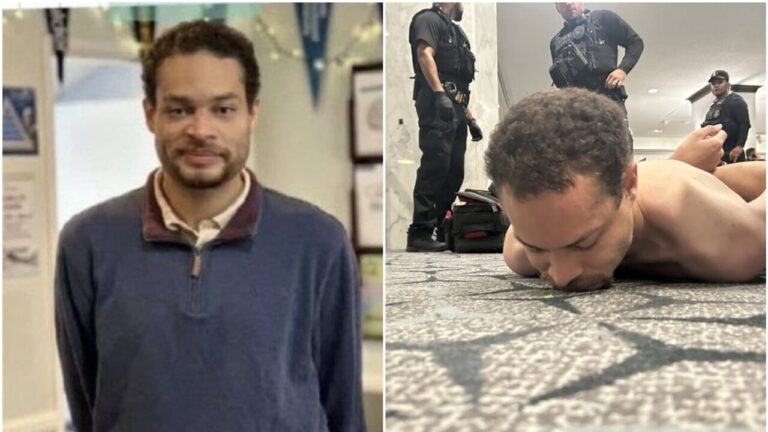
Not just gunshots and fear. What really shook Washington, after the shooting at the White House correspondents’ gala, was the content of the poster left by the suspect. A long text, lucid in some passages and delirious in others, which offers a disturbing insight into the motivations behind what President Donald Trump has called “the third attack” against him.
Interviewed by Fox News, Trump spoke bluntly: “He’s disturbed. When you read his manifesto, you see that he hates Christians.” The man He is an engineer by trainingworks as a teacher and is also a video game developer in Southern California.
Apologies before the attack
The document, attributed to 31-year-old Cole Tomas Allen and published by the New York Post, opens with a series of apologies that are striking in tone and structure.
“I may have surprised a lot of people today… I apologize to my parents… to my colleagues… to all the people I put in danger simply by being nearby.”
An almost paradoxical premise: man recognizes the damage he is about to cause, but considers it inevitable. “I don’t expect forgiveness,” he writes, “but if I had seen another way to get there, I would have done it.”
The attack against Trump as a “due act”
The text then changes register. The apology leaves room for a direct and violent accusation against the president: “I am no longer willing to allow a pedophile, rapist and traitor to stain my hands with his crimes.”
Words which, according to investigators cited by CBS News, confirm a radicalization that has developed over time, also fueled by anti-Trump content spread on social media.
An extreme vision of political responsibility emerges in the manifesto: the actions of the representatives, he writes, “reflect on me”, transforming the attack into a sort of “due act”.
The bomber’s “rules of engagement”.
Even more disturbing is the operational part of the document. Allen precisely lists the targets and methods of action, as in a military plan.
“Administration officials: they are targets… Secret Service: targets only if necessary… Hotel employees: not targets at all.”
The man claims to want to limit collateral victims, explaining that he chose “less penetrating” ammunition to reduce the risks for those who were not involved. But the next passage contradicts this premise: “If it were absolutely necessary, I would be willing to examine almost everyone present… assuming that most chose to participate… and are therefore complicit.” A sentence that marks the breaking point: anyone present can become a target.
A plan prepared over time
The authorities have reconstructed a path of progressive radicalization. The 31-year-old legally owned two guns and trained regularly at the range. He had also shared his writings with family members before the attack, prompting one of them to alert the police.
According to what emerged, he frequented activist circles and groups and had participated in political protests in the United States.
The episode reignites the debate on the security of institutional events and the growing political polarization in the United States. The poster, even more than the shooting, shows the leap in quality of a violence that is not just impulsive. A narrative that risks further fueling tensions in a climate already marked by suspicions, conspiracies and radicalization.