

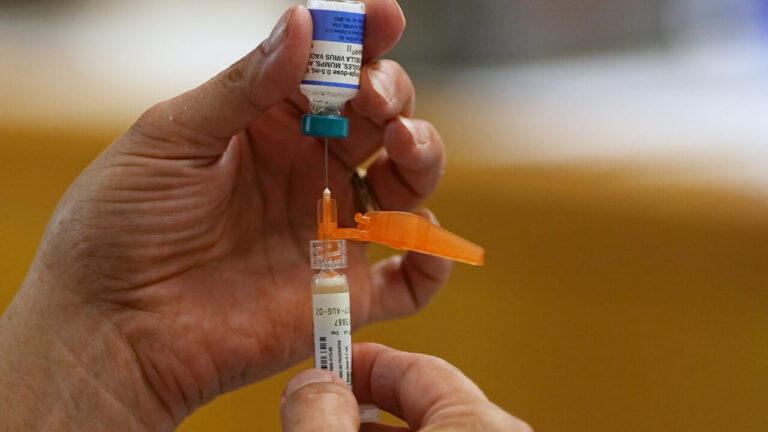
The days are getting shorter, the cold is being felt, the hours closed in the office or on crowded trains and buses are increasing, and the result is that respiratory viruses will once again have ideal terrain to circulate. Against the most well-known and feared, the flu, we have an effective prevention tool: the vaccine. The Ministry of Health recommends it starting from six months of age, recommending it in particular for the most at-risk categories: elderly people, children, pregnant women and people with chronic diseases. For those who are not yet equipped, don’t worry: there is still time to protect yourself before the most acute phase of the seasonal epidemic. This year there is also some small news, regarding the recommended formulations and the incoming virus. Here’s everything you need to know about the 2026/2027 vaccination campaign.
The season is about to take off
For now, it is mainly colds and other respiratory viruses that are circulating, but the numbers show that the situation is about to change. The RespiVirNet bulletin of the Higher Institute of Health (ISS), published on 13 November, estimates 478,371 acute respiratory infections in the week from 2 to 8 November, up compared to the 442,752 of the previous week. The incidence is 8.51 cases per thousand assisted: above the seasonal baseline threshold (8.01) and in line with the same period last year.
The growth in cases indicates that the winter epidemic is slowly arriving. But the data must be read with caution: we are talking about respiratory infections in general, not just influenza, and in the samples analyzed in the laboratory the majority of positives are still due to rhinoviruses and parainfluenza viruses. However, the ISS expects an increase in cases of influenza, respiratory syncytial virus and Covid in the coming weeks. To understand when the peak will arrive we can look at last winter: the incidence of respiratory infections reached the maximum in the 51st week, in mid-December 2025, with 17.6 cases per thousand assisted and with the H3N2 virus which was the protagonist throughout Europe. The calendar therefore advises you not to wait: protection is not immediate, and there is little time left to be ready.
Over 60: the novelty of enhanced vaccines
In terms of prevention, this year’s novelty concerns enhanced vaccines, aimed at the elderly population. The circular from the Ministry of Health of 23 June has in fact lowered from 65 to 60 the threshold from which the two available vaccines are recommended: the adjuvanted one (which contains an additive that strengthens and lengthens the immune response, authorized for those over 50) and the high-dose one (containing a greater quantity of antigen).
The reason for choosing enhanced vaccines is in biology: with age the immune system responds less well to the standard vaccine, a phenomenon called immunosenescence, and enhanced vaccines serve to compensate for this reduced effectiveness, especially in terms of protection from severe forms of the disease. Enhanced vaccines are offered free of charge to anyone over 60. But for now, despite the free offer, the crux of coverage remains: in the 2025/26 season, 49.81 percent of over 65s were vaccinated, a figure lower than the 52.5 percent of the previous year, and far from the minimum objective of 75 percent set by the National Vaccine Prevention Plan. A practical clarification: the Regions choose by competition which products to purchase, so not all authorized vaccines are available everywhere. Your family doctor or vaccination center will be able to confirm which one is in use in your area.
Chronic diseases and frailty
Regardless of age, the vaccine is recommended and free for those with pathologies that increase the risk of complications: chronic respiratory diseases (severe asthma, COPD, cystic fibrosis), heart disease, diabetes and other metabolic diseases, obesity with a body mass index above 30, chronic renal failure, liver disease, tumors including those in the follow-up phase, immunodeficiencies, inflammatory intestinal diseases and other conditions (listed in the Ministry’s circular) that lead to a situation of fragility. The free offer also includes people hospitalized in long-term care facilities and family members of frail patients, regardless of their vaccination status.
Vaccination is also recommended and free for women in any trimester of pregnancy and in the period following childbirth: the World Health Organization considers pregnant women to be the most important risk group, because the mother’s vaccination also extends protection to the newborn in the first six months of life, when it cannot yet be vaccinated.
Children: from 6 months to 6 years priority
The little ones are the first to get infected and among the main drivers of the spread of the flu: for this reason the circular reiterates the free offer to children between 6 months and 6 years. For children there are two options: intramuscular injection (from 6 months) or nasal spray with live attenuated virus, authorized between 2 and 18 years of age. In pediatric age, the flu vaccine is free between six months and six years, but the Regions can extend the reimbursement at their discretion.
After having covered the priority categories, in fact, the Regions can offer it free of charge to anyone who requests it, with rules that change from territory to territory. For health and social-health workers, police forces, firefighters, blood donors, those who work in contact with animals that can carry influenza viruses (farmers, veterinarians, butchers) vaccination is recommended and offered free of charge: it serves to avoid transmitting the virus to those who are fragile and to guarantee the continuity of essential services.
When to do it and how effective is it?
The Ministry’s circular sets the start of the vaccination campaign for the beginning of October, and provides that the offer for those who are entitled to it is valid at any time of the season, even late and also for those who have already had a flu-like episode (which could have been caused by another virus). However, it is recommended to undergo the vaccine as soon as possible: the immune response takes about two weeks to fully develop, and getting vaccinated now therefore means being covered before the holidays, when the circulation of viruses usually intensifies.
Regarding effectiveness, no flu vaccine eliminates risk, and actual protection changes every year based on how much the strains in circulation resemble those present in the vaccine. Last winter, dominated by a mutated variant of H3N2, a European study estimated low to moderate effectiveness, for example. Despite this, vaccination would have avoided between a third and half of the serious outcomes of the disease, such as visits and hospitalizations, and is therefore confirmed as an essential prevention device even in years of poor effectiveness.