
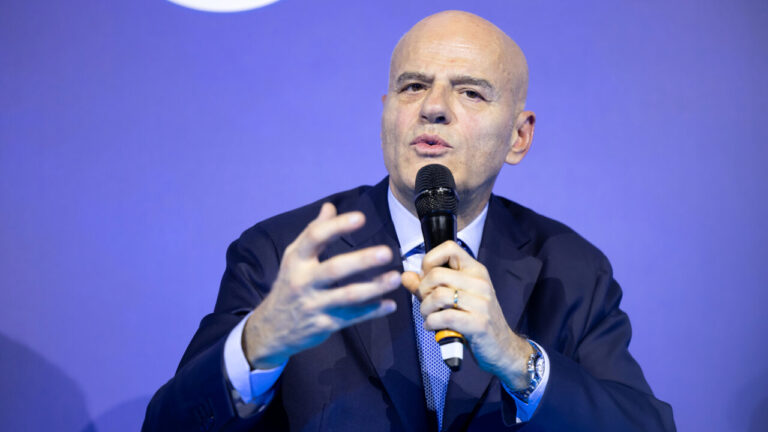
The total stop to Russian gas in the EU from January 1st “will be a problem for supplies and prices, because supply will be drastically reduced”. Words from Eni’s CEO, Claudio Descalzi, who spoke on the sidelines of FI’s General States of Energy. “It is unlikely that other areas, unless Qatar can reopen completely, will be able to make a contribution, so there will be less supply and prices will be higher. We must also consider that European stocks, not for Italy but for all of Europe, are already very low, they started low and are low”, added Descalzi.
The stop to Russian gas
The European ban on imports of Russian gas will not come into force in January, but will proceed in phases. The stop on long-term contracts for liquefied natural gas (LNG) comes into force on 1 January 2027, while the stop on pipeline gas is expected by 30 September 2027.
The stop is part of Europe’s strategy to no longer depend on Moscow on the energy front and therefore not be “blackmailable”.
The problems of Europe without Russian gas
The cut concerns approximately 20 billion cubic meters of liquefied natural gas that the European Union continued to purchase from Russia. A hole of this magnitude, according to Eni’s number one, is not easily compensated for in the short term and inevitably pushes gas prices upwards.
“We must also consider – according to Descalzi – that European stocks, not for Italy but for all of Europe, are already very low, while for the winter it will depend a lot on the climate: if it is harsh, 20 billion cubic meters per year disappearing from Europe without the possibility of recovery could create problems”.
The price cap on fuel
Descalzi then confirmed Eni’s intention to extend the fuel cap until the end of the year. “There is this intention – he said -. Now we are re-analysing the system, I really think that by today there will be some possible news, which I won’t announce to you yet, but it is like this”.