

The world will exceed the threshold of 1.5 degrees of global warming compared to the pre-industrial era. It is no longer realistic to think of avoiding it: the challenge now is to ensure that the exceedance is as short and contained as possible and to subsequently be able to bring temperatures back below that limit.
This is the change of scenario sanctioned by the United Nations Environment Program (UNEP) in the new “Limiting Overshoot” report, published on 2 September. According to the UN agency, with current policies and trajectories, exceeding 1.5 °C is now considered inevitable and could occur permanently within a few years. “The challenge has moved from avoiding overshoot to managing overshoot,” is the central message of the report.
“It’s a reality check. We have to live with this warmer world, but there is still a lot we can do to limit warming,” explained Richard Betts, a climate scientist at the University of Exeter and one of the authors of the report.
The 1.5 degree threshold represents the most ambitious reference of the 2015 Paris Agreement. Exceeding it progressively increases the risks: more intense extreme weather events, loss of ecosystems, damage to food security and water resources, rising sea levels and a greater probability of reaching climate tipping points. According to UNEP, every fraction of a degree and every year spent above 1.5°C increases these dangers.
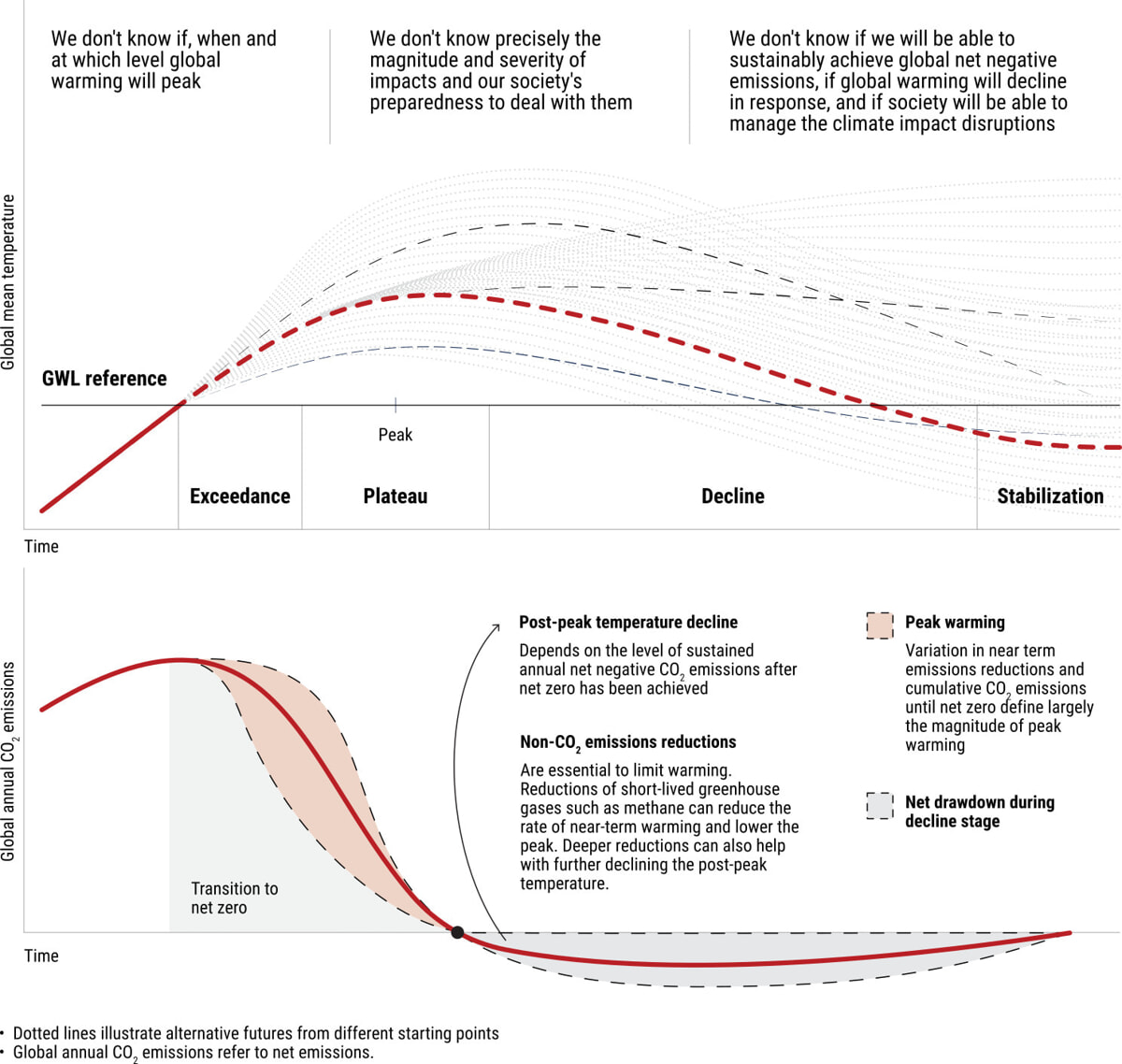
Perhaps the most significant figure is that even in the most favorable scenario examined by the UN, warming would reach a peak of around 1.8°C before eventually starting to decline. The indicated strategy is defined as “overshoot, peak and decline”: exceeding the threshold, reaching a peak and subsequent decrease in temperatures.
To achieve this, it will not be enough to adapt to a warmer planet. Strong and immediate reductions in greenhouse gas emissions will be needed, until net zero emissions are achieved, followed by a phase in which more CO2 must be removed from the atmosphere than is emitted. However, UNEP underlines that the removal of carbon dioxide cannot replace cutting emissions.
The report therefore marks above all a change in climate policy. “The rules of the game are changing,” explained Debra Roberts, of the University of KwaZulu-Natal. According to the scientist, we need to rethink climate governance for a world that will go through a phase of exceeding the threshold: “None of our plans are currently set up for this.”
However, this does not mean that 1.5 °C has become irrelevant. On the contrary. According to UNEP, exceeding that threshold must not transform it into a new acceptable level of warming. The objective becomes to limit the peak and duration of the exceedance as much as possible, because the closer the planet gets to 2 degrees, the more difficult it will be – and perhaps in some cases impossible – to erase its consequences. As the report summarizes: Overshoot is not a reason to give up, but to accelerate action.
But what should we expect? Even if we managed to bring the thermometer back below 1.5 degrees, we could not erase what has happened in the meantime: higher seas, disappeared glaciers, extinct species, relocated populations and destroyed infrastructures would remain part of the new climate world.
The phenomenon of hysteresis
The UN report shows how, during the phase in which temperatures fall again, the level of damage could be greater than that experienced during the rise to the same temperature also because the effects can arrive quickly but disappear very slowly.
The main risks? Extreme heat, fires, droughts and floods. Exceptional heat waves become more frequent and long-lasting; it also increases the possibility that multiple extreme events will occur simultaneously, for example heat and drought or heat and floods. Around half of the world’s population has already experienced at least 30 days of extreme heat between May 2024 and May 2025.
Furthermore, glaciers could lose over a quarter of their mass by 2100 even in relatively low scenarios. The problem is that the sea would continue to rise for centuries or millennia even if global temperatures subsequently decreased. The report estimates, based on the studies cited, that every hundred years spent above 1.5°C could add about 40 centimeters to “committed” sea rise by 2300, compared to a scenario without overshoot.
The report in particular explicitly cites as “point of no return” risks the melting of the Greenland ice sheet and that of West Antarctica, but also the weakening of the Atlantic ocean circulation and the desertification of the Amazon forest. Exceeding certain thresholds could trigger transformations that continue autonomously or are irreversible even if the planet subsequently cools.
Coral reefs are among the most exposed systems; the report notes that their thermal limit is already near or below current warming levels. Extinctions, geographical movements of species, loss of polar and alpine habitats and permanent changes in the composition of forests are also increasing. An extinct species, the report’s reasoning implicitly emphasizes, does not return when the temperature drops
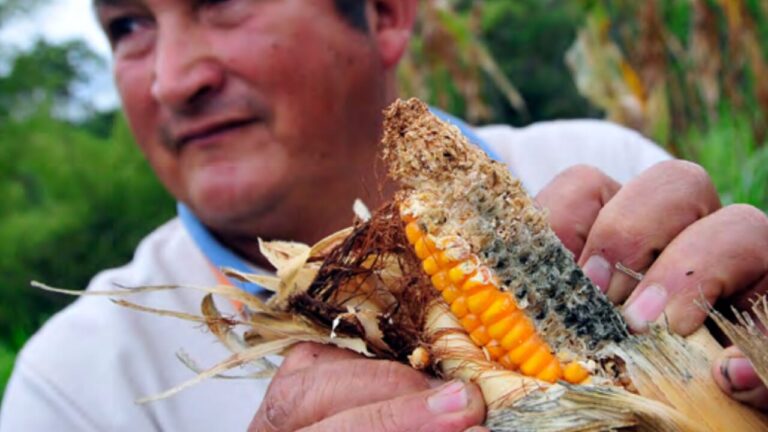
Instead, our society will see a possible reduction in global food production of up to 14% by 2050. Heat, drought, altered precipitation and loss of glaciers can reduce crop yields and water availability. Deaths from heat, malnutrition, diseases related to diet quality, mental stress and pressure on health systems are increasing. The geographic distribution of mosquitoes and other disease vectors is also changing. Alterations to ecosystems can also increase the risk of pathogen spillover. Summer seasons with heat mortality that were considered centennial events in 2000 could become common in a world between +1.5 and +2 °C, in the absence of adaptation.
Longer heat waves, floods, increased demand for electricity for cooling and deterioration of infrastructure will mainly affect coastal cities and poor neighborhoods. Around a billion people already live in informal settlements, often with less protection. For small islands and some coastal cities, the report predicts a loss of habitability even before complete submergence.
Climate change can reduce labor productivity, increase food prices and energy costs, damage property and infrastructure, and increase the cost of public debt. Insurers could withdraw from areas deemed too risky, passing the costs on to families and governments.