

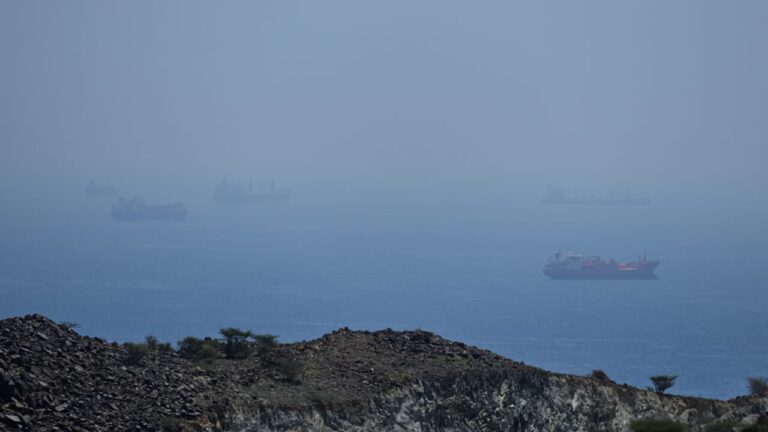
An oil pipeline providing an alternative route to the Strait of Hormuz could come into operation by the end of next year. The United Arab Emirates has announced that the new East-West pipeline from Adnoc, the national oil company, is expected to be completed by the end of 2027. The project is set to double crude oil export capacity from the Fujairah terminal, thus strengthening a major “diversion” from Hormuz, while also protecting future exports from possible blockages.
The alternative route to the Strait of Hormuz
The news was made known at the end of a meeting of the executive committee of the Adnoc board of directors, chaired by the crown prince of Abu Dhabi, Sheikh Khaled bin Mohamed bin Zayed Al Nahyan. During the meeting, Khaled praised Adnoc for its ability to guarantee continuity in energy supplies to local and international customers, while asking to accelerate the construction of the new Habshan-Fujairah oil pipeline, considered strategic to support the growing global demand for energy.
Strategic project
The Executive Committee also reviewed the progress of the Ta’ziz Phase 1 chemical project in Al-Ruwais, Al-Dhafra Region, highlighting its role in the development of new national industrial supply chains. During the meeting, the Crown Prince of Abu Dhabi also reiterated the strategic role of Adnoc’s ‘In-Country Value’ program in supporting the growth of local businesses and industry, calling on the company to prioritize ‘Made in the Emirates’ products in its projects and operational activities.
Doubled capacity
According to the Guardian, the new project is expected to double the capacity of the current Habshan-Fujairah pipeline, which today can transport up to 1.8 million barrels per day to the port of Fujairah on the Gulf of Oman. With the upgrade, capacity could rise to 3.6 million barrels a day, approaching levels in Saudi Arabia, which can export about 5 million barrels a day through the Red Sea. The United Arab Emirates and Saudi Arabia are the only Gulf producers to have pipelines that export crude oil outside the narrow strait that separates Iranian and Omani territory.
The exit from OPEC
The decision to accelerate the construction of a new oil pipeline comes a few weeks after the United Arab Emirates’ exit from OPEC, after 60 years of membership, a clear sign of a break with Saudi Arabia, the de facto leader of the group. Leaving the oil cartel was supposed to allow the United Arab Emirates, the group’s third-largest oil producer, to pump more oil than the group’s future production quotas would allow once the conflict ended and normal trade through the Strait of Hormuz resumed.