

The words about the war being “near the end” lasted less than the smoke from the stricken buildings. As soon as the three-day ceasefire ended, and with it the hopes fueled by Vladimir Putin’s phrases interpreted by some as a sign of opening, Russia unleashed one of the most massive air attacks against Ukraine since the beginning of the large-scale invasion.
For approximately 30 hours, between Wednesday 13 and Thursday 14 May, Russian drones and missiles hit cities, energy infrastructures, ports, railways, residential buildings and other civilian targets in different regions of the country. According to Ukrainian President Volodymyr Zelensky, Moscow has deployed more than 1,560 drones against Ukrainian cities and communities since the start of the new wave of raids. Overnight alone, Russian forces launched over 670 attack drones and 56 missiles, including ballistic, cruise and aeroballistic missiles.
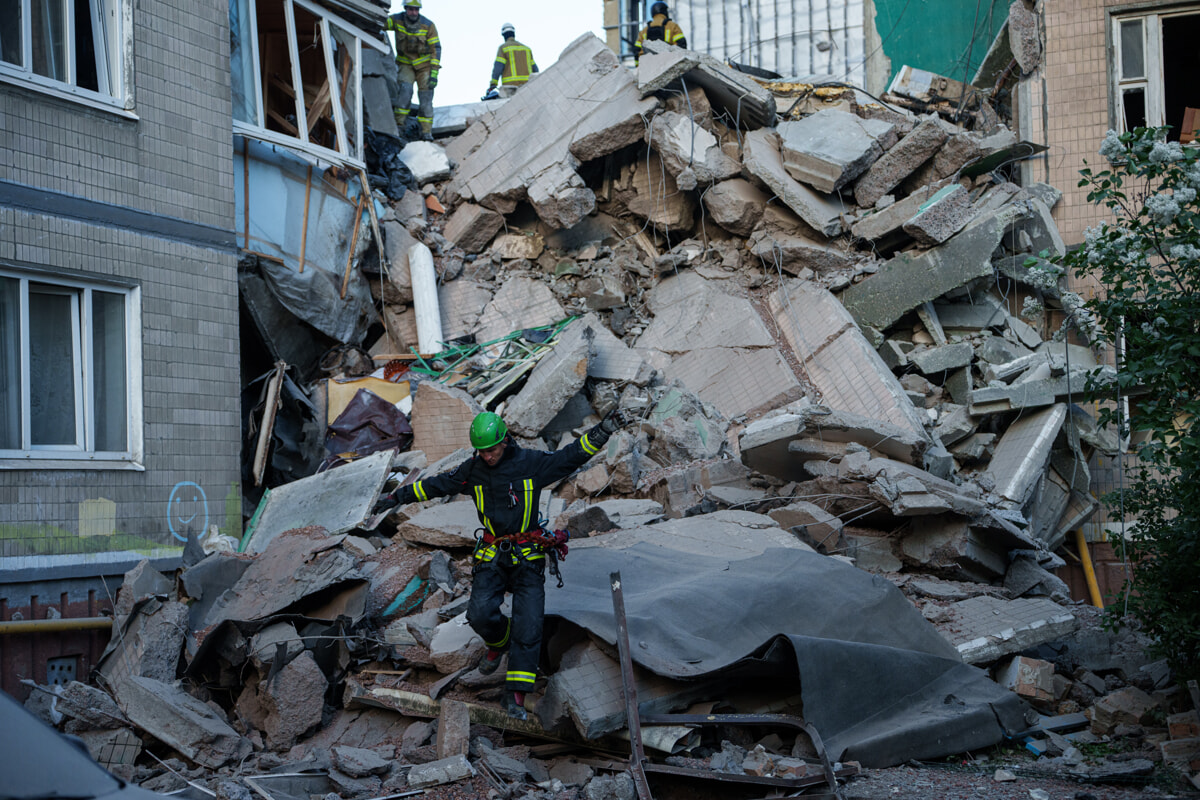
The toll, still provisional, speaks of at least 15 dead and more than one hundred injured, including children. The figures remain updated because in Kiev, where part of a residential building collapsed, rescuers continue to dig through the rubble. According to Ukrainian authorities, around 180 sites were damaged, including more than 50 residential buildings.
Kiev under bombs: a 12-year-old girl dies
The main target of the night attack was Kiev. In the Ukrainian capital there are at least five deaths, including a 12-year-old girl, and dozens injured. About ten people are still missing. The most serious damage was recorded in the Darnytskyi district, where the partial collapse of a nine-story building destroyed several apartments.
Local authorities reported damage in at least twenty places in the city: homes, a school, a veterinary clinic and civil infrastructure. Electricity lines and energy plants were also affected, with disruption to the supply of water and energy in some areas of the capital.
Ukrainian air defense intercepted most of the carriers launched from Moscow, but failed to prevent missiles and drones from reaching several targets. According to the Kiev Air Force, 652 drones and 41 missiles were shot down or neutralized during the night. Fifteen missiles and 23 drones would still have hit 24 locations.
Hit Odessa, Kharkiv and other cities
The capital was not the only target. Raids and damage were also reported in Odessa, Kharkiv, Sumy, Poltava and other regions. In Kharkiv, at least 28 people were injured. In Odessa, buildings and port infrastructure were hit. According to the Ukrainian authorities, the attack had a national dimension, with swarms of drones also directed towards western areas of the country, not far from the borders with NATO member states.
The new offensive came a few hours after the end of the three-day ceasefire announced in recent days. A fragile truce, accompanied from the beginning by mutual accusations of violations, and which did not turn into a real negotiation. Reuters had already reported that Kiev was preparing for new attacks, while Zelensky claimed that Moscow had no intention of ending the war.
The denial of Putin’s words
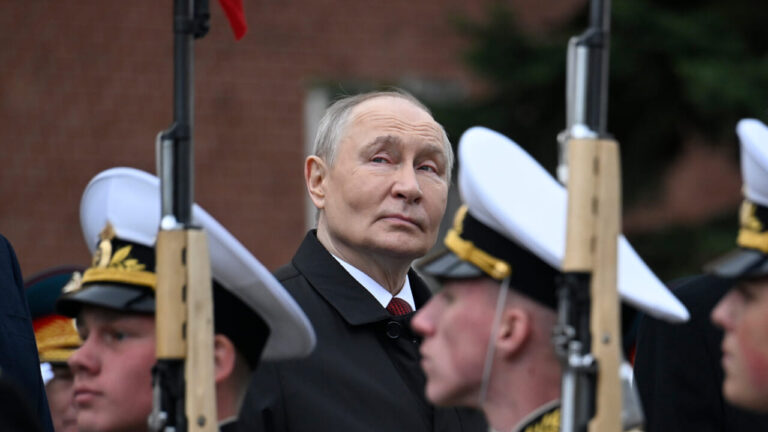
The political fact is clear: the Russian attack comes a few days after Putin’s declarations, who said he believed the conflict was “close to the end”. A phrase welcomed by some as a possible glimmer of hope, but immediately contradicted by the facts. After the truce, the Kremlin did not reduce military pressure: it increased it.
Zelensky accused Moscow of using diplomacy as a cover to continue the war. “These are certainly not the actions of those who believe the war is ending,” the Ukrainian president said, calling for a tougher international response and new sanctions against Russia.
The message coming from Kiev is that the war is not only not over, but is entering a phase in which Russia tries to saturate Ukrainian defenses with increasingly higher numbers of drones and missiles. A strategy designed to wear out the energy network, subdue the civilian population and force Ukraine to consume interceptors and defensive resources.