

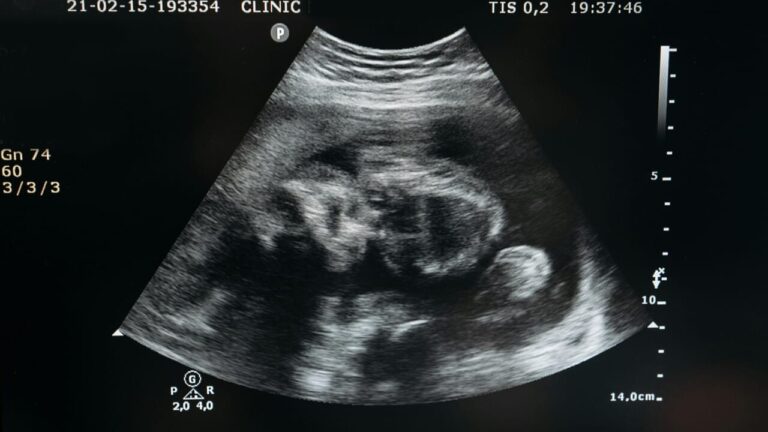
A Canadian couple of two men sued the woman who had carried out a surrogate pregnancy for them, after a malformation of the fetus emerged during gestation. According to the reconstruction initially published by National Postthe pregnant woman had refused to terminate the pregnancy at the twenty-second week, when an ultrasound had detected a cleft lip – commonly called cleft lip – and had also raised the possibility of a possible cleft palate and a slight heart problem. Now the woman claims that the couple is asking her for around 600 thousand Canadian dollars, equivalent to just under 375 thousand euros at the current exchange rate.
The request to terminate the pregnancy
The pregnancy was achieved through in vitro fertilization, using a donated egg and the genetic material of one of the two intended parents. The relations between the parties, initially good, would have deteriorated in the summer of 2024, when the pregnant woman announced the results of the ultrasound.
In the message sent to the woman, reproduced by the Canadian media, the couple referred to a clause in the surrogacy agreement and wrote that they wanted the pregnancy to be terminated. The pregnant woman replied that she would only consider abortion if the tests indicated that the baby would have no real chance of surviving.
Subsequent tests carried out at Mount Sinai Hospital in Toronto ruled out serious pathologies, essentially confirming the presence of the cleft lip. At that point the intended parents also agreed to continue the pregnancy.
Cleft lip and cleft palate are congenital malformations that can cause difficulties in feeding, dental development, hearing and speech. They are generally treated through surgical interventions and multidisciplinary care: according to the US Centers for Disease Control and Prevention, surgical correction of the lip is normally performed within the first year of life, while that of the palate within the first 18 months.
We go to court: the request for 600 thousand dollars
The two men accuse the woman of not having adequately and promptly informed them about the condition of the fetus, of not having followed their instructions on medical decisions, of having endangered the child, of having caused serious emotional harm and of having violated their confidentiality. One of the two claims to have been unable to work for over a year due to the psychological consequences of the affair. The pregnant woman denies all allegations.
Another point of conflict concerns childbirth. The woman wanted to respect the initial plan, which included a home birth assisted by midwives, while the couple asked for the baby to be born in hospital after the prenatal diagnosis. At birth the newborn had had breathing difficulties: the midwives had administered oxygen and called an ambulance to transfer him to hospital. The child, who would be around two years old today, was then handed over to his intended parents.
The dispute over the $10,000 in expenses
After the birth, the pregnant woman had asked the couple for reimbursement of approximately 10 thousand Canadian dollars, including expenses incurred during the pregnancy, transfers, lost days of work and unpaid pension contributions. After not receiving payment, the woman went to small claims court. She was then advised that the agreement included an attempt at arbitration. She was subsequently notified of the civil lawsuit brought by the couple. “I feel used,” she told the Canadian newspaper.
How surrogacy works in Canada
In Canada, childbearing for others is only permitted in an altruistic way. The law prohibits paying compensation to a person to become a surrogate mother, but allows reimbursement of documented expenses incurred in connection with the pregnancy. Under certain conditions, lost work income can also be reimbursed, in particular when a doctor certifies that continuing work could put the health of the woman or the fetus at risk.
The legislation on the validity of agreements and the recognition of parenthood is instead provincial. Ontario law expressly states that a subrogation agreement cannot be enforced like a normal contract, although it can be used as evidence of the parties’ intentions. Furthermore, after the birth, the pregnant woman’s consent to the recognition of the intended parents cannot be given before seven days have passed.