

Once upon a time it was Italians who went to Germany to work in German factories. Today, Italian companies are increasingly crossing the Alps to buy businesses, shareholdings and market shares. The historical comparison is not just rhetorical. On 20 December 1955, Italy and West Germany signed the agreement which officially opened the season of Gastarbeiter, the “guest workers” called to support the German economic miracle.
Seventy years later, the industrial balance of power between the two countries has become much more complex. According to an analysis by Kpmg Corporate Financefrom the beginning of 2023 to July 2026, Italian companies carried out around 100 operations in Germany including mergers, acquisitions and commercial agreements, for a total value of 17.8 billion euros.
A figure almost double compared to the 9.5 billion recorded between 2015 and 2022. And which speaks of a growing ability of large Italian groups to use the German market as a springboard to become European operators.
UniCredit’s great climb
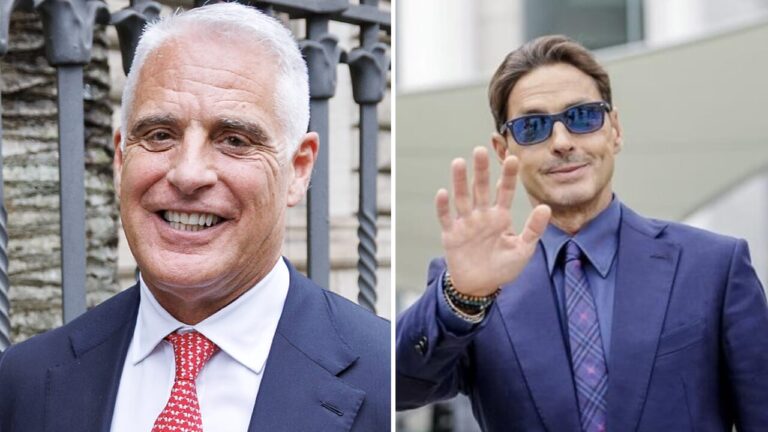
The most obvious case is that of UniCredit. Andrea Orcel transformed what initially seemed like a financial stake in Commerzbank into a real takeover of the second largest German private bank.
The Italian bank has now come to own around 48% of Commerzbank, a share sufficient to exercise enormous influence on corporate decisions and which alone represents over 80% of the value attributed by Kpmg to the large Italian operations of recent years.
The match, however, is not yet formally over. The acquisition project must complete the regulatory process and remains politically very delicate in Germany. According to documents that have emerged in recent weeks, the ECB is inclined not to oppose the operation.
It is therefore above all Commerzbank that explains why the value of “Italian shopping” has suddenly exploded.
Berlusconi conquers German TV
The case of Mfe-MediaForEurope, the group controlled by the Berlusconi family, is different. The entry into the German ProSiebenSat.1 had already begun in 2019, but in September 2025 Mfe completed the public offering, reaching 75.61% of the capital.
It is therefore no longer a simple participation: Mfe controls the German broadcaster and considers it the central piece of a much more ambitious project, that of building a large European television group capable of competing on the advertising and content market with American platforms.
German companies bought by Italians
But behind the two financial giants there are dozens of lesser-known industrial operations. In 2023 Ariston completed the acquisition of Centrotec Climate Systems, owner among others of the German Wolf brand, in the largest acquisition in its history. The operation transformed Germany into one of the Italian group’s central markets in heating and air conditioning.
In 2024, EssilorLuxottica purchased 80% of Heidelberg Engineering, a company specializing in diagnostic equipment for ophthalmology.
And on 31 July 2026, Comelit from Bergamo acquired 100% of the historic German brand Ritto, active in video door entry systems, from Schneider Electric. Thanks to the operation, Germany has become the group’s second largest market after Italy, with a turnover of around 28 million euros.
Added to the list are numerous industrial and component companies, from metalworking to logistics.
MSC sets foot in the port of Hamburg
Then there is strategic infrastructure such as the port of Hamburg. In 2024 MSC, the shipping giant founded by Gianluigi Aponte, became a shareholder of HHLA, the company that manages a fundamental part of the city’s port activities.
The agreed structure keeps the city of Hamburg 50.1%, while MSC can reach 49.9%. It is a particularly significant participation because it allows one of the world’s largest shipping groups to have a direct role in one of the main logistics hubs of Northern Europe.
The Italo case: 3.6 billion, but it is not an acquisition
In the account of 17.8 billion Kpmg also considers large commercial agreements. This is the case of Italo, which from 2028 wants to challenge Deutsche Bahn on German high-speed rail. The group has ordered 26 Velaro trains from Siemens Mobility, with an option for a further 14 trainsets and a 30-year maintenance contract. The contract with Siemens is worth around 3 billion euros, while the entire expansion project in Germany involves investments of around 3.6 billion.
Why Italians are aiming for Germany
However, the phenomenon remains significant. Germany comes from extremely difficult years for its industry, hit by the energy crisis, the loss of cheap Russian gas, Chinese competition and the transformation of the automotive sector.
In the second quarter of 2026, German GDP returned to growth by 0.3% compared to the previous three months and by 1% compared to a year earlier, a sign of an initial recovery. But the Bundesbank continues to point to high energy costs, the shortage of qualified workers, bureaucracy and growing international competition among the country’s structural problems. And it is precisely within this transformation that Italian companies are finding space.