

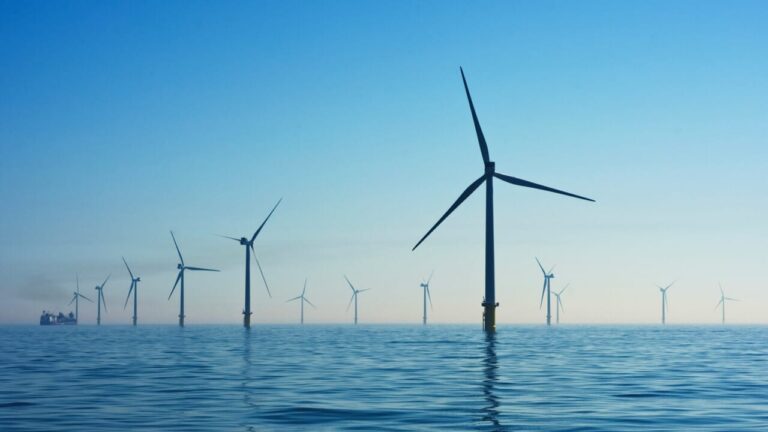
The future of energy lies in renewables. They know it all over the world, so much so that solar and wind are constantly growing technologies. Predicting the diffusion scenarios of the coming decades is complicated, but with the help of artificial intelligence a group of researchers from the Chalmers University of Technology in Gothenburg believe they have succeeded. Their model, described in the magazine Nature Energyindicates that in 2050 these sources could produce a significant share of global electricity needs, higher than expected, but unfortunately insufficient to reach the more stringent climate targets established by the Paris Agreement.
A model to predict the possible
The need for this new approach arises from the limitations of the tools used so far to map the energy transition. Existing models are very good at identifying what needs to happen to meet climate goals, but they can’t tell us which developments are most likely,” explains Jessica Jewell, a researcher at Chalmers University of Technology who led the study. “This is the gap we wanted to fill.”
Instead of simply charting a theoretical course toward decarbonization, scientists have sought to understand where current technological and political trends are taking us. To do this, they analyzed historical data on the growth of solar and wind power in 146 countries, feeding a machine learning system capable of simulating thousands of possible future evolutions based on real parameters.
Thirteen thousand scenarios for the future
The heart of the research consists in the creation of approximately 13,000 virtual worlds, each characterized by different speeds of adoption of clean technologies. Analyzing this mass of data, the model projects that by 2050, onshore wind could cover around 26 percent of global electricity, while solar is expected to be around 21 percent.
Although these figures represent notable progress compared to past estimates, they remain in a gray area: they are projections largely aligned with paths compatible with an increase in average global temperatures that does not exceed two degrees, but they are not enough to respect the threshold of one and a half degrees aimed at by the Paris agreements, and which should keep the effects of climate change to a minimum. The work also puts into perspective the commitment made during COP28 to triple renewables capacity by 2030: according to their simulations, achieving this would require growth rates rarely seen in industrial history.
The conditions for success
Reaching international targets is not an impossible mission, but it requires that each piece of the mosaic fits together perfectly and without delays. “Tripleing the commitment to renewables is not impossible, but it would require everything to go smoothly in all countries,” Jewell points out. The challenge is not just technological, but logistical and political, as it requires supply chains, network infrastructures and national regulatory frameworks to operate at maximum efficiency simultaneously. The model indicates that we are on a positive trajectory, but the current cruising speed is not what the climate emergency requires.
Researchers tested what it would actually take to hit the 1.5°C target and found that the time window is closing rapidly. “If we start now, the growth rates required are challenging but not unprecedented, comparable to what the European Union aims to achieve for wind with RePowerEu and what India has planned for solar,” says Abhishek Jakhmola, a researcher at Chalmers University of Technology and co-author of the study. “If we postpone to 2030, the necessary acceleration will become much steeper and more abrupt. The window to increase renewable production is closing fast.”