

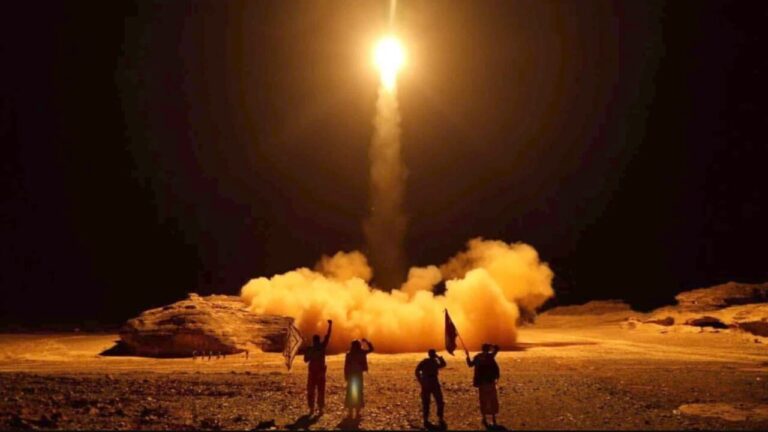
New heavy escalation between the Houthis of Yemen and Saudi Arabia. A series of attacks against the south of the Kingdom left at least 73 injured and also hit economic and energy infrastructure, forcing the authorities to temporarily suspend operations at some plants.
The attacks were confirmed by the Saudi-led coalition engaged in Yemen. The raids affected the cities of Abha, Khamis Mushait, Jazan and Najran, all in the south of the country, relatively close to the Yemeni border.
According to the Saudi Ministry of Energy, fires broke out at some of the targeted sites. Firefighting teams and emergency personnel intervened to put out the flames, secure the structures and assess the extent of the damage.
Authorities also reported that some operational activities at the affected power plants were halted. However, Riyadh has not indicated, at least for now, what overall production capacity is affected or whether the attacks will have consequences on oil exports.
The ministry assured that all necessary measures will be adopted to guarantee the safety of workers and allow the continuation of activities according to the planned operational plans.
Aramco plants are also in the crosshairs
Attention is focused above all on Jazan, one of the main Saudi energy hubs on the Red Sea. The Financial Times had already reported on Monday about new attacks on Saudi Aramco oil infrastructure in the area and ongoing damage checks.
Reuters could not independently verify this specific information and Aramco had no comment.
However, Jazan is home to one of the largest refineries in the Kingdom, with a nominal capacity of around 400 thousand barrels of crude oil per day. The plant had already been targeted by the Houthis in the previous weeks. On August 9, a fire broke out in the refinery after an attack claimed by the Yemeni group; on that occasion the Saudi authorities reported that there had been no injuries.
The Houthi threat to Saudi oil
The attacks represent a qualitative leap in the comparison with Riyadh. The Houthis, backed by Iran and in control of much of northern Yemen and the capital Sanaa, have stepped up operations against Saudi Arabia after announcing a naval blockade against the Kingdom in July.
Since then, Saudi ships in the Red Sea and some energy infrastructures have been targeted in particular.
Saudi coalition spokesman Turki al-Malki called the latest attacks a “dangerous escalation”, stressing that civilian and economic targets were hit. Riyadh promised a response. “The coalition will take all necessary operational measures to deter this militia and firmly counter its hostile attitude,” al-Malki said.
After Hormuz, Bab el-Mandeb
The attacks on the world’s largest oil exporter also come at a time when oil markets are already under pressure due to the regional crisis and navigation difficulties between the Persian Gulf and the Red Sea. In recent weeks, Saudi oil tankers have changed routes and operating methods in the Red Sea to reduce exposure to Houthi attacks. A further deterioration in the safety of the Jazan facilities and the routes through Bab el-Mandeb could therefore add a further risk factor to global crude oil supplies.
The development of an old war
The Houthis are a Zaidi armed movement originating from northern Yemen who conquered Sana’a in 2014, forcing President Abd Rabbu Mansour Hadi to flee. Riyadh considered the Houthi takeover a direct threat: Yemen borders Saudi Arabia and the Houthis had increasingly close relations with Iran, the Saudis’ main strategic rival. In March 2015, a coalition led by Saudi Arabia intervened militarily in Yemen in support of the internationally recognized government.
From there the conflict fueled itself. Saudi Arabia conducted thousands of bombing raids and imposed naval and trade restrictions; the Houthis responded by striking Saudi territory with ballistic missiles and drones, including oil infrastructure, airports and cities near the border. Iran has provided the Houthis with weapons, technology, training and military assistance, especially for missiles and drones. Since 2022 the front had essentially frozen thanks to a truce mediated by the UN, only to then reignite in 2026 with the outbreak of war in Iran.