

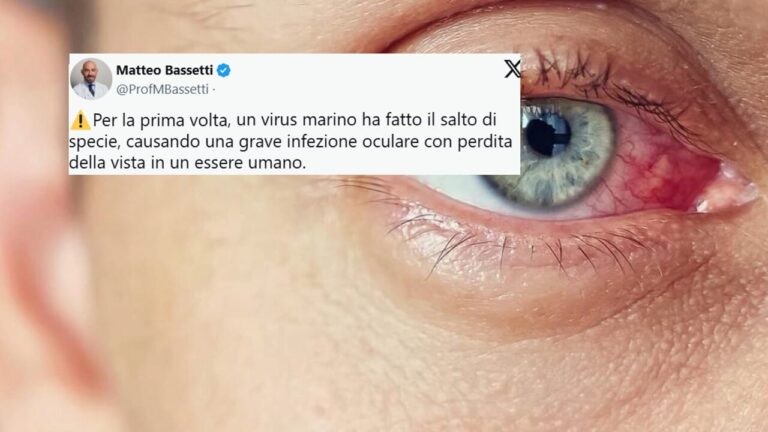
A virus that typically infects marine animals, such as shrimp and fish, has jumped to humans and is causing a chronic eye disease in some people that can lead to vision loss. This is the covert mortality nodavirus (Cmnv) linked to a new form of persistent ocular hypertensive viral anterior uveitis (Poh-Vau) according to a study published in the journal Nature Microbiology.
Traces of the pathogen were found in the iris tissues of some patients between January 2022 and April 2025: in the most serious cases the disease presents with a strong increase in intraocular pressure, recurrent inflammation, progressive damage to the eye and, in a small proportion of patients, even irreversible loss of visual function. The authors of the study describe a picture that may resemble glaucoma, but with a distinct viral and inflammatory component. In some patients, the disease required prolonged therapies and, in the most difficult cases, surgical interventions to contain the eye pressure.
In some laboratory tests the virus was able to infect mammalian cells, including human corneal epithelial cells. It is one of the points that makes the study particularly relevant, because it suggests that the jump in species is not just an epidemiological hypothesis but has a concrete biological plausibility.
How is it transmitted and what are the risks
According to the data collected by the researchers, the majority of patients handled fish and shellfish and consumed raw fish products. Among the risk factors highlighted are the presence of wounds on the hands or stings caused by the sharp appendages of crustaceans.
The same authors, however, invite us not to transform these results into a hasty alarm given the still limited number of cases although – we read – “the relationship between exposure to the virus and disease must be interpreted as a very relevant result”. The work insists on one point: the covert mortality nodavirus today appears as a possible new zoonotic risk to be monitored, especially in countries where the consumption and processing of fish products are widespread.
⚠️For the first time a marine virus has passed to humans.
🗓️For the first time, a marine virus has jumped species, causing a serious eye infection with vision loss in a human being.
The marine virus jumped from aquatic animals to humans, causing… pic.twitter.com/HctSntx9gE
— Matteo Bassetti (@ProfMBassetti) April 10, 2026