

The truce announced between the United States and Iran and the partial reopening of the Strait of Hormuz are not enough to restore normality to agricultural markets. For the fertilizer sector, one of the most affected by the escalation in the Middle East, the damage has already been done and the repercussions have also reached Italian fields.
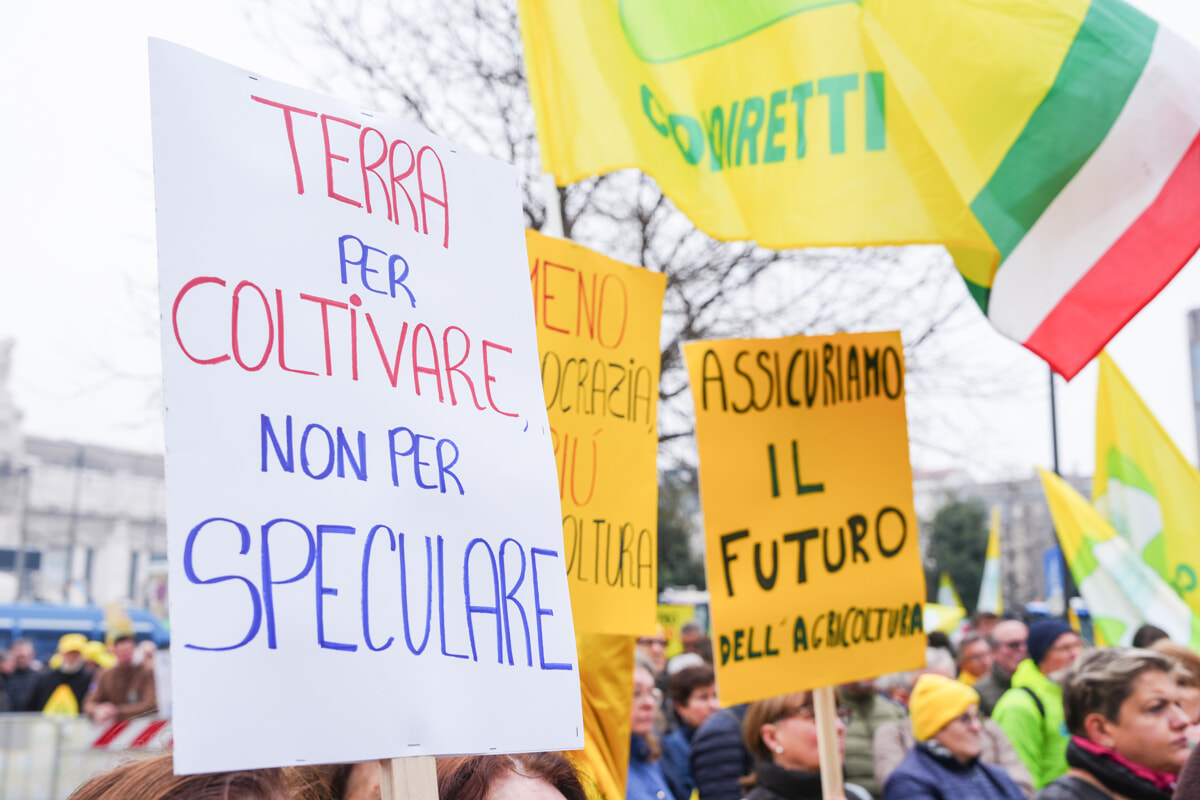
Just over a month after the start of the conflict, Italian agricultural companies are dealing with price increases which, in some cases, reach up to 200 euros per hectare. The alarm was raised by estimates from the Divulga Study Center, released by Coldiretti during the mobilization organized at the Pala BigMat in Florence, where over 4 thousand farmers asked for immediate intervention by the European Union.
Fertilizer crisis: why Hormuz is also crucial for food security
According to data processed by Divulga, fertilizers, fuel, energy and plastics have recorded increases of more than 30 percent compared to the period before the outbreak of the war. The most serious data concerns nitrogen fertilizers: the price of urea has risen to 815 euros per ton, 230 euros more in just one month, with an increase of 40%. Ammonium nitrate reached 500 euros per ton, equal to an increase of 21%.
Agricultural diesel has also undergone an unprecedented rush. According to estimates relaunched by Coldiretti, the price went from around 0.85 euros per liter to 1.38 euros, with a higher increase than that recorded for automotive diesel. An increase that has a direct impact on field processing and the transport of goods, in a country where 88% of food products travel by road. The Strait of Hormuz is also a central hub for global food security: today approximately 29% of the ammonia and 36% of the urea traded globally come from the Gulf area.
In fact, Saudi Arabia, Qatar, Oman, Bahrain and the United Arab Emirates are home to some of the world’s leading producers. These include the Saudi Sabic, the Qatar Fertilizer Company, the Gulf Petrochemical Industries Company of Bahrain, the Oman India Fertilizer Company and Adnoc in the Emirates. But with traffic in the Strait of Hormuz reduced to a minimum, production also began to slow. QatarEnergy, for example, has partially suspended the activities of some chemical and petrochemical plants, including those intended for the production of urea. Meanwhile, ships continue to avoid the area or face much higher insurance costs.
Because the truce will not give immediate relief to agriculture
For this reason, despite the truce, analysts exclude a rapid return to previous levels. Deepika Thapliyal, global fertilizer analyst for Independent Commodity Intelligence Services, explained that the partial reopening of the Strait of Hormuz has reduced the immediate panic in the markets, but is not enough to change the overall picture. According to Thapliyal, cargoes will continue to be delayed and war insurance premiums will remain high. It may take weeks, if not months, to return to regular circulation. The same assessment comes from Tim Lang, professor of food policy at City University of London. According to Lang, the back deliveries of fuel and fertilizer will take a long time to clear.
The fear is that the crisis will not end even with the 2026 harvest. A survey by the National Corn Growers Association shows that the concern of American farmers is already shifting to 2027. Jed Bower, president of the NCGA, underlined that fertilizer prices were already high before the start of the conflict and that the closure of Hormuz has aggravated an already critical situation. According to the survey, for every farmer worried about 2026 there are almost two who fear even bigger problems in 2027.
In Italy the consequences are already tangible. The most exposed crops are those with a high intensity of fertilizers and energy. For olive growing, the Divulga Study Center estimates an increase in costs of 205 euros per hectare. In cereals the average price increase varies between 65 and 80 euros per hectare, but for corn it can reach up to 200 euros. Farms are also experiencing a sharp increase in costs. Producing a ton of milk costs around 40 euros more than a month ago, while on pig farms the increased outlay reaches 25 euros per animal. In orchards, additional costs are estimated at around 35 euros per ton produced.
Even wine at risk: what the government wants to do
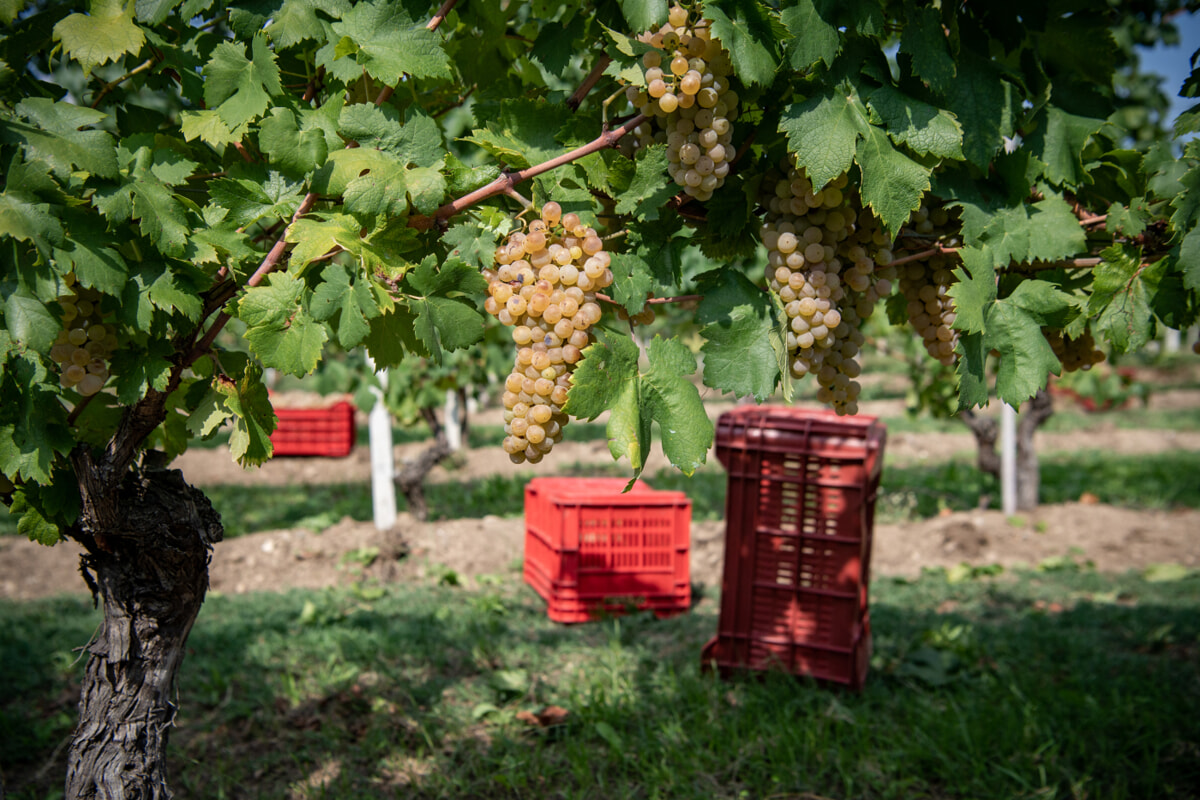
Even wine, of which Italy is the world export leader, risks paying a high price. According to the focus on wine developed by the Sace research office in view of Vinitaly, the sector must face an increase in costs linked not only to fertilizers, but also to energy, glass and other materials necessary for the supply chain. For a sector that exported 7.8 billion euros in 2025 and represents one of the main Made in Italy excellences, the risk is a reduction in margins just as uncertainties on international markets increase.
Of particular concern is the stability of small and medium-sized agricultural companies, which have less financial capacity to absorb the increase in costs. In many cases margins have already been eroded by the effects of the energy crisis and rising interest rates. Now the new surge in fertilizers risks further compressing profitability and, in some cases, calling into question the cultivation choices themselves.
The government assures that it is already busy working to contain costs for farmers. Responding in the Senate, Masaf undersecretary Patrizio La Pietra recalled that on 14 January the European Commission suspended duties on fertilizers from third countries, at Italy’s request, precisely to contain the costs borne by farmers. La Pietra also relaunched the Italian request to suspend the European Carbon Border Adjustment Mechanism and to neutralize the additional costs for businesses.
Among the solutions indicated by the government there is also a greater use of digestate as an alternative to chemical fertilizers. But in the short term the problem remains open. Coldiretti meanwhile is calling for the recovery of 10 billion euros from the common agricultural policy and immediate tools to support the most affected companies. The association also presented a complaint to the Prosecutor’s Office and the Financial Police to verify any speculative phenomena on agricultural diesel.
The truce may reduce geopolitical tension and stock market alarm, but fertilizer supply chains operate over time, markets are inevitably affected by uncertainty and Italian agricultural companies are already paying the bill. The price of the war on food is not a future threat, but a reality that already weighs on fields and tables today.
The cost of war already today in the fields (and on the tables): keep an eye on price increases
Although at this stage the strongest impact is still upstream, on farms and in logistics, Coldiretti warns that the increase in production costs risks soon being passed on to consumers. The increase in costs in the fields is already very high: +205 euros per hectare for olive oil, up to +200 euros for corn, +40 euros per ton of milk and +25 euros per head for pigs.
If these increases remain structural, the first goods destined to hit the shelves will be bread, pasta, milk, meat, cured meats and oil. The most exposed sector is the cereals sector. Nitrogen fertilizers are essential for wheat and corn and their price has increased by up to 50%, with urea rising from 55 to 75 euros per quintal in some areas. This means that future agricultural campaigns could produce more expensive crops, with direct effects on the prices of bread, pasta and feed.
The latest survey by Ismea (the Institute of Services for the Agricultural Food Market), relating to the second week of March, shows already marked increases in prices for vegetables compared to the same month of the previous year. Greenhouse aubergines even recorded a +101%.
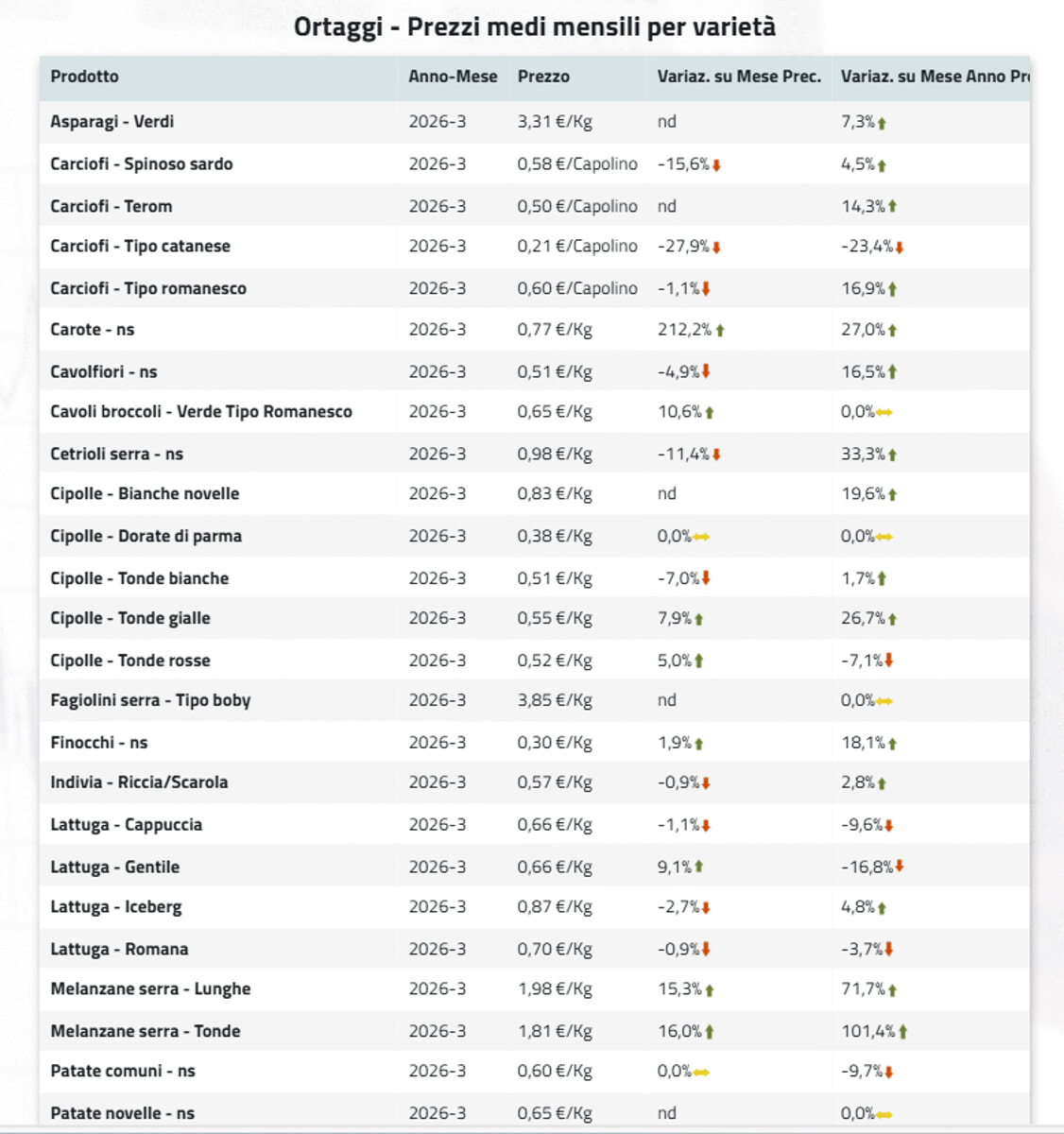
The prices mentioned are the average ones at the origin, therefore they do not yet include the costs of transport, logistics, intermediation, nor the margins of large-scale distribution. The increases for consumers are therefore even higher on the shelves and, in fact, operators report that the real risk is concentrated between summer and autumn 2026, when the increases in fertilizer and transport prices will be reflected in new production. The risk is therefore that of a “second wave” of food inflation, similar to that seen after the Russian invasion of Ukraine.