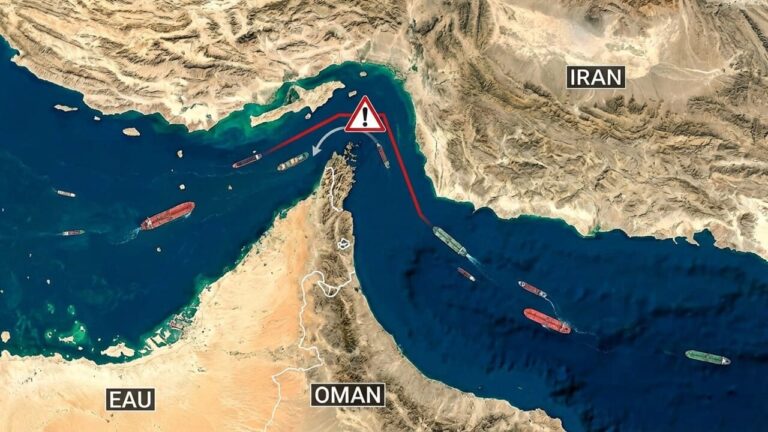
Iran found its “nuclear weapon” without going through the atomic bomb. And he found it thanks to Donald Trump. The scenario outlined by CNN is not rosy for the global economy. The reason, going to the heart of the matter, is the following: even if Tehran and Washington reached an agreement to put an end to the war, the Strait of Hormuz would somehow remain hostage to the Pasdaran. Iranian forces, the US newspaper reasons, have demonstrated that they are able to control the stretch of sea with a relatively limited number of missiles and drones. A power that before the conflict the ayatollahs claimed on paper, but which they have now demonstrated they can exercise concretely.
Tolls and the authority that supervises the Strait of Hormuz
In Tehran they therefore want to move on to collections. So much so that one of the issues on which the negotiations focus is precisely the toll requested by the Iranians from ships passing through Hormuz. According to some sources, including the specialized magazine Lloyd’s List, in some cases Tehran has asked for up to 2 million dollars from the few oil tankers authorized to cross the strait during the blockade. Recently, the Iranian government has also delegated the management of maritime traffic to the ‘Persian Gulf Strait Authority’, an ad hoc authority created precisely to control passage in the stretch of sea where before the conflict approximately one fifth of oil and gas transited globally.
The United States responded by threatening sanctions on “anyone who collaborates with the so-called cross-strait authority”, as they “may provide support and receive services” from the Pasdaran, “who ultimately benefit from this extortion attempt”. According to the US Treasury Department, the body “blatantly violates international law and US sanctions” and represents the Pasdaran’s attempt to “monetise the campaign of state terrorism by extorting money from ships transiting the Strait of Hormuz”.
The geopolitical price of instability
In reality, however, Tehran’s control is real. And it could cause cascading consequences. Alan Gelder, vice president of refining, chemicals and oil markets for the consultancy Wood Mackenzie, estimates that a tariff of $2 million per tanker would result in a $1 per barrel increase in crude markets. A marginal difference.
However, the energy consultancy firm Rystad believes that the price will necessarily also have to incorporate “a geopolitical risk premium” which is estimated at around “10-20 dollars per barrel”. Before the conflict, around 140 ships a day passed through Hormuz. Even if traffic were to return to the same levels, geopolitical instability would cause the cost of crude oil to rise. “We are convinced that Iran will maintain some form of influence on the Strait of Hormuz in the future,” Jorge Leon, an analyst at Rystad, told CNN. For this reason “the risk of further unrest in the Strait is real”.
In other words, there will be no return to the pre-war status quo. Of course, if the United States and Iran were to reach an agreement, the cost of a barrel would still suffer a significant drop, but in any case, Leon prophesies, “we will not return to oil prices of 60 dollars a barrel, not even in 2027”. However, if the agreement does not arrive even by the end of 2026, oil could reach close to 200 dollars a barrel, inevitably triggering a global economic crisis.
“Iran has a new nuclear option”
In short, Iran has a new and powerful blackmail weapon. Tehran “has demonstrated that it has the power to close the strait and keep it closed,” says Gregory Brew, senior analyst at consultancy Eurasia Group. And he has shown that he can do so “even in the face of extensive US and Israeli bombing. This is something that no one can ever take away from him. It is their new nuclear option.” Not to mention that oil is not the only commodity that passes through Hormuz. Geopolitical uncertainty could also weigh on the availability of fertilizers, aviation kerosene, helium and aluminum.
New pipelines under construction
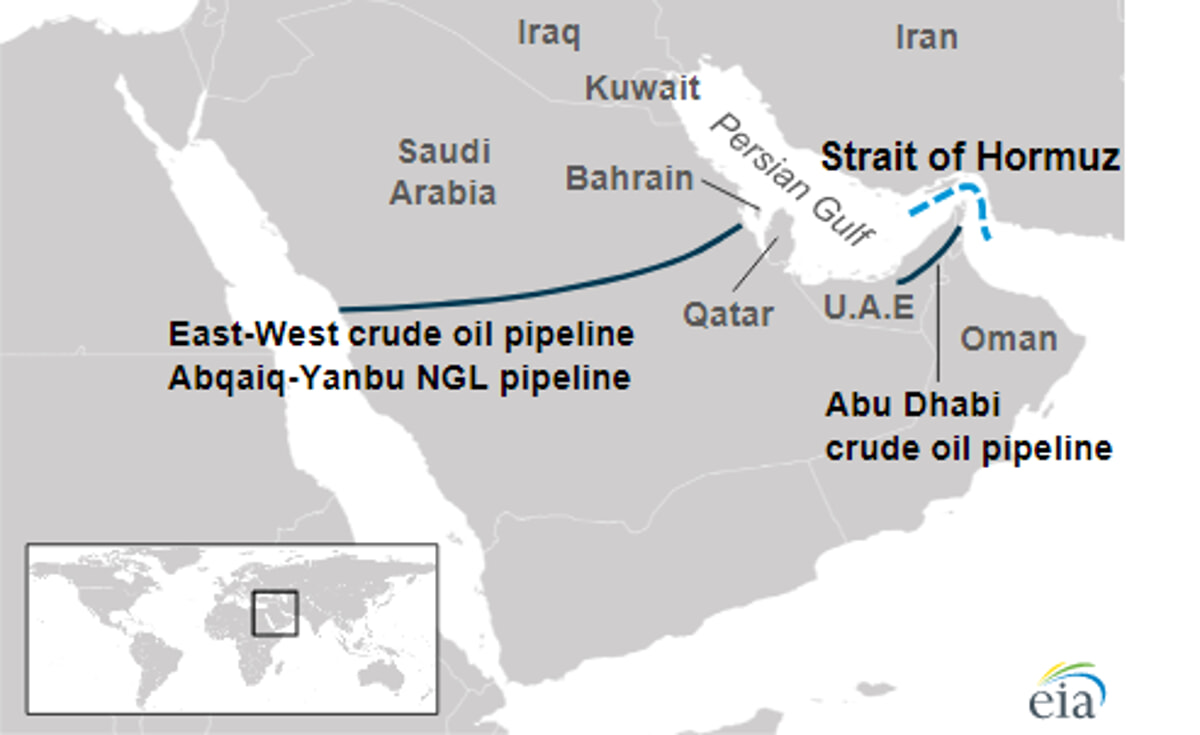
The global economy will therefore have to deal with this “new normality” in which Tehran has its finger on the trigger of the world’s energy lung. The ways out take a long time. The diversification of energy sources and the gradual reduction of dependence on fossil fuels is an objective that both Western countries and China have long aspired to, while the Gulf countries are already working to build infrastructures that will allow oil to be exported bypassing the strait.
The new pipeline from Adnoc, the national oil company of the United Arab Emirates, is expected to be completed by the end of 2027, while Saudi Arabia plans to expand the East-West pipeline from the Persian Gulf to the Red Sea port of Yanbu. Regardless of the times, however, these structures would still be within reach of Iranian drones and missiles.