

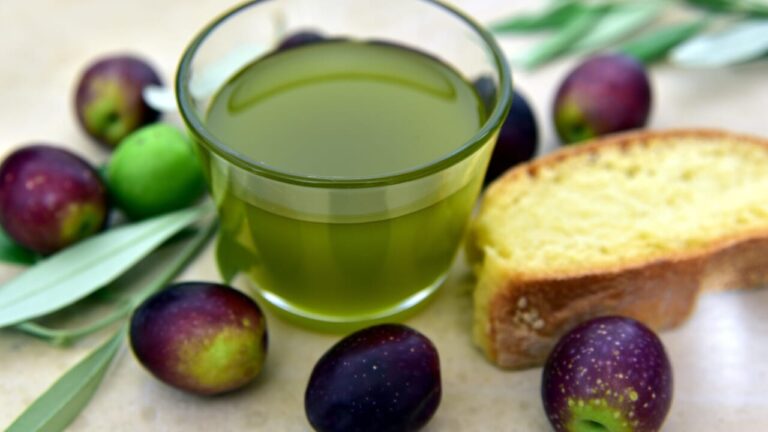
There is so much olive oil that the government has decided to withdraw it from the market. It happens in Spain, the world’s largest producer, where the abundance of harvests risks turning into an economic problem. To avoid a collapse in prices, the Spanish government has decided to temporarily block the sale of 12% of the oil produced, forcing mills and cooperatives to store it in their warehouses rather than placing it on the market. An unprecedented measure, which will lead to the withdrawal of approximately 188 thousand tons of olive oil.
The decision was made official on November 6 by the Spanish Ministry of Agriculture and published in the Official Journal. The provision concerns the 2026-2027 olive oil campaign and provides that the withdrawn oil will remain off the market until 30 September 2027. It will not be destroyed: it will simply be stored, waiting to be marketed without worsening the excess supply.
Extra oil production
At the origin of the decision is an exceptionally abundant production. According to official estimates, Spain is expected to produce 1,602,596 tonnes of olive oil in the 2026-2027 campaign, 23% more than the previous one. It would be the fourth largest harvest ever recorded in the country. The spring weather conditions favored production, characterized by mild temperatures and abundant rainfall in the main olive-growing regions. The climate favored flowering and fruit development, significantly increasing the quantity of olives available.
Complicating the situation are the inventories accumulated in previous years. At the beginning of the new campaign, Spanish warehouses already contained 357,040 tons of oil, 23.3% more than the previous year. By adding the stocks to the expected production, the overall availability is close to two million tonnes. A quantity such as to trigger the extraordinary mechanism provided for by Spanish legislation to deal with situations of overproduction.
The problem for farmers is that too much oil on the market means lower prices. The prices of extra virgin olive oil at origin have already fallen to around three euros per kilo, around one euro less than a year earlier. According to agricultural organizations, these prices are not enough to cover the production costs of many companies.
| Price | Italy | Spain |
| Extra virgin on offer, per litre | €3.79–4.49 | €3.75–4.35 |
| Higher-end extra virgin olive oil | Often over €8 | Often over €7 |
| Price at origin, per kg | €4.26 | €3.17 |
The government therefore chose to intervene directly on supply. The oil mills will have to set aside 12% of the production declared monthly, freely choosing which category of oil to keep. The checks will be entrusted to the authorities of the autonomous communities, under the coordination of the Ministry of Agriculture. The aim is to prevent a bumper harvest from turning into a crisis for producers. The provision may be revised starting from 31 December 2026, based on the actual trend of production. The measure, however, does not please everyone.
The Spanish competition authority, the Comisión Nacional de los Mercados y la Competencia, has highlighted the possible negative effects of the intervention on consumers. Artificially reducing the quantity of oil available could in fact support prices, limiting the benefits that abundant production would normally guarantee to those who purchase.