

Trump announces naval blockade of Hormuz. And after the failure of negotiations between the USA and Iran, the situation on the energy front becomes increasingly critical. The government sees the recession as one step away and is asking the European Union for flexibility on the accounts. Meanwhile, Eni’s CEO, Claudio Descalzi, invites Brussels to take a bath in industrial realism and re-establish relations with Moscow for the purchase of gas. But let’s go in order.
The failure of negotiations between the US and Iran and the naval blockade in Hormuz
The first round table between Tehran and Washington ended in the night between Saturday and Sunday with no results. “The United States has not reached an agreement with Iran” announced US Vice President JD Vance, adding that “there is no promise from Iran to definitively abandon nuclear weapons”. According to Tehran, however, “the negotiations failed due to the unreasonable demands of the US”, but “no one expected an agreement in the first round of negotiations”. The fact is that after the failure of the talks in Islamabad, US President Donald Trump announced a naval blockade of the Strait of Hormuz which will begin today, pending new attacks on Iran or additional negotiations.
“Iran will never have a nuclear weapon,” Trump said. “The United States will implement a naval blockade in the Strait of Hormuz.” “Many agreements have been reached between the US and Iran,” he added, “but there is only one thing that matters: Iran is not willing to give up its nuclear ambitions. In many ways, the points agreed are better for us than continuing our military operations to the conclusion, but all these points do not matter compared to allowing nuclear energy to be in the hands of such an unstable, difficult and unpredictable people.” According to Lloyd’s List, a newspaper specializing in shipping news, maritime traffic through the Strait of Hormuz is once again blocked.
Not only from the Iranians, but also from the USA. “Effective immediately,” Trump announced on Truth, “the United States Navy, the best in the world, will begin the process of blocking all ships attempting to enter or exit the Strait of Hormuz.”
The blockade will affect ships sailing to Iranian ports
The United States Central Command (Centocom) then specified that the block will only concern “maritime traffic entering and exiting Iranian ports starting from 10:00 am (ET time zone) on April 13” (4 pm in Italy).
“The blockade will be enforced impartially against merchant vessels of all nations entering or departing from Iranian ports and coastal areas, including all Iranian ports on the Arabian Gulf and the Gulf of Oman.” US forces, Centcom specifies, “will not impede the freedom of navigation of vessels transiting the Strait of Hormuz headed to, or coming from, non-Iranian ports”.
It’s raining wet: Hormuz is blocked, oil prices start to rise again
“Further information – it is still underlined – will be provided to commercial seafarers through a formal notice before the start of the blockade”. Trump’s objective is clear: to cut off all resources reaching Tehran and force the ayatollah regime to negotiate.
Descalzi: “Suspend the ban on Russian gas”
In such a complex context, the words of Eni’s CEO emerge. “On gas, I think it is necessary to suspend the tender which will start on 1 January 2027 on the 20 billion cubic meters coming from Russia” he said on the sidelines of a speech at the League’s political training school which was held yesterday in Rome. “The flexibility on the grid is given by gas, not renewables or even nuclear which we don’t have.”
“We need gas and we need to realize these things. We have a company that lives with this gas. So, in my opinion on gas – Eni’s number one commented – it is necessary to review” the Russian ban. The total ban on importing Moscow gas was approved on January 26 by the EU Council. Today the flows arriving from Russia are already at historic lows: from 2019 to today there has been a reduction from 60 to 8%, even if imports of liquefied natural gas (LNG) have increased slightly.
The League wants to get closer to Russia
The words of Eni’s CEO are making noise. Above all, Descalzi is applauded by the League which certainly does not look favorably on a rapprochement with Putin from today. “In addition to Matteo Salvini, Claudio Descalzi also invites us to overcome ideological approaches, opening up to a pragmatic reflection also on supplies from Russia” says the deputy minister of the Environment and Energy Security Vannia Gava. “The line is clear: realistic and responsible choices are needed to defend the purchasing power of families, the competitiveness of businesses and national energy security.”
This is echoed by Senator Claudio Durigon, undersecretary of the Ministry of Labor and Social Policies. “Europe should listen carefully to Descalzi’s words” says Durigon. “The CEO of Eni, who is not an isolated case in the world of energy services, talks about suspending the ban on Russian gas. Descalzi’s statements, released during the League school, are worrying: he reeled off numbers that foreshadow an unprecedented crisis, with workers and businesses that risk coming to a halt. Hoping for a reflection on Russian gas, as we have long supported, is not a taboo or a subversive message but a common sense solution.”
Descalzi: “The truce did not exist, in Europe we have closed 36 refineries”
In his speech Descalzi painted a gloomy picture. “The truce did not exist. What happened in the Gulf is the most important event of the last 40 years” he explained speaking at Palazzo Rospigliosi. The war in Iraq, the 2008 financial crisis, Covid and the Russian-Ukrainian crisis “caused 3 to 7 million barrels to fall, in this case 4.5 million products and 11-12 million crude oil are missing”.
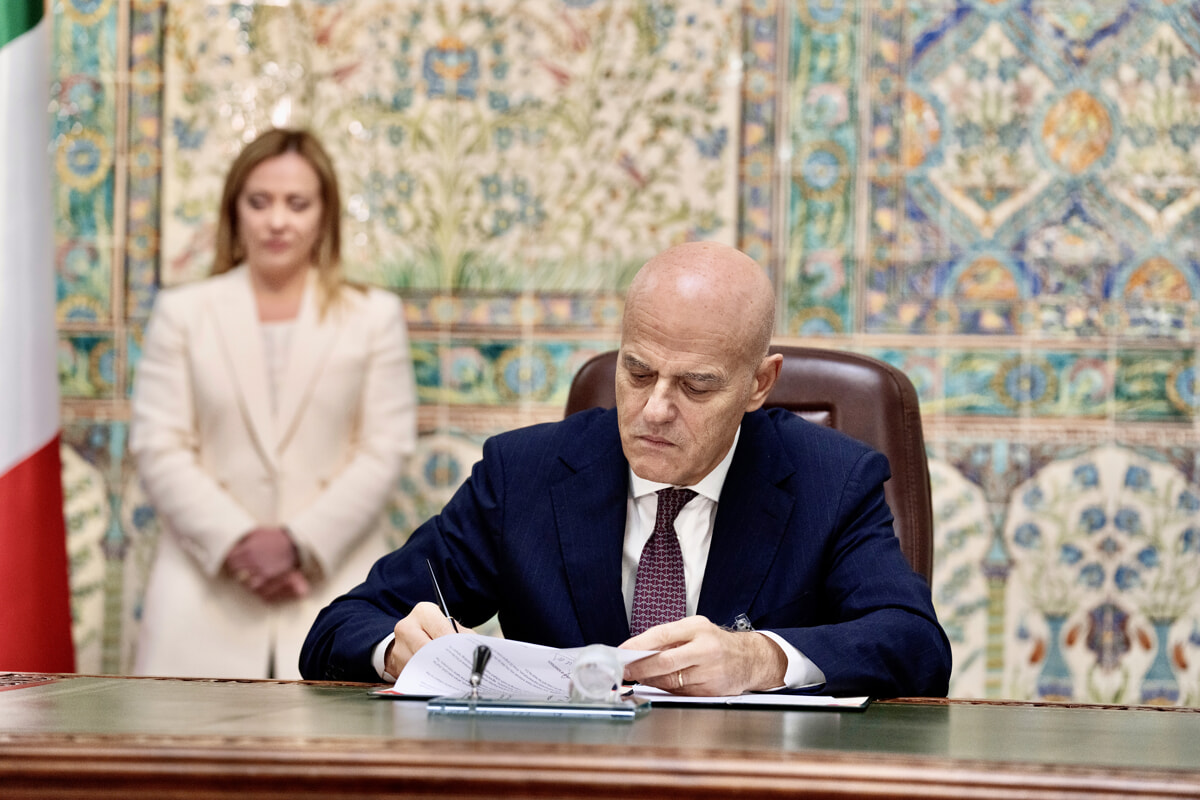
According to Descalzi, in Europe there is also a “jet fuel problem”, i.e. a shortage of kerosene for planes. “It consumes 60 million tonnes and imports around 35% of it” because “in the last 18 years we have closed 36 refineries because it was said that oil and gas are not needed” and now “we have no refining capacity”. “We have arrived at the situation that either you have the ability to produce what you need or you risk it” added the CEO of Eni. “Not only do we no longer have refining but we also no longer have European or national production. In jet fuel, Italy consumes 5-6 million tonnes and imports like the EU, 35%”.
“To be able to react, we need to understand what the problem is,” he added. “We can’t wake up every time there is a crisis and chase it, because then we won’t get anywhere.”
The government sees recession. And Giorgetti asks for flexibility
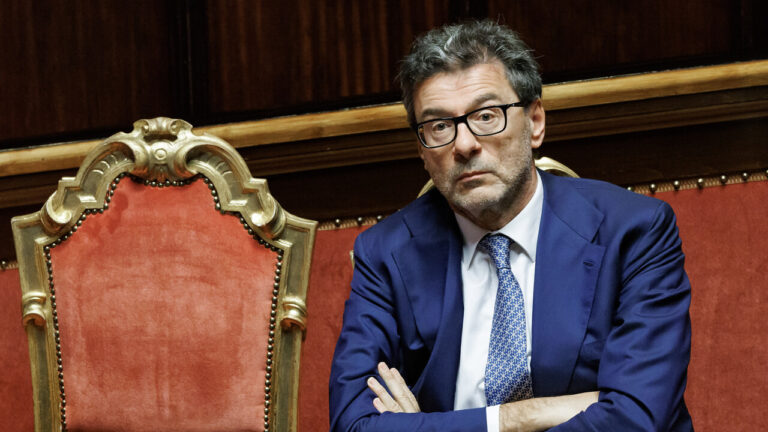
Meanwhile, the day before yesterday, Economy Minister Giorgetti even feared a decline in Italian GDP in 2026, despite the OECD having estimated a +0.4%. The head of the Treasury explained that the EU allows derogations from the stability pact “only in the presence of a serious recession”, but “I fear that if the situation continues like this on the energy and fuel oil front, the serious recession will arrive”.
Giorgetti’s words are followed by those of deputy prime minister Antonio Tajani. “If the situation in Hormuz continues to be negative, there are risks, we must prevent this from happening. We must avoid escalation by encouraging dialogue.”
Urso: “The consequences could be more serious than expected”
Even for the Minister for Business Adolfo Urso, the risk of recession certainly exists. “We are very concerned about the fact that the first round of negotiations” between the United States and Iran has failed, “even though it has been announced that the negotiations will continue”.
“We need to understand – Urso said at Vinitaly – what will happen on the international markets certainly with regards to energy products and not only, given that the blockade that persists on the Strait of Hormuz also concerns other productions with those countries and I am referring to some fundamental raw materials, I am referring to the fertilizer sector, or even to the microelectronics sector if we consider that Qatar is the largest producer of helium in the world”. For this reason, Urso continued, “if the blockade were to continue” the consequences for “the world economy and certainly for the European and Italian economy could be more serious than expected and could lead to a recession on our continent”.