

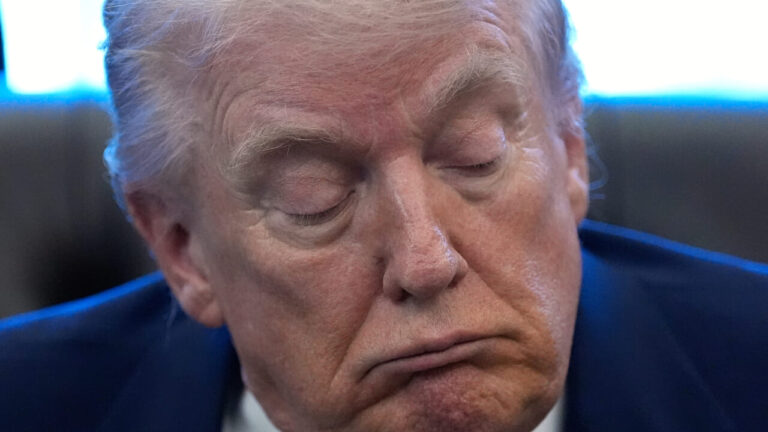
Donald Trump’s approval rating slips to the lowest levels of his second term as Americans’ concerns about the economy and the conflict with Iran grow. The latest NBC News Decision Desk survey illustrates the decline: only 37% of adults support the president’s actions, compared to a clear 63% who reject him. And among the latter, one in two expresses “strong” disapproval, a sign of deep-rooted discontent.
Two out of three Americans think the country is going the wrong way
The data fits into a general climate of mistrust. Two out of three Americans believe that the country is heading in the wrong direction: it is the highest level of pessimism recorded since Trump returned to the White House. A judgment that also weighs on the political stability of the Republicans, called to defend the majorities in Congress in the upcoming mid-term elections.
It is above all the wallet that has an impact. The economy remains the priority for voters and, within it, inflation dominates concerns: 45% indicate it as the main problem. Only 32% approve of the president’s handling of the cost of living, while 68% disapprove. It is not surprising, then, that 40% of Americans say they are worse off than a year ago, compared to just 19% who report an improvement.
The weight of expensive fuel
The high cost of fuel is one of the most obvious symbols of economic pressure. Almost two thirds of those interviewed consider it a problem for their family. Gasoline trades just above $4 a gallon nationally, but above $5 in West Coast states. Twelve months ago, the average was $3.16. A growth that has a knock-on effect on bills, transport and consumer goods.
On the energy front, the outlook remains uncertain. According to analysts, a significant drop in prices would depend on the end of the war and the full reopening of the Strait of Hormuz, a crucial hub for global oil traffic. A scenario that, at the moment, seems distant.
Alongside the economy, the international dossier weighs heavily. Two-thirds of Americans disapprove of the handling of the conflict with Tehran, while only a third support it. Not even the announcement of a temporary ceasefire, which arrived on 7 April, substantially changed the orientation of public opinion.
Maga Front still solid, but approval drops on immigration too
The president continues to maintain a solid base among his voters, but here too there are signs of erosion. 83% of Republicans still express a positive opinion, but the figure is down four points compared to the beginning of the year. The decline among the most convinced supporters is even more marked: those who approve “strongly” drop from 58% to 52%. Among Maga voters, however, support remains broad, with 87% defending the White House line on war.
The difficulties are not limited to the economy and foreign policy. Even on one of the pillars of his campaign, immigration, Trump experienced a backlash after the killing of two US citizens by federal agents in Minnesota. The administration has tried to correct course, with changes at the top of Homeland Security and the Border Patrol, and a reduction in arrests and detentions. Despite this, more than 60,000 people remain in ICE custody, nearly double the number before he returned to the presidency.
The picture that emerges is that of a leadership under pressure, caught between unfulfilled electoral promises – from the containment of inflation to the commitment to avoid new conflicts – and a reality that fuels dissatisfaction. A mix which, a few months before the midterm elections, risks turning into a decisive test for the political stability of the president and his party.