
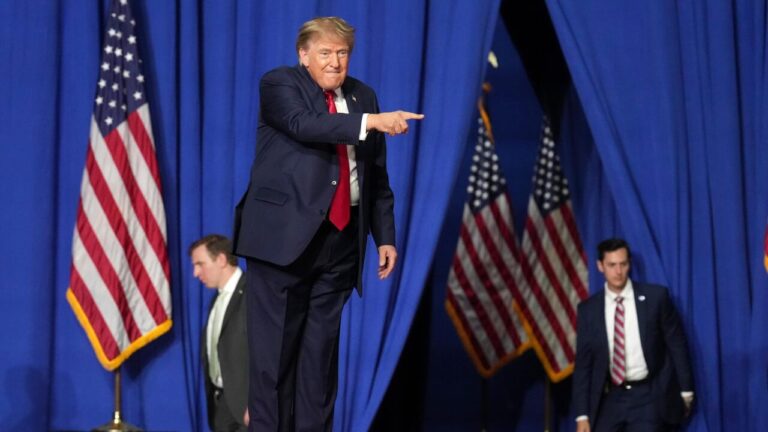
Donald Trump’s administration is proposing new tariffs of up to 15% on European Union products. The plan, reported by Bloomberg And Cnbcaffects 14 US trading partners, including China, Vietnam, Japan, India and Mexico. Washington accuses them of favoring, in some manufacturing sectors, a production capacity higher than demand, with consequences for American companies. The rates have been communicated to the interested partners and will be subject to public consultation before any entry into force.
How much are the new tariffs proposed by Trump worth?
According to the rates reported by ANSA, the American proposal includes duties of 20% for China and Vietnam, 18% for Thailand and 17% for India. For the European Union the rate reaches 15%, the same level indicated for Switzerland, South Korea and Japan. In the case of Brazil, Washington has proposed a 10% tariff on planes.
For European businesses, the question is how much the cost of exporting to the United States would change. According to an American official quoted by Cnbcthe proposed rates take into account existing trade agreements and, in general, would not be in addition to tariffs already in place. The exception indicated concerns China, for which the new 20% would be added to the 25% tariff introduced in 2018 on products already subject to that tariff, as part of the dispute over forced technology transfers.
Why Washington bets on “overproduction”
The proposal comes at the end of an investigation launched in March by the Office of the US Trade Representative, led by Jamieson Greer. At the center is what Washington calls “production overcapacity.” According to the American administration, in some sectors public subsidies help companies produce more than the market can absorb. Part of that production thus ends up on foreign markets at prices that, in the reconstruction of the United States, put American competitors under pressure.
The legal basis chosen by the White House is Section 301 of the Trade Act of 1974, which allows Washington to take countermeasures against foreign trade practices deemed harmful to US trade. Second Associated Press, This is the Trump administration’s second attempt to replace the generalized tariffs of 2025, rejected by the Supreme Court in February. In July, Washington had already launched another package, with rates between 10% and 12.5% for 60 trading partners, as part of an investigation into imports of goods produced with forced labor. For tariffs on overproduction, the next step is public consultation, at the end of which the administration will be able to define the final measures.
The reaction of the EU Commission
Brussels’ response was not long in coming. “The EU takes note of the publication by the United States of the preliminary results of the investigation conducted under Section 301. We will examine these results. At the same time, we strongly reject the premise according to which Europe is a source of structural overcapacity. On the contrary, Europe is among the subjects most exposed to the phenomenon of overcapacity”: this was underlined by a Commission spokesperson.
“Under the joint statement, the 15% ceiling applies. We expect any measures resulting from this investigation to fully respect it, even when combined with existing duties,” adds the same source cited by theHandle.