

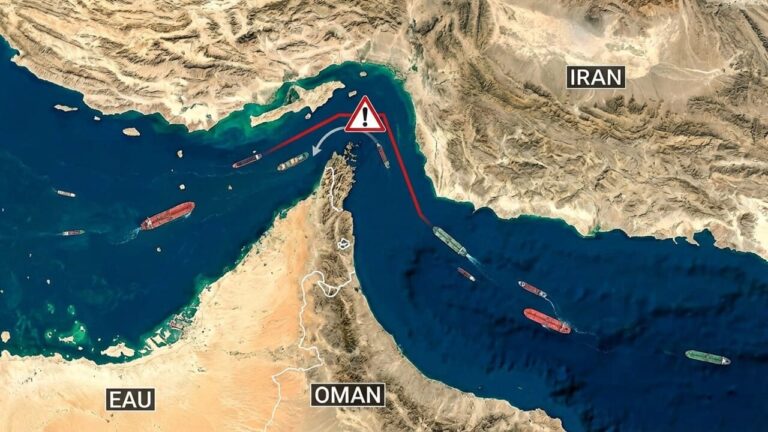
The “Project freedom” operation announced by Donald Trump to free the ships in the Strait of Hormuz comes to life. The US Army Central Command (Centcom) announced on X that “two US-flagged merchant ships successfully crossed” the sea area “and are continuing their journey safely.” A piece of news which, however, was immediately denied by the Iranian Revolutionary Guards.
🚫 CLAIM: Iranian state media claims that Iran’s Islamic Revolutionary Guard Corps hit a US warship with two missiles.
✅ TRUTH: No US Navy ships have been struck. US forces are supporting Project Freedom and enforcing the naval blockade on Iranian ports. pic.twitter.com/VFxovxLU6G
— US Central Command (@CENTCOM) May 4, 2026
Centcom itself instead defined as false the indiscretion, reported by Iranian state media, according to which the forces of the Revolutionary Guards had hit a US military ship with two missiles. “No ships in the US Navy were hit,” the US command explained, adding that “US forces are supporting Project Freedom and enforcing a naval blockade on Iranian ports.”
US Navy guided-missile destroyers are currently operating in the Arabian Gulf after transiting the Strait of Hormuz in support of Project Freedom. American forces are actively assisting efforts to restore transit for commercial shipping. As a first step, 2 US-flagged merchant… pic.twitter.com/SVDxDhK72I
— US Central Command (@CENTCOM) May 4, 2026
Operation Project Freedom was presented by Trump from a “humanitarian” perspective to escort the ships held captive in the Strait, but now it risks ruining the truce. In reality, as we will see, it cannot be ruled out that the intention of the United States was precisely to relight the fuse of hostilities and reach a redde rationem with Tehran. The situation in Hormuz is increasingly tense. The United Arab Emirates says it has detected 4 missiles and reports a “large fire” at the Fujairah oil industrial site. American Apache and Seahawk helicopters, the CentCom commander announced, destroyed six small Iranian ships “that threatened commercial navigation” and shot down all the missiles and drones launched against American military ships and commercial ships by Tehran’s forces. Meanwhile, rumors of a resumption of the raids are becoming insistent. But let’s go in order.
What is the Project freedom mission
Trump called the operation “a humanitarian gesture made on behalf of the United States, Middle Eastern countries and, in particular, Iran.” “Many of these ships – wrote the President of the United States – are running out of supplies of food and all other essential goods to guarantee the crews a stay on board in adequate health and hygiene conditions”.
“Countries around the world, which are in no way involved in the conflict in Iran, have asked the United States to help free their ships” added the head of the White House, according to whom the United States will do “everything possible to save their ships and crews out of the Strait”.
Centcom explained that military support for the operation will include “missile destroyers, over 100 aircraft, multi-domain platforms”, both air and sea, for surveillance, reconnaissance or rapid intervention in case of threats and “15 thousand military personnel”. But according to various anonymous sources cited by US media, there will be no direct escort to ships venturing into the Strait. Navy ships will be “in the vicinity” of transiting ships ready to intervene in the event of an attack together with US aircraft.
Why Trump broke the stalemate
But what’s behind Trump’s move? According to Axios, the head of the White House “was fed up” with the stalemate that had arisen. “The president wants to act. He doesn’t want to sit idly by,” an official who remained anonymous was quoted as saying. “He wants to apply pressure. He wants a deal.” In short, the republican leader has decided to stir the waters of Hormuz.
According to the same source, the US has also changed the rules of engagement: US forces are now authorized to immediately strike any threat against passing boats, in particular those coming from Pasdaran boats or Iranian missile sites. The truce is therefore more fragile than ever. So much so that a source close to the president described the situation as “the beginning of a process that could lead to a clash with the Iranians”. Behind the scenes, Trump was proposed a more aggressive plan, which involved sending military ships to reopen the strait by force, but in the end the head of the White House opted for a less bloody and in a certain sense more diplomatic solution.
“If the Iranians react – the aforementioned source explained to Axios -, they will be the ones to be seen as aggressors and we will have the legitimacy to intervene”. But the US move may not lead to a resumption of hostilities, leaving the situation unchanged.
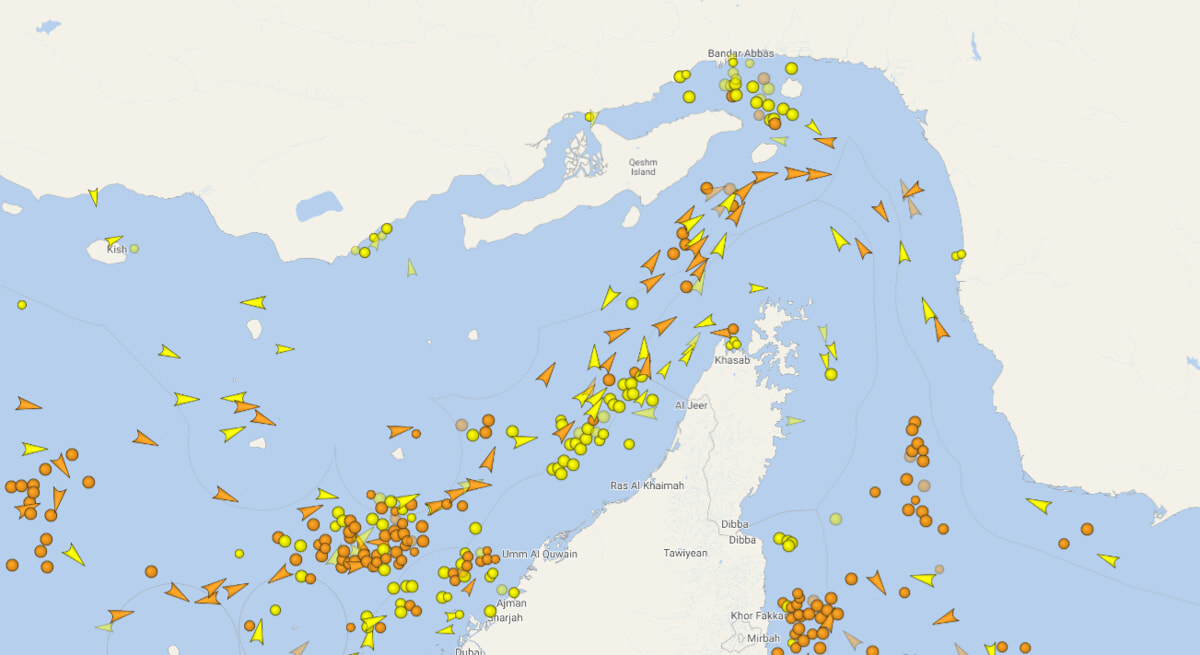
The truce is coming to an end, the missiles are starting again from Iran
Meanwhile in Hormuz the tension rises. A South Korean ship was apparently hit while in the waters of the strait, while Tehran claims to have fired “warning shots” at US naval vessels after they ignored instructions not to approach the area.
The United Arab Emirates instead detected four missiles coming from Iran, of which three were intercepted over territorial waters and a fourth fell into the sea. This was announced by the Emirates Ministry of Defense after the activation of the air defense systems.
The Ministry of Defense of the United Arab Emirates (UAE) has announced that it has detected 4 missiles launched at the UAE from Iran a short time ago. Three of the missiles were intercepted, and one fell into the sea. The MoD confirmed that the sounds reported earlier were… pic.twitter.com/KMQIbBEk1f
— OSINTdefender (@sentdefender) May 4, 2026
And again in the United Arab Emirates, a “large fire broke out” in the Fujairah oil industrial site following a drone attack from Iran. Three people, all Indian nationals, were injured in the fire. Local authorities announced that the injured were transported to hospital and are in a “moderate” condition.
Trump: if Iran attacks US ships “it will be wiped off the face of the earth”
According to CNN sources, a resumption of US-Israeli air strikes against targets inside Iran is expected within the next 24 hours. Iran will be “wiped off the face of the Earth” if it attacks US ships participating in Project Freedom, the president told Fox News, adding that he believes Tehran has become “much more malleable” in the negotiations.
“We have more weapons and ammunition at a much higher level than we had before,” he added. “We have the best equipment, we have stuff for all over the world, bases all over the world, we have arsenals full of equipment, we can use all this stuff and we will if necessary.”