

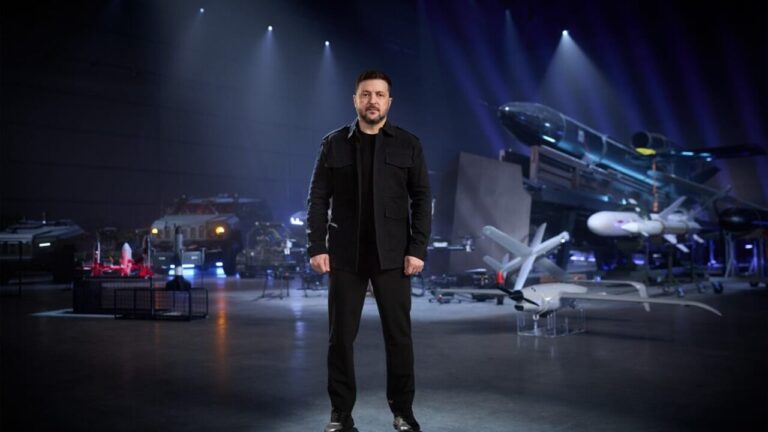
Ukraine is changing the way modern warfare is fought. After the start of the conflict triggered by the Russian invasion of February 2022, Kiev’s army reorganized itself as one of the most modern in terms of tactics and tools used. Not just drones, now also robots to be used on the battlefield, on the front line, to reduce human losses and exploit new technologies.
The first time robots were at the front
“The future is already on the front line,” Volodymyr Zelensky said, announcing that for the first time since the start of the Russian invasion, an enemy position would be conquered “exclusively by unmanned platforms,” i.e. drones and robotic ground systems, “without infantry and without losses” from Ukraine. The operation was conducted by an entirely robotic platoon, made up of tracked modules equipped with explosives and automatic weapons, supported by aerial drones. The volume of crossfire and the inability to counter the machines with normal barrage forced the Russian garrison to surrender. The next phase was also unprecedented: the escort of prisoners of war towards the Ukrainian rear was directed and monitored solely through the interaction between ground robots and aerial observation drones.
The first documented operation dates back to the end of 2024: unmanned reconnaissance aircraft mapped enemy positions from above, transmitting the data to the operations centers. The latter sent forward ground assault drones which, exploiting the forest cover and moving silently thanks to electric motors, opened their way by suppressing the Russian trenches with machine gun fire from below, while swarms of drones struck from above, dismantling entire enemy defensive lines before the garrison infantry took over.
Zelensky’s new investments
There are already tens of thousands of uses: the Ukrainian president announced that platforms such as Ratel, TerMIT, Ardal, Rys, Zmiy, Protector and Volia have already completed more than 22,000 missions.
The Ukrainian Defense Ministry has explicitly spoken of a “new form of warfare” based on assault units that combine unmanned air and ground systems with infantry into a single operational device. Minister Mykhailo Fedorov announced contracts for 25,000 ground robotic systems in the first half of 2026, double the entire volume of 2025. The stated goal is to have robotic systems perform 100% of front-line logistics tasks.
Russia publishes the addresses of factories in Europe that help Ukraine, “possible military targets”: Italy is also there
These units – they can have tracks or even wheels – guarantee the uninterrupted supply of ammunition, food and equipment, and are regularly used for the tactical evacuation of wounded soldiers, operating in extreme mud conditions and under interference from Russian electronic warfare. According to Ukrainian authorities, these platforms completed over 9,000 missions in March alone, while the Defense Procurement Agency has already signed 19 contracts worth over 570 million euros.
The models: what war robots do and how they work
To date, seven models produced by six Ukrainian companies are available, in addition to various types of drones and interceptors. The fleet is divided into specialized categories – assault, fire support and kamikaze attack – with specifications designed to maximize survivability and effectiveness in extreme environmental and electronic conditions.
The “Liut” (Fury) for example is a ground reconnaissance and support vehicle, armed with a 7.62 mm Pkt machine gun. It weighs 330 kg and is protected by armor capable of resisting small arms fire. Its optical system detects targets up to 1,200 meters away, operating remotely via an operator located 2 kilometers away as the crow flies.
The “Ratel S” is a small land drone specifically designed for “suicide attacks” against trenches or armored vehicles. It travels at a maximum speed of 24 kilometers per hour with a range of 6 kilometers and an autonomy of two hours. It has no firearms but can accommodate heavy explosive charges, such as anti-tank mines or mortar shells. It’s like a mobile explosive warhead that the operator remotely guides right under enemy vehicles.
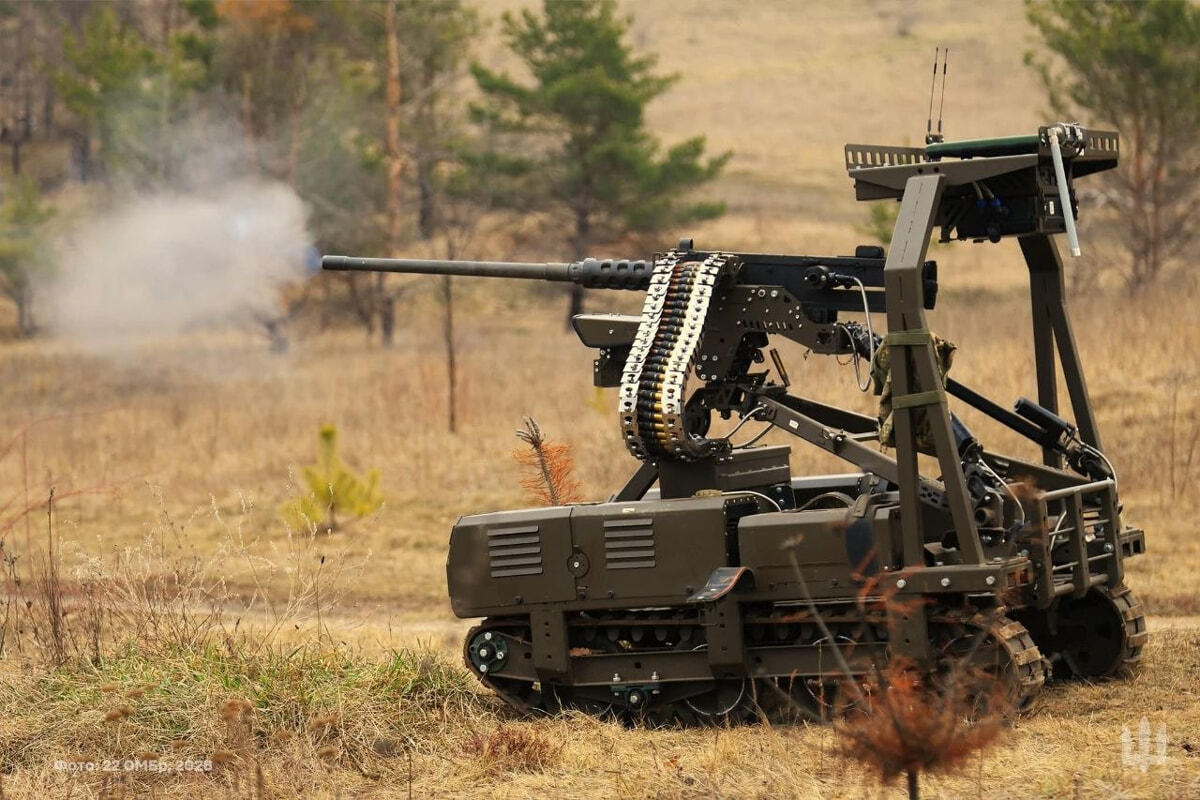
Other modules such as “Ironclad” and “ShaBlya Module” are heavy armored assault vehicles, equipped with machine guns and grenade launchers. In the hottest operational sectors, units such as the 123rd Territorial Defense Brigade and the 3rd Assault Brigade use mixed swarms of ground drones to prepare the battlefield before the infantry advance. The armored drones are sent ahead to “bait” them: by attracting enemy fire, they reveal the enemy’s camouflaged positions, onto which they then direct suppression fire thanks to thermal cameras. Simultaneously, “Ratel S” units are infiltrated into the chaos of the firefight to blow up exposed machine gun nests or to safely detonate enemy minefields and barbed wire, creating safe logistical corridors for the human assault troops in the rear.
How much is Vladimir Putin earning every day thanks to Trump’s war in Iran
Progress is rapid: according to Andrii Biletski, commander of the Ukrainian Third Corps, the massive use of land drones could soon allow the withdrawal of up to a third of the currently deployed infantry, thus mitigating the serious recruitment crisis affecting Kiev’s forces, saving numerous human lives.