

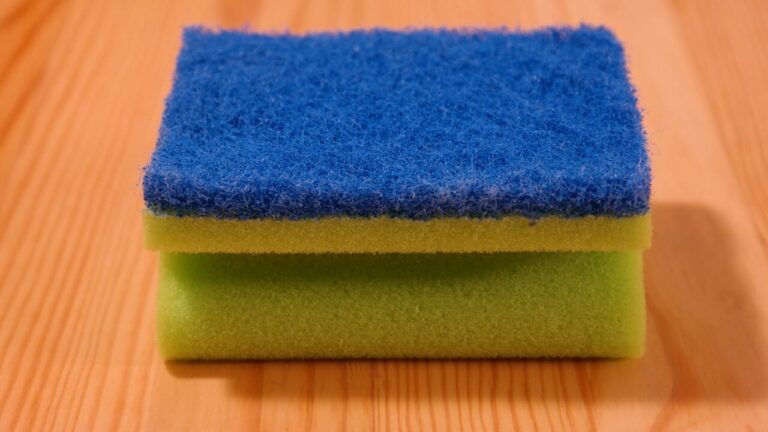
Damp, hot and full of food residue. It is now well known: the kitchen sponge is the ideal environment for bacteria. In 2017, a study by German microbiologist Markus Egert found up to 362 species of microbes and a bacterial density of 54 billion organisms per square centimeter, equal to that found in a human stool sample.
Research from Duke University in 2022 showed that the presence of pores of different sizes creates perfect niches for bacteria, helping to promote microbial growth.
The risk is low (but sometimes it is there)
What to do? Meanwhile, it must be said that the presence of these microorganisms does not necessarily represent a risk to our health. Bacteria are everywhere: on our skin, in the soil and in the air around us.
Not all of them are harmful, in fact many perform vital functions. The important question, then, is: Is it worth worrying about the bacteria in sponges? As the BBC explains, 90% of hospital admissions for food-borne illnesses can be traced back to just five pathogens, three of which are bacteria: Escherichia coli, salmonella and campylobacter. But fortunately these bacteria are quite rare in sponges. According to Egert, only “potentially pathogenic bacteria” were found in the research, which can be dangerous “for people with a weak immune system” such as “the elderly or children”, but not for healthy people. The vast majority of bacteria present in sponges is therefore harmless and only causes the material to smell bad over time, but this is not always the case.
In 2017, Jennifer Quinlan, professor of food safety at Prairie View A&M University, in the United States, together with other colleagues analyzed kitchen sponges from over 100 homes in Philadelphia. The researchers found that only 1-2% contained bacteria linked to food poisoning in humans. And where they were present, the most harmful pathogens were still in small numbers. “The vast majority of bacteria on sponges don’t cause disease, they just cause bad odors,” Quinlan commented.
However, the researcher added that “some studies have shown that it is possible to isolate pathogens from kitchen sponges”. THEThe use of this tool is not recommended, for exampleer clean raw meat or chicken juice and several searches have shown that the structure of the sponge makes it an ideal environment for the growth of pathogens such as salmonella.
Remedies against bacteria: from cleaning to using brushes
So how should sponges be cleaned? Several studies confirm that the microwave or dishwasher reduce the bacterial load even more than soaking in bleach, but they risk selecting the most resistant bacterial strains, making the effectiveness of the wash increasingly less as time passes.
The use of boiling water and disinfectant eliminates almost all microbes, but does nothing against those protected by viscous films. Despite this, this method is still effective in reducing the load of dangerous bacteria such as salmonella.
According to the BBC, a remedy could be to use kitchen brushes. A 2022 study by Solveig Langsrud, a scientist at the Norwegian food research institute Nofima, actually found that the brushes contained far fewer bacteria overall and were effective in preventing the proliferation of salmonella. Also according to microbiologist Markus Egert “a brush is much better because it retains less bacteria and dries more easily. Plus, it’s easier to clean.”
The infectious disease specialist at San Martino in Genoa Matteo Bassetti he proposed a more drastic solution. “After a week you have to throw them away because boiling them or sanitizing them is useless. The bacteria remain anchored inside, so they stratify.” The only thing to do, the white coat explained in a video last year, is to “throw them away and buy new ones”.