

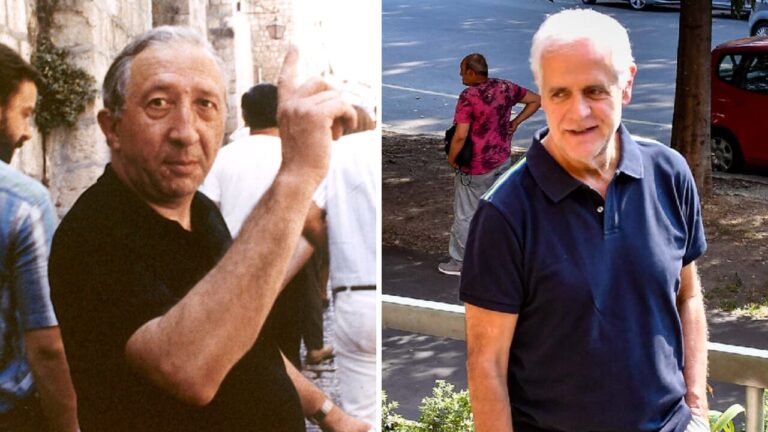
Communion and Liberation (Cl) is a Catholic movement born in Italy in the 1950s around the figure of the Milanese priest Don Luigi Giussani. It is not a religious order nor a party: it is an ecclesial movement made up mainly of lay people, recognized by the Catholic Church and present in numerous countries.
Its origins date back to 1954, when Giussani began teaching religion at the Berchet high school in Milan and working with Gioventù Studentesca, then linked to Catholic Action. At the end of the 1960s that experience progressively took the name of Communion and Liberation: “communion” indicates Christian belonging lived in community; “liberation” is the idea that the encounter with Christ makes man freer and more capable of influencing reality.
The distinctive feature of CL is precisely this: Christianity is not conceived above all as a set of moral rules, but as a concrete experience that must involve study, work, culture, politics and economics. Hence the strong presence of Ciellini in universities, professions, businesses, volunteering and, above all in some phases of Italian history, in politics.
The religious activity revolves around the so-called “Community School”, periodic meetings in which Giussani’s texts and other Church documents are read and discussed. Numerous social works, associations, cooperatives, schools and cultural initiatives are also linked to the movement, albeit with different legal forms and degrees of autonomy.
The best-known public event in the universe of CL is the Meeting for friendship between the peoples of Rimini, born in 1980. Over the years it has become a major political, religious and cultural event, attended by prime ministers, ministers, party leaders, entrepreneurs, representatives of the Church and international personalities.
| Reality | Sector | |
| Sacred Heart Foundation – Milan | school | Wanted by Giussani, CL appoints the majority of the Board of Directors |
| Company of Works – CdO | businesses/professionals/non-profits | It is the main economic-social network generated by the movement with over 10,000 associated profit and non-profit businesses. At the top Andrea Dellabianca (formerly Fiera Milano), Alessandro Bracci (Teddy Spa), Massimiliano Tonarini, Felice Vai |
| CdO Educational Works | schools | Network of school and training institutions |
| CdO Social Works | cooperatives/social | Social works network |
| Foundation for Subsidiarity | research/public policy | Think tank and research center chaired by Giorgio Vittadini |
| AVSI Foundation | international cooperation | Born in 1972 on the initiative of people belonging to CL. The general secretary is Giampaolo Silvestri, also present in the control room of the Mattei Plan |
| Food Bank Foundation | poverty/nutrition | Born in the Ciellino environment; Giussani participated in its birth |
| Pharmaceutical Bank Foundation | health care | Indicated by CL itself among its social works of reference |
| Families for Hospitality | foster care/adoption | Born in the early 1980s from the experience promoted by Giussani |
| Portofranco | school/school dropout | Born at the Sacred Heart by Don Giorgio Pontiggia and teachers of the Cl environment |
| Meeting Foundation for friendship between peoples | culture/events | Organize the Rimini Meeting |
On a political level, CL does not formally have its own party, but has had considerable influence especially in the Christian Democrats and, after the end of the First Republic, in the centre-right and centrist area. Among the politicians historically close to the movement, Roberto Formigoni, president of Lombardy from 1995 to 2013, is especially remembered.
| Name | Political role |
| Maurizio Lupi | deputy, president of Noi Moderati, former minister |
| Lorenzo Malagola | Deputy Brothers of Italy |
| Massimiliano Salini | Forza Italia MEP, vice-president of the EPP group |
| Elena Ugolini | former Undersecretary of Education; candidate for president of Emilia-Romagna 2024 |
| Raffaele Cattaneo | former councilor and president of the Lombardy Regional Council |
| Roberto Formigoni | former president of Lombardy, former senator |
| Mario Mauro | former Defense Minister, former senator and MEP |
| Giulio Boscagli | former Lombardy Region councilor, former parliamentarian |
| Massimo Trespidi | former president of the Province of Piacenza |
| Luigi Amicone | former FI city councilor in Milan; founder of Tempi |
In Lombardy the Ciellina network has had considerable weight in healthcare, cooperatives, foundations and public administrations for decades. This intertwining of faith, economic works and political power was also one of the most discussed and controversial aspects of CL.
Giussani died in 2005. At his funeral the homily was given by Cardinal Joseph Ratzinger, a few weeks before he became Benedict XVI. After Giussani, the movement was long led by the Spanish priest Julián Carrón. In the following years, CL went through a phase of reorganization and revision of its governing bodies also following the new Vatican regulations on international associations of the faithful.