

The message that arrived from Tel Aviv during the hours of the truce with Iran was clear: Lebanon is not part of the ceasefire. While Washington and Tehran negotiated to stop the open war, Benjamin Netanyahu’s government made it known that Beirut was excluded from the ceasefire and that operations against Hezbollah will continue.
The Lebanese front itself has in fact already undermined the truce, with Iran announcing a new blockade of Hormuz in response to the Israeli raids. Lebanon also represents a source of diplomatic friction between Israel and the United States. In the last few hours it has emerged that President Donald Trump has asked Netanyahu to reduce attacks in Lebanon to ensure the success of negotiations in Pakistan. And, on the afternoon of Thursday 9 April, the Israeli prime minister announced that he had ordered the opening of direct negotiations with Lebanon. The negotiations, he said, will focus “on the disarmament of Hezbollah and the establishment of peaceful relations between Israel and Lebanon.”
Israel’s strategy and objectives in Lebanon
For Israel, the Lebanese match has different and much deeper objectives than the confrontation with Iran. Behind the incursions, raids and evacuation orders that are emptying southern Lebanon – with over a million displaced, thousands injured and more than 250 dead yesterday alone, 8 April, when the deadliest attack since the beginning of this parallel front was launched – there is a strategy that Israel has been pursuing for almost half a century: creating a stable security belt across the border. But there’s more.
Over the last fifty years, Israel has entered Lebanon several times. In 1978 with Operation Litani, in 1982 with “Peace in Galilee”, then during the 2006 war and finally with the new offensive that started after 7 October and exploded again in 2025. Each time the official motivation was security: first the Palestinian PLO, then Hezbollah. The end point remained the control of southern Lebanon up to the Litani River and the creation of a buffer zone.
Goodbye to the “mow the grass” strategy: how the IDF moves now
This time, however, Israel seems to want to go beyond the traditional “mow the grass” strategy, that is, strike Hezbollah periodically to reduce its strength. The objective, according to many analysts and according to the declarations of Israeli ministers, is to “eradicate” the Shiite group: not only to destroy its arsenals and military leaders, but to break the link with the territory that supports it. This is why the Israeli operation does not resemble a classic invasion.
After the lessons of 2006 and the 2024 war, the Israeli army avoids a major advance of heavy vehicles. Hezbollah, weakened but still present, has also changed its way of fighting: no longer fixed lines and permanent positions, but small dispersed, mobile units that act with guerrilla tactics.
The hit and run and “salami” tactics
Israel responds with rapid, limited incursions, often of a “hit and run” type: it enters villages, destroys infrastructure, blows up roads, bridges and houses, then withdraws. The immediate objective is to cut connections between Beirut, the south and the Beqaa valley, isolating the various Hezbollah areas. A “salami tactic”, as he calls it Joseph Bahout, professor at the American University of Beirut: divide the enemy into pieces, make him less coordinated and hit him one sector at a time.
Behind this military logic there is a political one. Israel aims to occupy a strip between three and eight kilometers wide along the entire border. Systematic demolitions of villages and homes are already underway in that area. The idea is to create an area that is almost impossible to repopulate and keep the return of the inhabitants as a negotiating lever: no return, no reconstruction, until Beirut faces the Hezbollah problem.
It is the same scheme that Israel has already used in the past, but today it appears much more radical. Defense Minister Israel Katz made it clear that the displaced Lebanese will not return to their homes south of the Litani until the security of northern Israel is guaranteed. On the ground this means that over a million people have been forced to leave their homes and that around 14% of Lebanese territory – according to the latest estimates from mid-March – has been emptied.
Not just security: Lebanon’s strategic resources
The project is not just about safety. Strategic resources are also concentrated in southern Lebanon: water, agricultural land and, off the coast, gas fields. Israel has long looked at the Litani, the great river in southern Lebanon, and at the water resources in the area. During operations in recent months, water plants, pumps and infrastructure have been hit in the Beqaa and in the south of the country. The Wazzani area, on the border with Israel, was devastated, while evacuation orders went well beyond the Litani, up to the Zahrani river.
The objective declared by some members of the Israeli government is a “buffer zone up to the Litani”. But a militarily controlled strip up to that river would also mean controlling one of Lebanon’s main water reserves. Then there is the sea. In 2022, Lebanon and Israel had reached an agreement on the maritime border: the Karish field to Israel, the Qana field to Lebanon. Today, however, Israeli Energy Minister Eli Cohen openly questions that agreement, claiming that Israel would not have benefited from it.
For Beirut it would be a huge blow. That compromise had already been signed in a phase of extreme political and economic weakness in Lebanon. Now, with the country under military and diplomatic pressure, Israel seems to want to use the gas dossier as a further instrument of pressure. But the real target remains Hezbollah. Netanyahu believes that the Shiite movement is more vulnerable than in the past. The 2024 war eliminated much of its leadership and destroyed a significant part of its infrastructure. Furthermore, Hezbollah can no longer count on Syria as a safe rear area as happened in past years.
The Israeli idea is simple: weaken the group to the point of forcing the Lebanese state to disarm it. If Beirut fails to do so, according to many observers, Israel would not even rule out a scenario of internal chaos. A Lebanon marked by tensions between Shiites and the rest of the population, with Hezbollah accused of having dragged the country into a devastating war, would still be a weaker and less dangerous Lebanon for Israel.
All the times Israel invaded Lebanon and the forgotten lessons
This is where the conflict takes on an even more ambitious dimension. It’s not just about winning a war, but about redesigning Lebanon’s internal balance. Israel hopes that military pressure, displacement and destruction will drive a wedge between Hezbollah and its own social base.
If the Shiite villages in the south remained destroyed for years, if hundreds of thousands of people were unable to return, the “Party of God” would risk losing part of its legitimacy. The problem is that this strategy could produce the opposite effect. History teaches that each Israeli invasion of Lebanon has ended up generating new enemies.
The 1982 occupation favored the birth of Hezbollah. The 2006 one failed to eliminate him. And even today many doubt that the bombings and occupation can really eradicate a movement rooted in Lebanese society, politics and the Shiite community. Furthermore, Israel still carries the burden of previous wars. Between 1985 and 2000, more than 650 Israeli soldiers died in the occupation of southern Lebanon. In 2006, in just 34 days, the losses were 164. The guerrilla war always forced Israel to retreat.
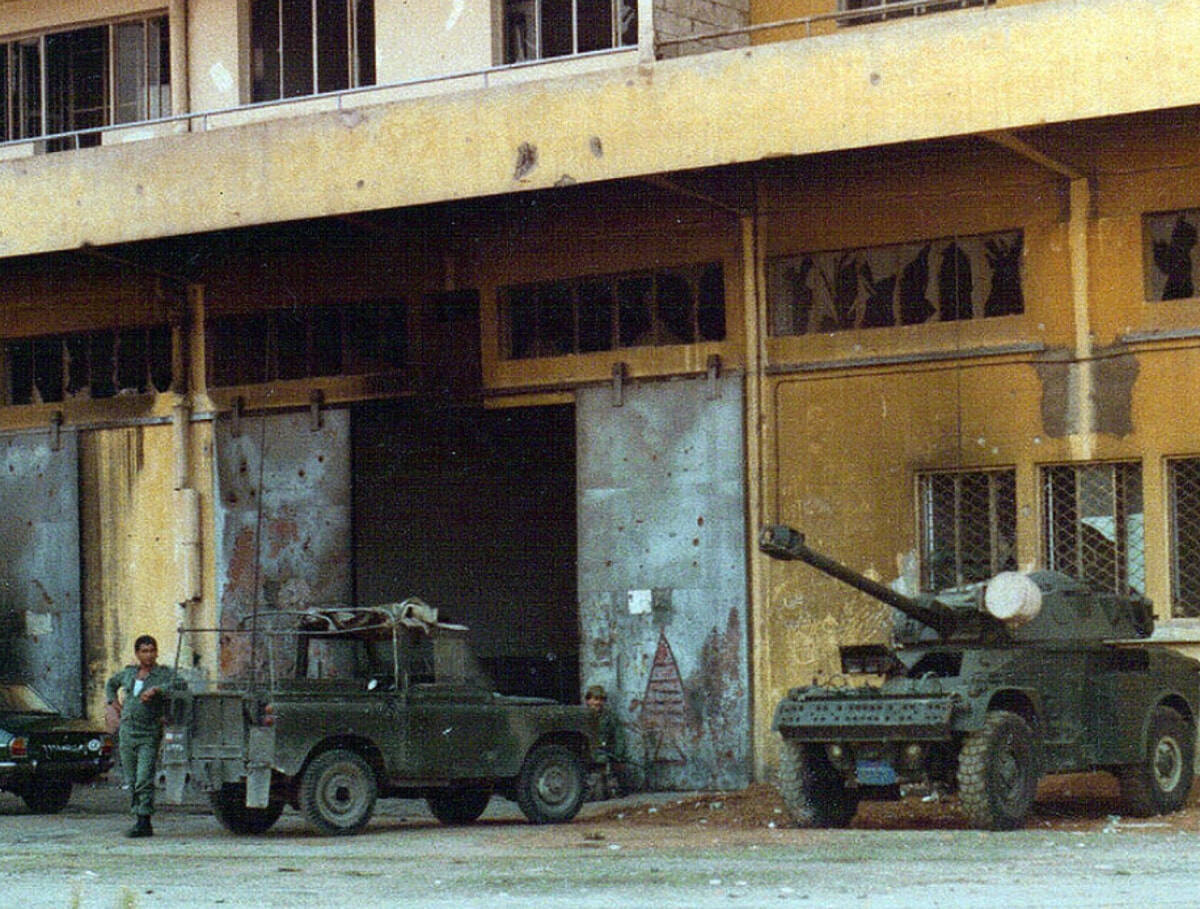
This is why Netanyahu is trying a different path today: fewer tanks, more drones, intelligence, selective destruction and political pressure. A war designed not only to hit Hezbollah, but to change Lebanon. It remains to be seen whether this project is really feasible. Because the “final war” evoked by both sides could indeed transform Lebanon. But not necessarily in the way Israel envisions.