


Fantasy football has now become a rival, or the best friend (depending on your point of view), of the football played. The last season of Serie A was followed, for each day, by an average of 7.2 million people on Sky and Dazn. A figure that does not refer to unique users, but to overall spectators, and which therefore also includes those who watch multiple matches in the same round. Numbers very close to the subscriber base of the Fantacalcio platform which is the leader in the sector with around 7 million users. The turnover is therefore immense, so much so that the Lega Serie A has decided to purchase the majority of the shares of the company which in recent years has made fantasy football an online game within everyone’s reach. But it all started with pen and paper.
The origins: how the fantasy football trend began
To understand the Fantacalcio phenomenon we need to go back to the end of the 1980s. The inventor of the game is Riccardo Albini, a Milanese journalist born in 1953, at the time director of the magazine Videogiochi. During one of his trips to the United States, in a Chicago bookshop he was intrigued by a book called Fantasy football. The game consists of forming a team made up of athletes who take to the field for American football teams. The idea seems good to him and he decides to try to do something similar in Italy, but with the most nationally popular sport: football.
Back in Italy he wrote down a draft regulation and decided to do a test with seven friends during the 1988 European Championships. The meeting point was the Goccia d’oro bar, in via Ausonio in Milan. The experimentation lasts two years, then in 1990 Albini publishes the first book that explains how the game works. The bonuses (goals and assists), the penalties (own goals and cards) and the voting system that relied on the Gazzetta dello sport and the Corriere dello sport. The first publication did not go well: only 2,500 copies sold out of a circulation of 10,000.
If the game doesn’t end up forgotten it’s thanks to some speakers from Radio Deejay and a group of journalists from the Gazzetta. Newspaper that in 1994 decided to host within its pages what Albini had created.
The transition to Gedi and Quadronica
The success grows year after year so much so that it attracts the L’Espresso publishing group. In 2000, Albini and his partners sold, through Kataweb, their company Edizioni studio Vit, the brand and the rights to the game, to the information giant. For 17 years Gedi developed the game, but not believing in it enough, he sold it to the Neapolitan Quadronica srl. The company, founded in 2008, had in the meantime created a competitor, the website fantagazzetta.com.
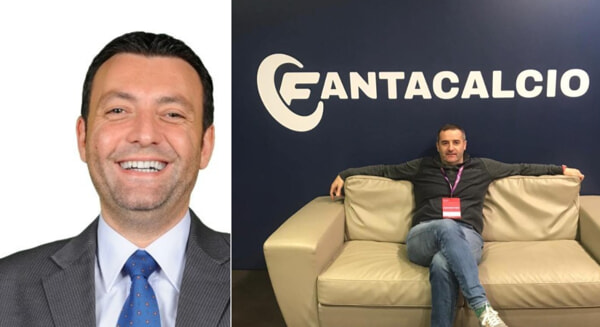
Behind the Neapolitan club are Nino Ragosta and Luigi Cutolo. In 1998, thanks to their passion for programming and their web agency, they created a platform in which to upload the chosen squads and update the votes after every single day. In the 2000s they opened the site to the public and created the first league system. Each group of friends can thus register and create their own private championship. Word of mouth multiplies subscribers and in 2017 the company completes the purchase of the Fantacalcio brand from Gedi. The rebranding lasts two years, from fantagazzetta.com we move to the current fantacalcio.it.
How the system works
Anyone who lands on the fantasy game site linked to the world of football immediately notices that the platform is divided into two sections. There is the newspaper that deals with everything related to football and then there are the games. Each sector lives thanks to the other. Ragosta is the editor-in-chief of the site on which well-known names and faces from Italian sports journalism collaborate: Riccardo Trevisani, first at SkySport and now at Mediaset; Pierluigi Pardo, at Dazn; Mario Giunta, presenter on SkySport and expert on the transfer market.
They are the ones who take care of the votes together with a team of 30 people who follow each match in teams of three: one reviews the crucial actions live and provides useful details to the two who take care of the voting, the “technician” who uploads the live vote to the site and the report card writer who has the final say.
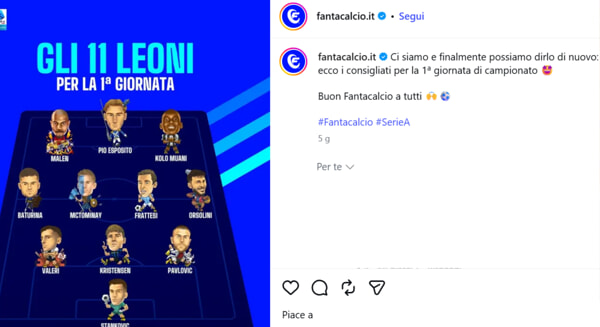
The site provides all the useful information for fantasy footballers in anticipation of the individual matchdays and above all the most important moment for any player: the auction. Before the championship begins or in the days following the closing of the transfer market, the players meet to create their teams. The platform provides them with fictitious credits with which to purchase footballers, from goalkeepers to forwards. Their value is established by the bonuses and the average grade accumulated in the past season. But they are only indicative, it will be the one who offers the most who will win each individual player.
After forming the teams, the starters who will accumulate the votes on that specific day line up. And this is where the newspaper and the platform integrate to offer fantasy footballers the necessary information and at the same time make the company profit. When you load the formation onto the pitch, advertising billboards appear with the logos of the brands that have purchased that space. Companies such as Puma, Allianz and McDonald’s are among the selectable sponsors to add on their shirts. And then there are the premium features, at 12.49 euros per year, which do not give any competitive advantage but allow you to access information on footballers without displaying advertising.
The takeover of Serie A
The business strategy rewarded Quadronica which went from 1.2 million euros in revenues in 2015 to a turnover of 9.6 million in 2025, with a profit of 3.5 million. A constant growth already rewarded by Serie A which in 2021 chose it as the official fantasy game of the League.
On February 16, 2026, the teams’ meeting gave the green light to the acquisition of 51 percent of the shares of Quadronica. An operation worth approximately 18 million euros and which starts from an overall valuation of just under 40 million. Double compared to two years ago.
There are at least two reasons behind Serie A’s interest. By getting its hands on Neapolitan society, the League appropriates the data it brings with it. Information that may be useful in terms of advertising and television rights. And then by incorporating the most used application for playing fantasy football, we gain a large loyal community willing to follow even the less “exciting” games on paper in the hope that one of our players will get a bonus.
The same broadcasters that divide the races, Sky and Dazn, have understood the potential of the platform. The Sky Superscudetto competition which offered numerous prizes for users was not renewed after the 2024/25 season. The following year the television giant created a partnership with Quadronica by launching Fantachampions, dedicated to the Champions League. Dazn, on the other hand, has put several new features on the table.
First of all, by subscribing from the Fantacalcio Serie A Enilive app to the full mobile Dazn package, 19.99 euros per month, the premium version of the gaming platform will be included. From the third day the Fantacalcio night program will begin which will offer detailed analyzes with the experts from Dazn and Fantacalcio. Finally, the integration of the players’ live votes during the viewing of the broadcast matches is envisaged.
These are all services that complement those announced by Lega Serie A and Volkswagen for the Fantacalcio Leagues application. Within the platform, fantasy managers will be able to see highlights of their players and will receive daily news and updates relating to the squad.
The newspaper founded by Fabrizio Romano and Fantalab
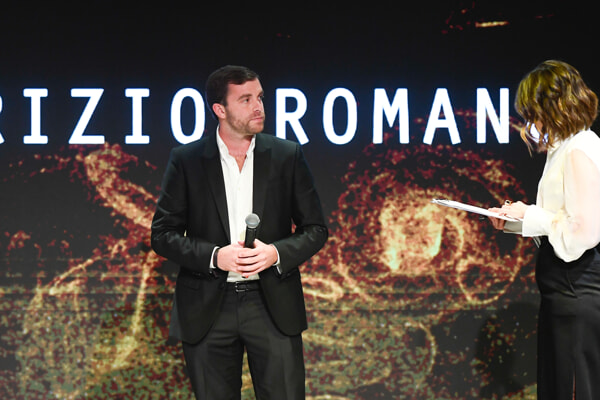
The Fantacalcio system is larger than the application managed by Quadronica. Over the years, specialized sites have been created. This is the case of Sos Fanta, launched in 2015. The online newspaper is the result of the collaboration between the sports journalist Guglielmo Cannavale and the most famous transfer market expert in the world: Fabrizio Romano. The platform is an aggregator of news on player transfers, tips for the auction and suggestions on the teams to field.
There are also competitors like Fantalab that try to rethink the fantasy football game in a modern way. The company is based in London and was founded in 2022 by Italians Federico Allegro and Luca Soldera. On the platform it is possible to view the advice of expert fantasy football content creators such as Carmyspecial, pseudonym of Carmelo Russo with 89 thousand followers on Instagram, and Il Profeta, nickname of Marco Daveri with 115 thousand subscribers on YouTube.

Users can stop by the free advice they find on the app or participate in the platform game. Compared to traditional fantasy football, on Fantalab you also have to manage a company like a manager. If you are good enough you can qualify for the Master league which offers real prizes for the best teams.
Without fantasy football, football in Italy would be over – by Claudio Pizzigallo
Fantalab claims to have around 100 thousand players, a solid base from which to try to undermine the dominance of Fantacalcio.it. The market is vast and this does not mean that the sector cannot open up to innovations. After all, it all started with pen and paper and an editorial failure. The virtual game seems to attract many, perhaps because it captures the disappointment of fans who consider our Serie A not up to par with other European championships.
Dossier is the exclusive subscription investigative section of The Vermilion. If you want to support our journalistic work and subscribe, Click here.