

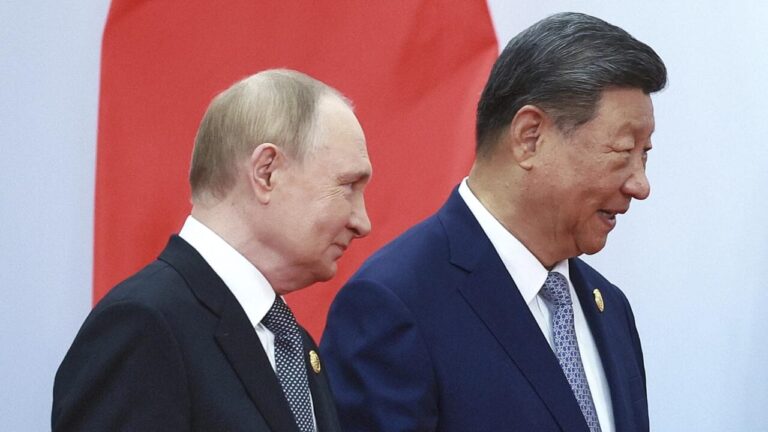
China and Russia have vetoed the draft resolution proposed by Bahrain to the UN Security Council on the security of the Strait of Hormuz. The text, already watered down compared to the original request from the Gulf countries to obtain authorization to use force, did not obtain the necessary votes: 11 in favour, two against and two abstentions, that of Colombia and Pakistan, the latter with very close relations with Tehran and engaged in a mediation role in the current conflict with Washington.
The draft limited its scope to the request to unblock the sea route, without foreseeing military interventions, but Beijing and Moscow still chose to block it, marking a clear – and predictable – political signal which represents yet another demonstration of the difficulty of action of the UN Security Council, precisely because of the veto right of its permanent members.
China between oil and antagonism with the USA
Beijing’s position is determined by a combination of economic and strategic interests. China is Iran’s main trading partner and the largest buyer of its oil: in 2025, Iranian crude oil imports reached volumes between 1.3 and 1.8 million barrels per day, representing between 80 and 90% of Tehran’s seaborne exports and approximately 13–14% of China’s total seaborne imports. Any resolution that could put pressure on Iran would have jeopardized this vital energy axis, critical to the security of Chinese supplies.
Furthermore, Beijing aims to preserve regional management without the formal mediation of the UN, preventing the Security Council from becoming a vehicle for the American military presence. The Chinese strategy is therefore twofold: protecting its energy accessibility and protecting regional sovereignty, opposing any measure that could justify external interventions in the Gulf and facilitate American action.
What Moscow wins: tactical advantages (without direct risks)
Russia’s strategy towards Iran is more calibrated. Moscow bases its alliance with Tehran on the objective of consolidating an axis resistant to sanctions and complicating Western moves, without however exposing itself directly to the armed conflict. Since the beginning of the joint US-Israeli attacks on Iran, Russia has combined public condemnations and intensified diplomatic engagement, offering forms of support such as more “discreet” intelligence exchanges rather than sending additional military contingents or open challenges to Israeli and US interventions.
“Russia is helping Iran strike US forces”
Indeed, Russian behavior aims to maximize its influence at low cost, preserving global freedom of action and accumulating strategic levers for other scenarios, first and foremost the war in Ukraine. The United States’ military commitment in the Middle East, in fact, calls into question support for Kiev and this represents an important tactical advantage for Moscow. Disruptions in the Gulf then generated an increase in demand for Russian oil on global markets, reducing or eliminating the discount on its crude oils and temporarily improving tax revenues.
The veto of China and Russia leaves the Strait of Hormuz without a shared UN framework, entrusting security to voluntary coalitions. The behavior of Tehran’s two main allies highlights how the Middle East and in particular Hormuz, one of the most strategic oil routes in the world, has become a node of intersection between energy interests, military strategy and global diplomacy. For China, the link with Iran guarantees fundamental energy supplies and strengthens its economic position and international influence from an anti-American perspective. For Russia, Tehran is a diplomatic lever that allows it to maintain relevance in multiple theaters and accumulate political advantages without direct costs.