

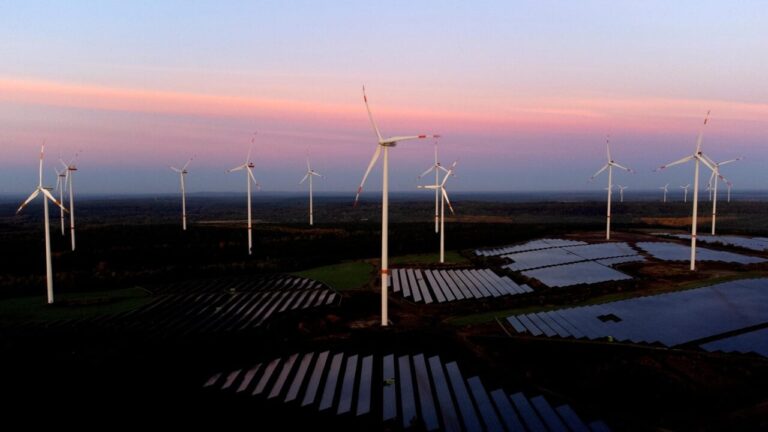
Between spring and summer, a paradox is created before our eyes: in some hours of the day energy costs zero euros. The credit goes to renewables. But if we took advantage of it by doing the washing machines during these price drops, we wouldn’t see any benefit in our bills. And the fault lies with renewables, always them. In the end, therefore, do “clean” energy sources lower our electricity bills or not? To answer, we need to understand the incentive system that supports photovoltaic and wind energy systems and how prices are formed on the market.
Do more renewables equal lower bills?
Renewable sources are generally presented as the main recipe for reducing the cost of bills and eliminating dependence on fossil fuels, the vast majority of which arrive in Italy from abroad. For example, we have replaced piped gas coming from Russia with another foreign source, LNG made in the USA. And this too has costs.
The presence of renewables continues to increase. In 2025 these sources covered 41.1 percent of Italian electricity demand, with photovoltaics increasing by over 25 percent: solar systems connected to the grid have exceeded the 2 million threshold, even if the number of new installations has slowed down.
We could deduce that, as a consequence of an increase in renewables, our electricity bills have benefited. In reality, the result is more complex. According to the latest annual analysis by Enea, in 2025 the price of electricity on the Italian stock exchange recorded an average of 116 euros per megawatt hour, 7 percent more than in 2024. The value remains decidedly higher than that recorded in the main European markets: 90 euros in Germany, 65 in Spain and 61 in France.
Because it controls the gas
Renewables are not yet able to “impose” their presence due to the price formation mechanism on the market. This happens because energy is exchanged as if it were a commodity and each plant that produces it has a price necessary to at least cover the production costs. The one produced at the lowest price is sold first and usually comes from renewables. But if production is unable to satisfy demand – something that renewables are still unable to do – other power plants such as coal, gas or, abroad, nuclear power plants come into play.
Thus, in 2025 gas-fired power plants made up the price of electricity for about 40 percent of the hours. On the contrary, renewable sources, by their nature non-programmable, have instead directly set the price only in a limited portion of hours.
The paradox of renewables: price at 0 euros but it doesn’t show on the bill
Solar production is concentrated in the central hours of the day. When the sun is strong, consumption is low and many plants produce at the same time, the wholesale price can drop to zero or become negative. This happens especially between spring and summer and in Southern Italy, where most of the plants are concentrated. In the absence of storage systems, this creates a situation where more energy is produced than is needed.
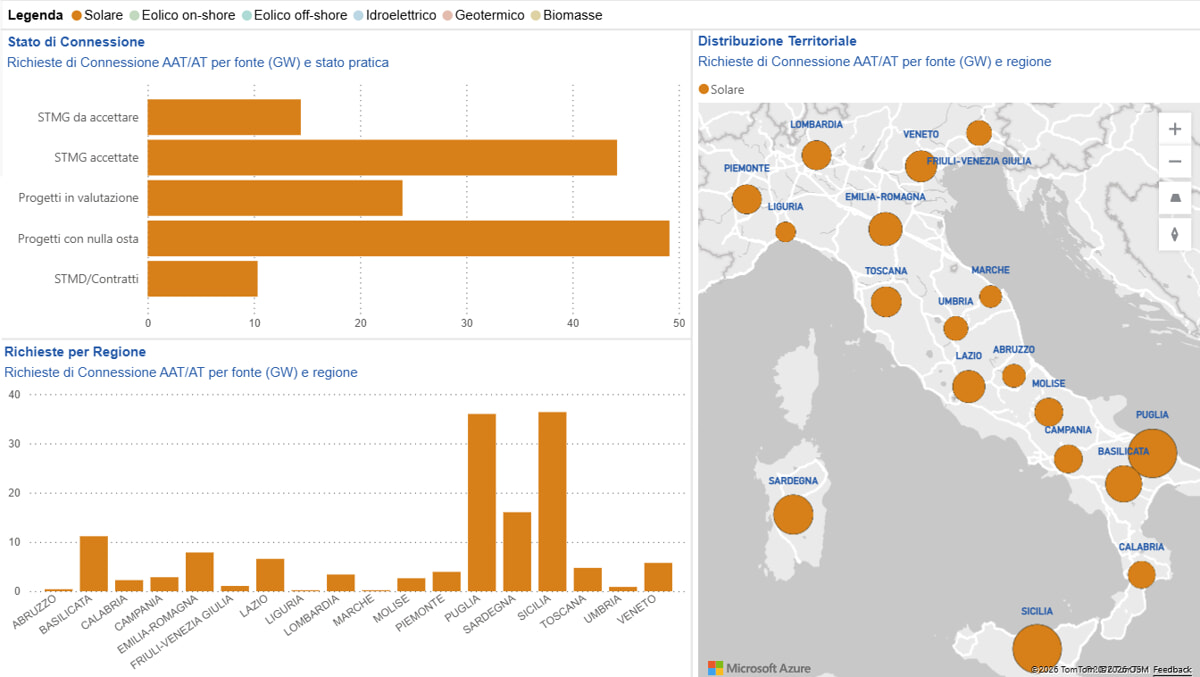
As happens during particularly sunny or windy Sundays when photovoltaic and wind power find themselves producing more energy than they need, causing prices to collapse in some areas and bring them to zero or even negative. It is no coincidence that most of these plants are in the south and that requests for connection to the grid for new ones always come from the same areas: given how the incentives work, it is convenient to invest in the south, even if the energy is “wasted”.
Get paid to waste energy
But all this doesn’t translate into lower bills for consumers. On the contrary. When photovoltaic brings prices to 0 euros it causes an illusion in consumers: in reality, at that moment they are the ones who pay. To develop renewable sources, over the years the State has proposed special “tariffs” to plant managers. In general, this is how it works: the State pays the price difference with fossil fuels – which are more expensive – and, in some cases, reimburses the energy that a plant produces in addition. That is, the very situation that causes prices to collapse to 0.
Over the years, a complex system of different incentives has been created that cover these differences and guarantee the survival of the plants. This has also produced a “distortion” of the market, as Carlo Stagnaro told us, so that it is more convenient to invest in the south and, in practice, where it would not be needed. Demand is already largely satisfied by existing plants while consumption is higher in the north due to industry.
They save (a lot) and the State pays for them (in part): I’ll take you to an energy community, here’s how to join – by Arianna Cerone
Example: if a photovoltaic system in Puglia produces a lot during a sunny day, at the moment it is useless because the system does not have the capacity to receive that energy or move it northwards, but it is still rewarded, even if it contributes a quantity of energy equal to 0 to the system. All this has a cost that ends up in the bill and has precise figures. Also because another cost spiral is created: adapting the system to transport energy along the Peninsula has a decidedly high price.
How much green energy weighs on the electricity bill
In the bill, there is an explicit cost that finances renewables: the item that refers to green energy falls within the “system charges” and is the “Asos” component. It has a variable weight depending on the user and can even exceed 22 percent of the total. Let’s take an example: in the image below, it is around 19 euros out of a total of 88 in the electricity bill.
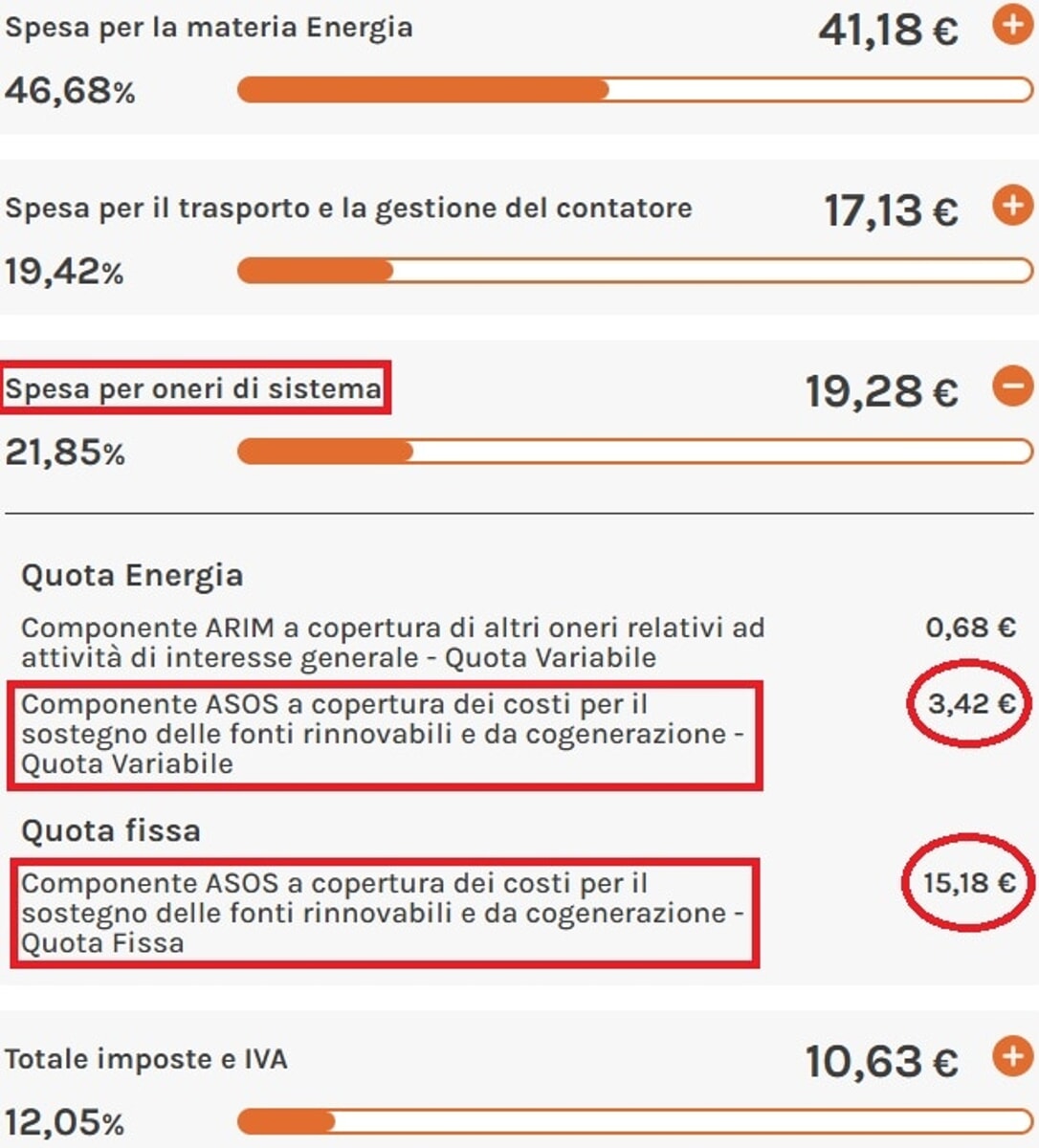
According to the reference prices established by Arera, for the typical vulnerable customer with greater protection – therefore with more advantageous conditions compared to “normal” users – we would be talking about around 42 euros per year. However, it is not the overall expense. To these figures we must add the costs that the system incurs for the electricity grid and energy transport.
Dear bills, we pay the “bonuses” for Terna and Arera: how much they weigh on our expenses – by Cesare Treccarichi
These are rumors that would exist even without wind and photovoltaic power, but to be able to accommodate and transport the power created by renewables, Terna, the state subsidiary that manages the electricity grid, has investments and projects in the pipeline for approximately 17.7 billion euros until 2028. As we had seen, this creates a Terna “bonus” passed on to bills: in 2026 alone it will be just under 3 billion euros.
10 billion a year in incentives
But in addition to transport and network costs there are the incentives we talked about. They are various, some are about to end, but new ones are coming. Over the years they have had a very high cost, especially in the initial phase of photovoltaic and an important part of that expense will continue to weigh on the bill for a few more years.
According to available data processed by The Vermilion, these incentives cost around 10 billion euros in the last year. The Ministry of the Environment is trying to correct these distortions with the new Fer
These sums cover the system’s inability to transport energy where it is needed most or to accumulate it, financing the plant operators. This creates the paradoxical situation whereby if market prices fall, the costs in the bill increase to cover the price differences and direct them to “green” plants: in Arera’s latest report on the topic, we read that “the costs deriving from encouraging renewable sources are growing as a result of the reduction in market prices of electricity”. The system works like this, waiting for corrective mechanisms.
Renewables remain the solution against pollution and high bills, but without adequate regulatory corrections the paradoxes multiply. And it is always the citizens who pay. Without benefits.
Dossier is the exclusive subscription investigative section of The Vermilion. If you would like to support our journalistic work and subscribe, visit our showcase by clicking here.