

09Aug 25
World Champion at 12 years old. Many questions
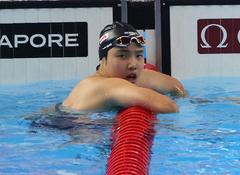
We always ask ourselves when in a world championship, at the Olympics, children descend in the field. The last, a few weeks ago, at the Singapore swimming World Cup where Yu Zidia 12 -year -old Chinese swimmer, became the youngest athlete ever to win a medal in swimming. In a few days he arrived fourth in the finals of the 200 meters butterfly and 200 mixed and won the bronze medal in the 4 × 200 freestyle relay. A phenomenon, there is no doubt.
But it wonders what the meaning of these companies is, what is the priority: If the champion or the girl is worth more, whether it is right or not comparing it with already teenage and trained athletes or if a path of personal and sporting growth should be preserved despite a huge talent that allows it in practice to compete on an equal footing. The result, the record, the medal or the educational sense of sport in the growth of children which is always a path that “trains” to grow, to emulate, to dream even if then should always be taken to account that at a certain age the dreams are of crystal and should be handled with care …
That a girl wins a medal in a World Cup is “History” But, given the age it would also be appropriate to consider the “future” of these very young champions. Many get lost and stand there. It is part of the game and statistics. But who continues, who goes on what price pays? At 12, a child is in second average, in this period he generally thinks about holidays, homework, playing with the lightness that the age fortunately still grants him. A girl who prepares a World Cup or an Olympiad has other thoughts: to train, compete, get to the top of the form at the appointment, compete and obviously win. In addition, Yu Zidi is Chinese and in his country sport is considered a primary tool to increase national prestige, not surprisingly the state invests very soon in the athletes. An extra weight, more pressures that a child’s mind and psyche is not ready to face. So. So stakes would be needed, a border line that the federations should trace or review where it already exists that allows children to compete with children and so on regardless of athletic qualities, class and talent.
Yu Zidi’s exploit has created not a little sensation even among the leaders of international swimming. There World Aquatics In fact, he took into consideration the possibility of reviewing his rules on the minimum age for participation in his competitions now set at 14 years with the possibility of derogations in the event of high-level chronometric performance: “We will examine the situation and we will evaluate if we have to do more- explained the CEO Brent Nowicki- Our minimums are so rigid that I didn’t think that a twelve year old would reach them. But now I think we have to ask questions and if it is necessary to put in place other measures “. That in essence it is already an answer …