

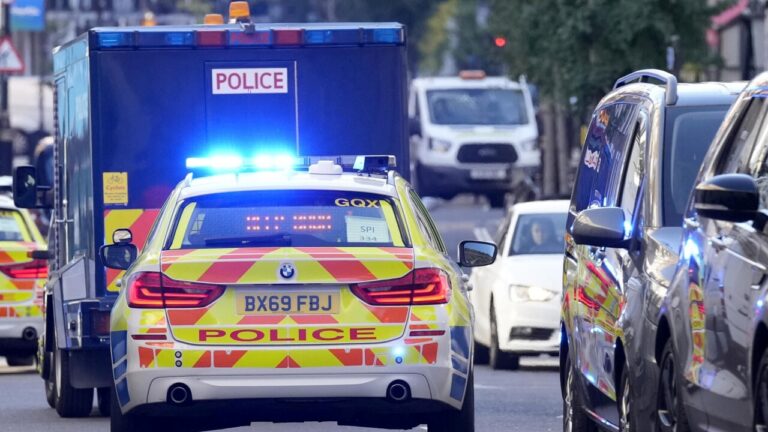
Twelve deaths in the space of a few days, including two police officers and several teenagers. A trail of blood that forced the authorities of the United Kingdom and Ireland to open two investigations into the connection between the crazy maneuvers, with cars on the wrong side of the road and with the headlights off, and the videos spread on social networks.
The incident in Middlesbrough
The latest tragic episode occurred on the night between Friday 21st and Saturday 22nd August, on the A66, a fast road near Middlesbrough, in northern England. A Volkswagen Passat with five young people between 17 and 23 years old on board, after being chased for a few minutes by a patrol car, entered the road in the wrong direction, crashing head-on with a second steering wheel coming from the opposite direction. The high-speed impact left no escape for any of the occupants of both vehicles: the two officers on board the patrol, Matthew Blades and Tom Clough, and the five boys who were in the other car died in the accident.
Arrests and the role of social media
Subsequent investigations revealed a complex scenario. The Passat that collided with the officers was already wanted because it was connected to a Volvo XC60 that had crashed into some houses in the area shortly before. Both vehicles were traveling with cloned license plates, intercepted by the automatic recognition system, and four of the five deceased young people had criminal records. This prompted the English police to arrest twelve people, nine men and three women aged between 19 and 61, suspected of crimes ranging from possession of firearms to participation in the activities of an organized criminal group. Parallel to the gang’s activity, controversy has exploded over the role of social media. One of the young people killed, 18-year-old Makai Saddington, had previously shared some videos on TikTok showing him driving at high speed and, in one case, during a chase with the police.
The precedent in Ireland
Although the police have clarified that there is no evidence that the events of that night were filmed to be published online, the case joins a precedent that occurred just a few days earlier, on August 16. On the M9 motorway near Dublin, Ireland, a head-on collision caused by a wrong-way car killed five teenagers aged between 15 and 18 and seriously injured four people, three women and a child who were on their way to a wedding. Even in that case, some of the young victims were in the habit of spreading videos of dangerous driving on social media.
The squeeze on videos
Faced with this trail of blood, the British Labor government promised an immediate crackdown. Interviewed by the media, Deputy Defense Minister Luke Pollard asked social platforms, starting with TikTok, to immediately remove content that celebrates risky behavior behind the wheel, underlining that the executive is ready to use the powers of the Online Safety Act to force web giants to respect the rules.