

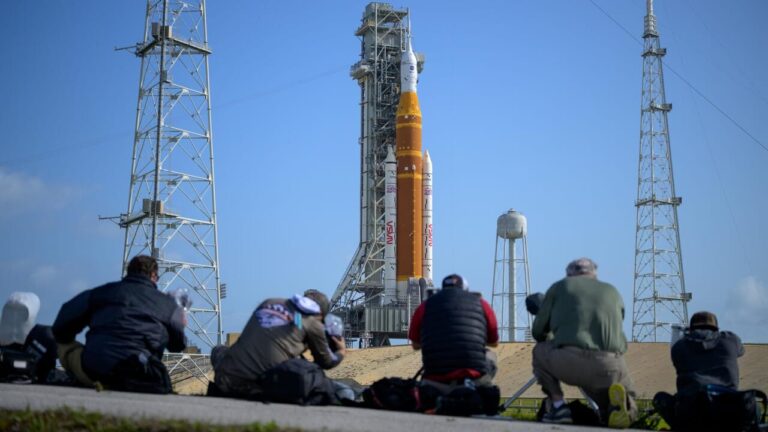
If all goes as hoped, the Artemis 2 mission will bring man back into orbit around the Moon. After several postponements, and a good deal of technical problems, this time NASA estimates an 85 percent probability that the rocket, with the Orion spacecraft on board, will finally be able to take off from the Kennedy Space Center. The objective is important: a journey around the satellite that will not be a simple panoramic tour, but the first mission that will fly over the far side of the Moon with a human crew on board.
It will allow us to verify the functioning of life support and communication systems in a deep space environment, preparing the ground for Artemis 4, the mission that will officially bring humans back to walking on the surface of the satellite by the end of the decade. With the ultimate goal of transforming the Moon into a logistical base for future exploration of Mars.
Artemis, live coverage of the launch
The technology to return to the Moon
Artemis 2 is designed to validate the performance of the Space Launch System (SLS) and the Orion capsule, the super rocket and spacecraft developed by NASA for missions outside Earth orbit. It will be the first test with humans on board, following the success of the unmanned Artemis 1 mission.
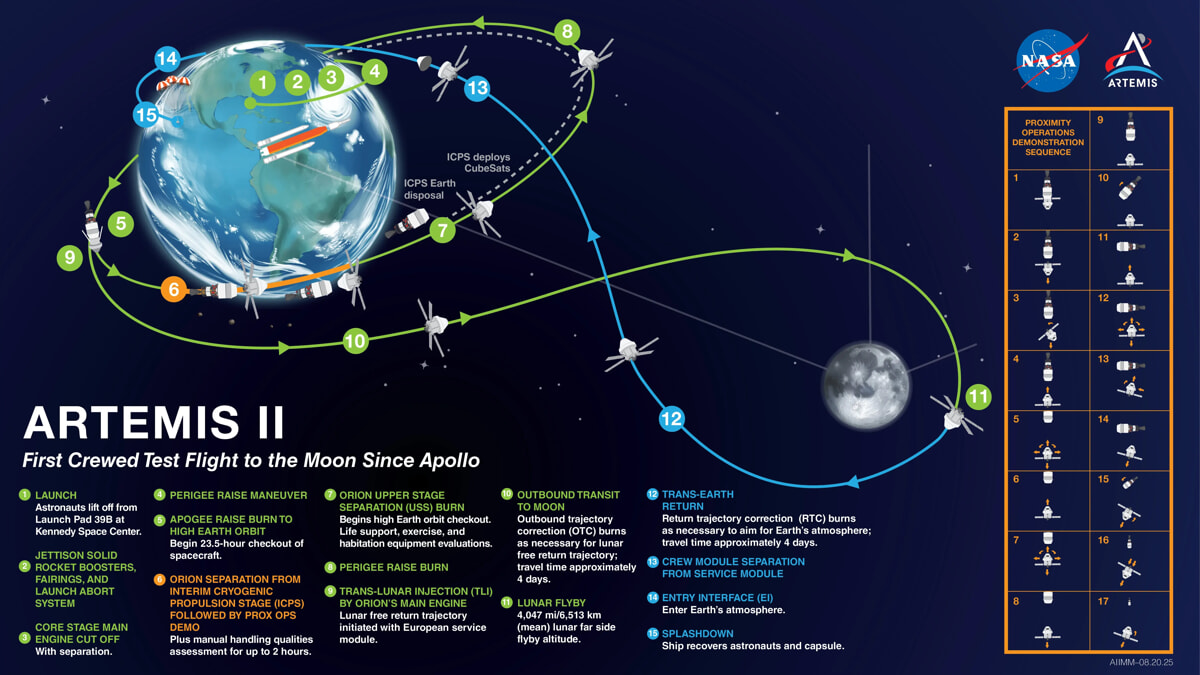
During the approximately ten days of flight, the spacecraft will follow a “free return” trajectory: once the initial push has been carried out, terrestrial and lunar gravity will naturally bring the capsule back home, reducing the risks in the event of engine failure. In this phase, technicians on the ground will monitor the Orion’s ability to manage radiation and keep the cockpit pressurized, conditions that will be pushed to the limit during the prolonged stay on the surface foreseen in the subsequent stages of the program.
The four passengers of the Orion
The crew selected for this orbital test is composed of Reid Wiseman, Victor Glover and Christina Koch – the first African American and the first woman to travel beyond low Earth orbit – and the Canadian Jeremy Hansen (the first non-US citizen to make such a journey). Their main task will not be scientific research, in this case, but monitoring the spacecraft’s manual piloting systems and interfaces, and studying the effects of space radiation and microgravity on the human body. This is a group of astronauts with extensive experience on the International Space Station, whose journey will mark the return of man to deep space after a break lasting over half a century, that is, since the last Apollo mission in 1972.
Distance and speed records
Even if it is not destined to land on the lunar surface, Artemis 2 will set several interesting records. The mission will take astronauts approximately 7,400 kilometers from the surface on the far side of the Moon, reaching over 410,000 kilometers from Earth, the furthest distance ever reached by a human crew. Furthermore, the Orion capsule will reach extremely high speeds: re-entry into the Earth’s atmosphere will occur at almost 40,000 kilometers per hour.
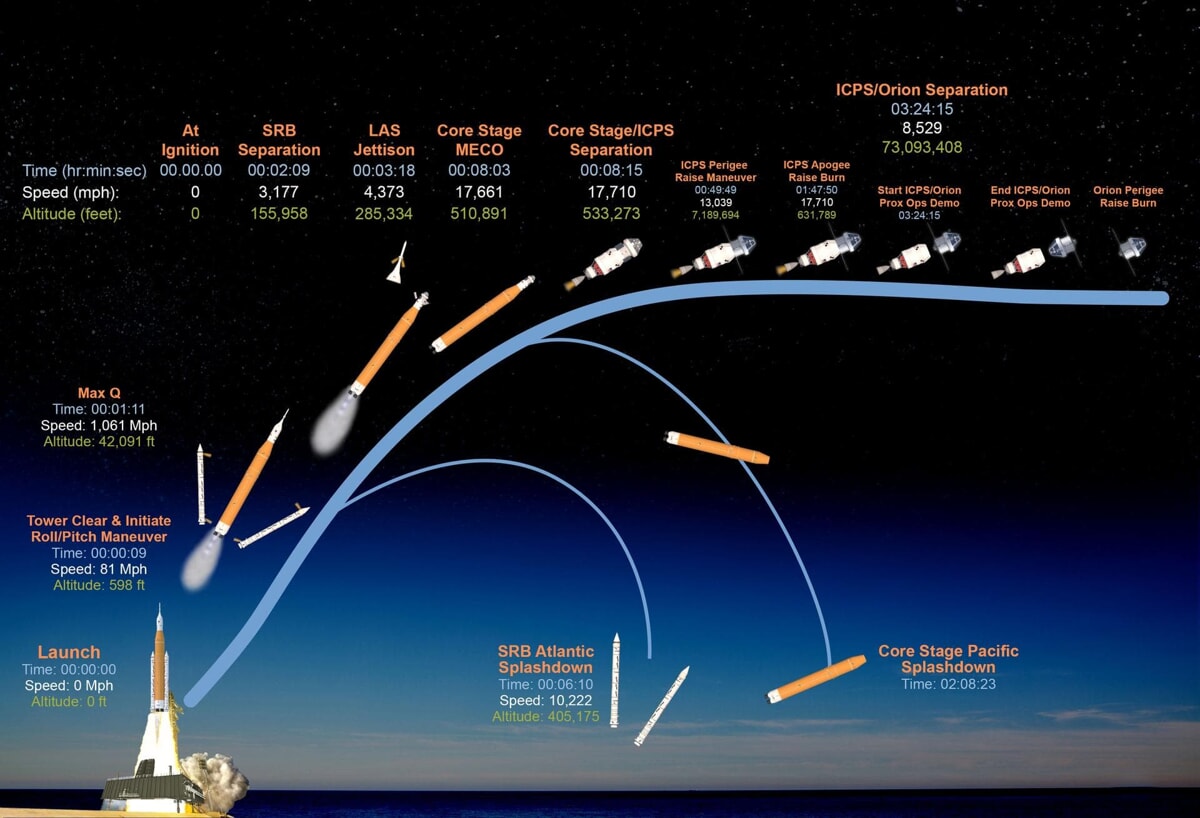
This thermal stress will subject the protective shield to temperatures of around 2,700 degrees Celsius, a critical step in proving that current technology can bring astronauts home safely from the depths of space.
Laser communications and logistics
Another technical curiosity concerns the communication system that will be tested during the trip. Instead of relying exclusively on traditional radio waves, Artemis 2 will use the Optical Communications System (O2O), a laser technology that allows it to send data and high-definition video at a speed much higher than that possible with normal radio waves. This will allow images of the Moon and Earth to be transmitted in real time with unprecedented quality. The mission will also serve to test the precision of proximity maneuvers: once in space, the crew will use the upper stage of the SLS rocket as a target to simulate the docking procedures necessary for future orbital space stations.
Costs and milestones for the future
Returning to the Moon is an expensive operation: between 2012 and 2025, NASA invested an (estimated) budget of 93 billion dollars in the Artemis program missions: each single launch of the SLS system has an approximate cost of 2 billion dollars. Enormous investments, which are obviously not only used for the symbolic return of man to the lunar surface. The long-term goal is to establish a fixed human presence on the satellite, to study it closely and to have a test bed in which to test housing infrastructure and new propulsion technologies necessary to undertake a months-long journey to the next destination: Mars.
Furthermore, NASA recently drastically modified the Artemis program, abandoning the construction of the Lunar Gateway orbital station, and investing over 30 billion dollars to speed up the construction of its base on the south pole of the Moon. A paradigm shift that has displaced historical partners such as ESA, and which seems to have a purely geopolitical motivation: competition with China. Beijing has ambitious plans to put its taikonauts on the Moon by 2030, and NASA aims to maintain its lead in the exploration and exploitation of lunar resources, such as water ice. Securing logistical control of the satellite means dictating the rules of the future space economy and consolidating a position of strategic advantage that goes beyond pure scientific curiosity.