

Dossier is the exclusive subscription investigative section of The Vermilion. If you want to support our journalistic work and subscribe, visit our showcase by clicking here.
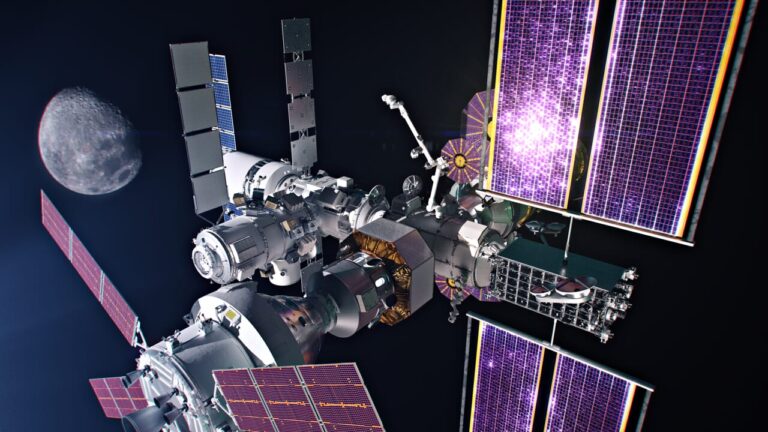
It is not only the war in Iran that fills the future of Europe with unknowns: the US president’s space tantrums also seem destined to take their toll. With the decision to suspend indefinitely the development of the Lunar Gateway – the new space station that was to be built in lunar orbit – all the related technologies and habitation modules under advanced development by Europe are at risk, many of which had been entrusted to Italian aerospace excellence. Donald Trump, in fact, now wants to land directly on the Moon, no longer stopping in orbit (we talked about it here).
The danger is that ESA and all its financiers (including Italy) have invested hundreds of millions without getting anything in return, now that the project seems to have definitively failed. And the bill will also prove to be steep for the European aerospace industry and its related industries, which in Italy include large companies such as Thales Alenia Space, but also a vast chain of small and medium-sized businesses that supply specialized bolts, wiring and software. Let’s see which projects are at risk.
I-Hab: the housing module made in Turin
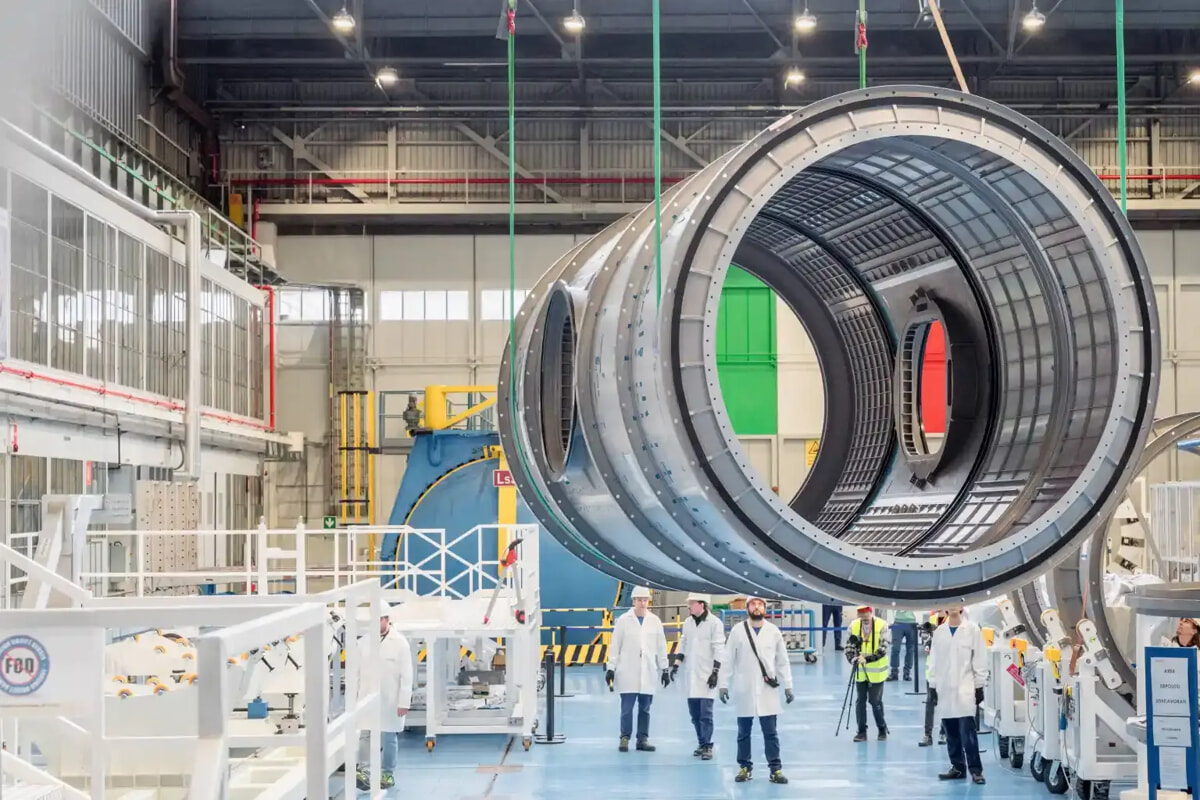
It was to be the main module supplied by Europe to the Lunar Gateway, a pressurized structure designed to accommodate up to four astronauts. The project, carried out by Thales Alenia Space in the Turin factories in collaboration with the Japanese agency Jaxa, has a contractual value exceeding 327 million euros. To date, the hull is in an advanced stage of integration, but without the Gateway it risks becoming a very expensive technological relic with no intended use.
Esprit: communications, supplies and panoramic view
Entrusted to a European consortium led by France but with a crucial role from the Turin headquarters, the Esprit module is divided into two components: Lunar Link, i.e. a complete communications system, and the Lunar View for the supply of propellants.
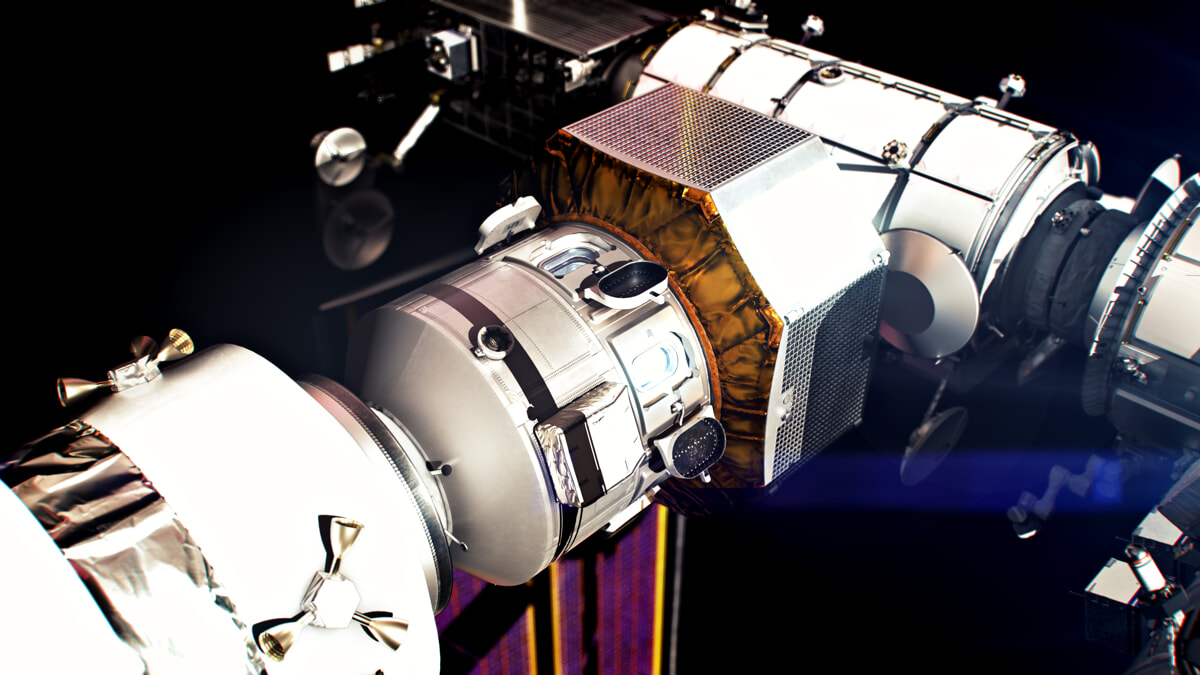
The latter is equipped with large panoramic windows to observe the lunar surface. The program had recently been updated with a 164 million euro contract extension to increase its carrying capacity.
Halo: the Italian hull for NASA
Despite being an officially American module (Northrop Grumman), the Halo (Habitation and Logistics Outpost) skeleton was entirely built in Turin. NASA invested approximately 935 million dollars in total for the module, of which a significant portion was used to pay for Italian manufacturing. It was supposed to be the first module to enter orbit, with a launch window scheduled for 2027. But even though it has already been completed, it now risks remaining on the ground.
The Airlock: the gateway to the Emirates (and Italy)
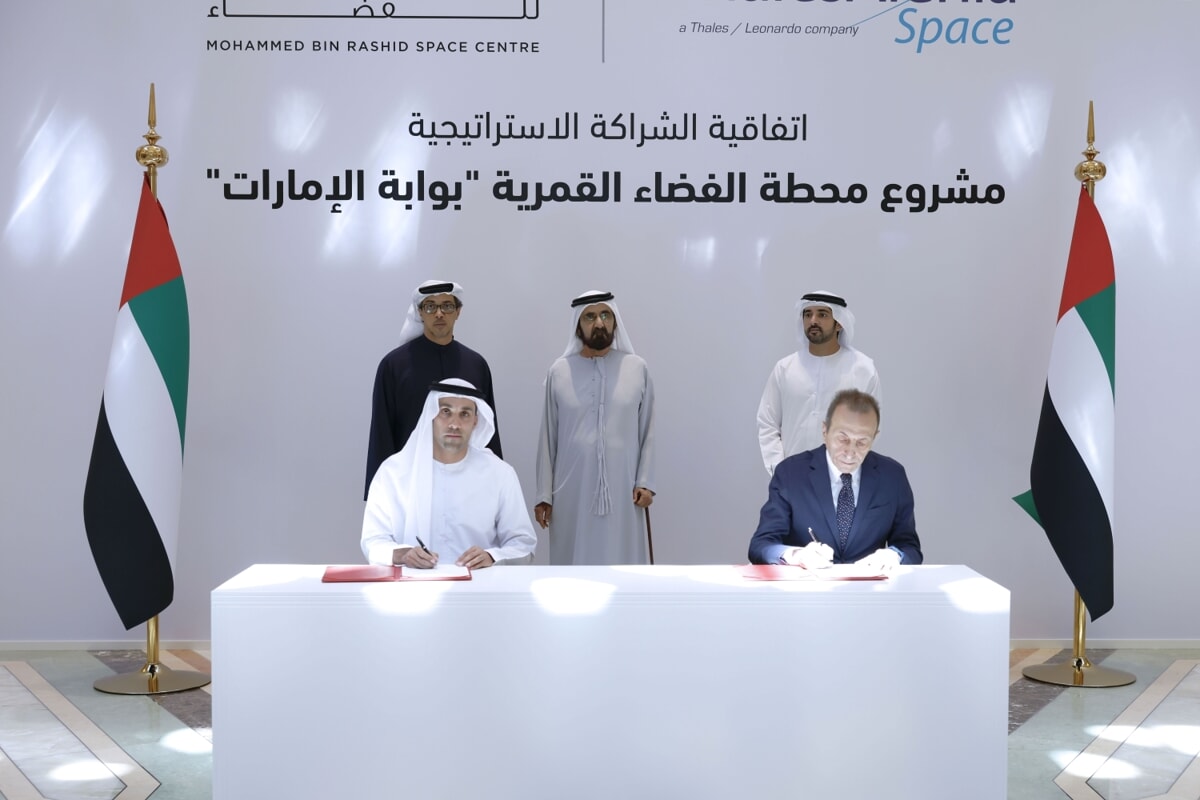
The last Italian piece of the Lunar Gateway was to be the Airlock module, commissioned by the Mohammed Bin Rashid Space Center of the United Arab Emirates. Precisely in 2025, the Emirates chose Italy and Thales Alenia Space for the design and construction of this watertight hatch, essential for astronauts’ spacewalks. An international contract that confirms Italian leadership, but whose fate is now unclear.
NASA’s reassurances and ESA’s doubts
It is clear that given the figures at stake, NASA’s change of plans risks dealing a serious blow to the reputation of the American space agency. Administrator Jared Isaacman is aware of this, and when presenting NASA’s new lunar projects, he assured that “despite the difficulties encountered with some existing equipment, the agency will reuse suitable equipment and exploit the commitment of international partners to support these objectives”.
Trump now wants the Moon: the new space project (to beat China) – by Simone Valesini
Despite the reassurances, many of the technologies under development will be difficult to find use on the lunar surface, where the conditions are very different from those for which they were developed: just think of the presence of gravity and lunar dust, capable of rapidly wearing out structures designed for the vacuum of space.
In this regard, for now ESA – which was present at the announcement of NASA’s new plans with its director general Josef Aschbacher – is not saying anything. “ESA is closely consulting its Member States, international partners and European industry to assess the implications of the announcement,” says the European Space Agency.
Why Italy spends five billion on space (and what we get back in our pockets) – by Simone Valesini
The return for the European contribution to the space station should have been scientific and political, guaranteeing the presence of ESA astronauts and projects within NASA’s lunar missions. It will therefore be necessary to see in the coming months how much the American agency will be willing to give space to ESA in its new programs, despite the abrupt change of course. The risk is that Europe once again finds itself paying the heavy bill for the “America first” policies of Donald Trump’s administration: partners in the expenses, and spectators in the decisions.