

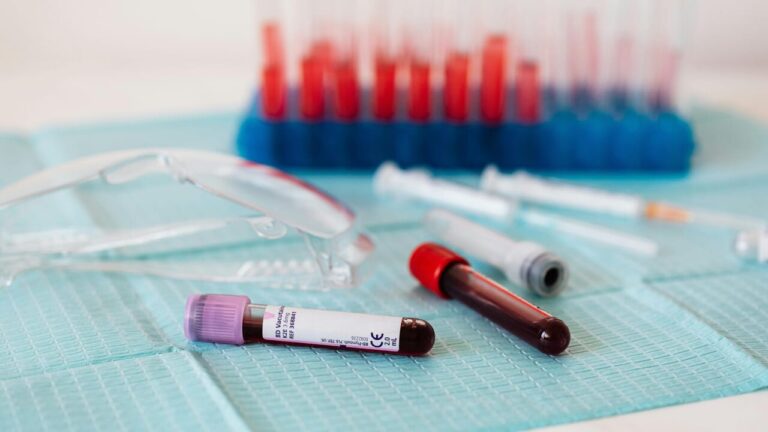
Identifying a tumor early drastically increases the chances of survival of cancer patients. And that’s what a new invention from the University of California at Los Angeles (UCLA) promises to do: a blood test capable of simultaneously detecting the presence of different types of cancer, at a fraction of the cost of traditional liquid biopsies. The test was put to the test in research described above Pnasand would have demonstrated high effectiveness in distinguishing between healthy and sick subjects, making itself a candidate as a powerful diagnostic tool that could enter clinical practice in the next few years.
A new type of liquid biopsy
The heart of the research lies in the analysis of the so-called methylation patterns of circulating free DNA (cfDNA), small fragments of genetic material that are released into the blood when tumor cells die, and which carry with them specific chemical “fingerprints” (methylation patterns) that differ from those of healthy cells. By focusing on specific regions of the genome where chemical changes are most evident in the initial stages of the disease, the new system – called MethylScan – is able to identify a multitude of tumors quickly, without the need to carry out detailed DNA sequencing in search of specific mutations, as happened with previous genomic tests.
An algorithm finds the origin of the tumor
In addition to confirming the presence of a neoplasm, the test is also able to precisely indicate the location of the tumor within the body. This function is made possible by a computational model that cross-references molecular data with a database that contains the profiles of the different tissues of the organism. The algorithm is thus able to identify the subtle differences in methylation signals that characterize, for example, a colon tumor compared to a lung or liver one. During the validation phase, the system showed a specificity greater than 98%, minimizing the cases of false positives which represent one of the main clinical obstacles for similar screening tests.
An economic test
One of the most interesting elements of this technology concerns economic sustainability. The liquid biopsies available on the market have costs that can exceed one thousand euros. The method developed by UCLA instead aims to simplify laboratory processes and reduce the computing power necessary for the analysis, and could reduce costs, reaching as low as 20 euros per patient. A determining factor for transforming an experimental test into a universal screening tool, accessible even in healthcare contexts with limited resources or during routine checks.
The invention is currently in a transition phase towards larger clinical trials. Although the preliminary results are solid, it will be necessary to validate the effectiveness of the test on larger populations before final approval by regulatory authorities. Experts hypothesize that, if the trials confirm the current data, the test could soon be available in clinical practice: initially, it could be used as a complementary test for patients at high genetic risk or to monitor any recurrences in those who have already been treated for a tumor, but the final goal remains to arrive at a generalized screening test, which allows many tumors to be intercepted when they are still silent and treatable with minimally invasive interventions.