

Trump expected a response, but no comment came from Tehran. And the stalemate continues. The Strait of Hormuz is still blocked, although today – Reuters reports – a Qatari tanker loaded with liquefied natural gas may be able to pass through to head towards Pakistan. According to the sources cited by the news agency, Qatar has obtained the green light from Iran with a view to improving relations with the two mediator countries.
Negotiations continue. As revealed by Axios, which cites two sources familiar with the facts, yesterday US Secretary of State Marco Rubio and White House envoy Steve Witkoff met with the Prime Minister of Qatar, Mohammed bin Abdulrahman al-Thani, in Miami in an attempt to conclude an agreement. But there was no white smoke. In his latest statements, Trump seemed optimistic. “Iran really wants to make a deal,” the US president reiterated in a telephone interview with journalist Margot Haddad. Trump added that he expected to hear from the Iranians “very soon.” News which, however, is slow in arriving.
The “super revolutionaries” who hinder any attempt at an agreement
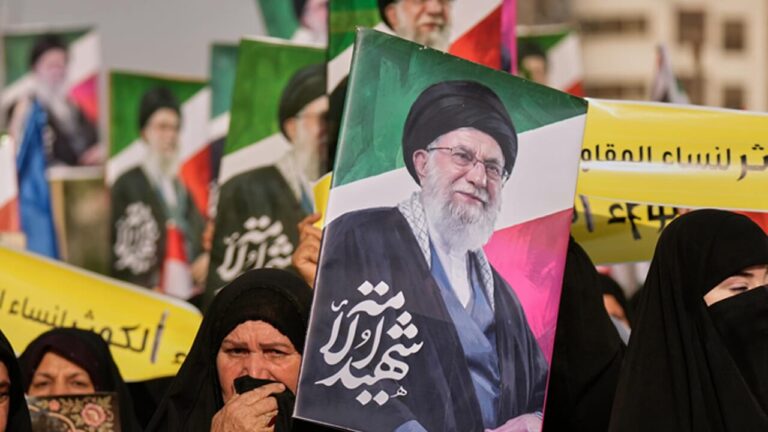
The divisions within the regime do not help US plans, on the contrary. According to CNN, a small but influential ultra-conservative faction is intensifying efforts to sabotage any possible agreement with Washington. This is the “Jebhe-ye Paydari” (‘Resistance Front’) group, whose members have been dubbed the “super revolutionaries” by observers.
The group paradoxically shares Donald Trump’s judgment on the 2015 nuclear agreement – considered a mistake – but for opposite reasons. If for the head of the White House that pact was too weak, for the Paydari faction it represented an ideological betrayal. These “guardians of the ’79 revolution” consider the struggle against the United States and Israel to be an eternal and metaphysical conflict. As explained to CNN by Hamidreza Azizi (German Institute for International and Security Affairs), theirs is a fanatical ideology that aims for a Shiite state committed to all-out resistance until the end of time.
The new Iranian leadership has sought to include Paydari representatives even in recent talks in Pakistan, in an attempt to project an image of internal cohesion in the face of what is perceived as the gravest existential threat in the regime’s history. But it didn’t work. The internal divisions, already denounced by Trump to highlight the cracks in the Islamic Republic, make the negotiations extremely unpredictable. Despite the Tehran government’s attempts to satisfy all political currents, the hostility of the ‘super revolutionaries’ makes every diplomatic step a dangerous path. And in Washington they are waiting for Iran to strike a blow.