

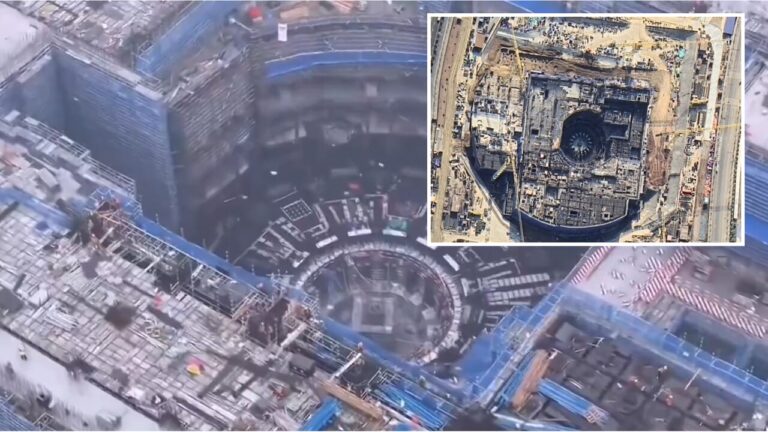
Last month, the Institute of Plasma Physics of the Chinese Academy of Sciences completed and tested the world’s largest superconducting magnet: a 582-ton giant destined for its next experimental fusion reactor, Best (Burning plasma experimental superconducting Tokamak). The plant represents the “next step” in the national research program for the production of a commercial fusion reactor, designed to trap plasma capable of exceeding 100 million degrees Celsius.
The record-breaking magnet is ready: this is how China wants to dominate nuclear fusion
The magnet measures 21 meters in length and is the first of 16 coils that will serve to contain the plasma inside the reactor, and prevent it from touching the internal walls of the tokamak. The primacy achieved by China with the new giant magnet is not only technological, but also industrial: in the race for the commercial development of nuclear fusion, Beijing is in fact attempting to replicate what has been done with solar panels, batteries and electric vehicles, establishing itself as a global leader thanks to the development of a complete production chain with which to control the key technologies necessary for the reactors of the future.
The superconducting magnet
The device just tested is a superconducting magnet with a toroidal field, a key element for the operation of tokamak-type fusion reactors. Its primary function is to generate a magnetic field intense enough to suspend and contain the superheated plasma, avoiding any physical contact with the surface of the vacuum chamber.
In terms of size and performance, the magnet has set several records: with a mass of 582 tonnes, 21 meters long and 12 meters wide, the volume is approximately 1.3 times larger than that of equivalent devices designed for the international Iter reactor, currently under construction in France. Furthermore, the amount of magnetic energy stored is three times greater. The work represents the first of the sixteen toroidal coils planned for the Best reactor, the plant destined to succeed the current East reactor (Experimental advanced superconducting Tokamak), with which China holds the current duration record for maintaining plasma at stellar temperatures: over 1,066 seconds with plasma above 100 million degrees Celsius.
The roadmap to the commercial reactor
Best is the next step in China’s commercial nuclear fusion development program. It is expected to come into operation by the end of 2027, and is designed to operate in a “burning plasma” regime, a condition in which the fusion reaction generates enough heat to sustain itself. With a plasma volume of approximately 120-150 cubic meters and a central magnetic field of approximately 6.15 Tesla, Best aims to reach and exceed the scientific “energy breakeven” (i.e. to produce more energy than that needed to fuel the fusion reaction, in technical jargon Q ≥ 1), pushing up to energy gain values equal to Q=5, where the power generated by the fusion exceeds that input to heat the plasma by five times.
In Beijing’s strategic plan, Best represents the critical link between the purely experimental phases of the East reactor and the construction of the Cfetr (China fusion engineering test reactor), the prototype power plant of approximately 1 Gigawatt whose construction is planned for the next decade, with the declared objective of introducing the first kilowatt hours of fusion energy into the Chinese electricity grid around 2040.
Best’s role is therefore to develop and test the technologies necessary to optimize energy production to the point of making fusion commercially advantageous: to do so, it is not enough to produce a nuclear reaction that generates more energy than that needed to trigger it, but it is necessary to obtain a power plant that is able to convert more energy into electricity than the entire plant (and the production of its components) consumes. An objective that can be achieved in small steps, optimizing all the technological components and steps in the production chain.
The comparison with Iter
When compared to the Iter project under construction in Cadarache, clear differences emerge in scale, scope and timing between the Chinese national project and the international one, of which China is also one of the main partners. Iter will in fact be a “scientific cathedral” of monumental proportions: with a plasma volume of 840 cubic meters – approximately six times that of Best – it aims for a gain factor Q ≥ 10 and a thermal power of 500 Megawatts. Its aim is to demonstrate, once and for all, that it is possible to make energy production from nuclear fusion profitable: if Iter is successful, it will only be a matter of time before fusion power plants become a widespread reality.
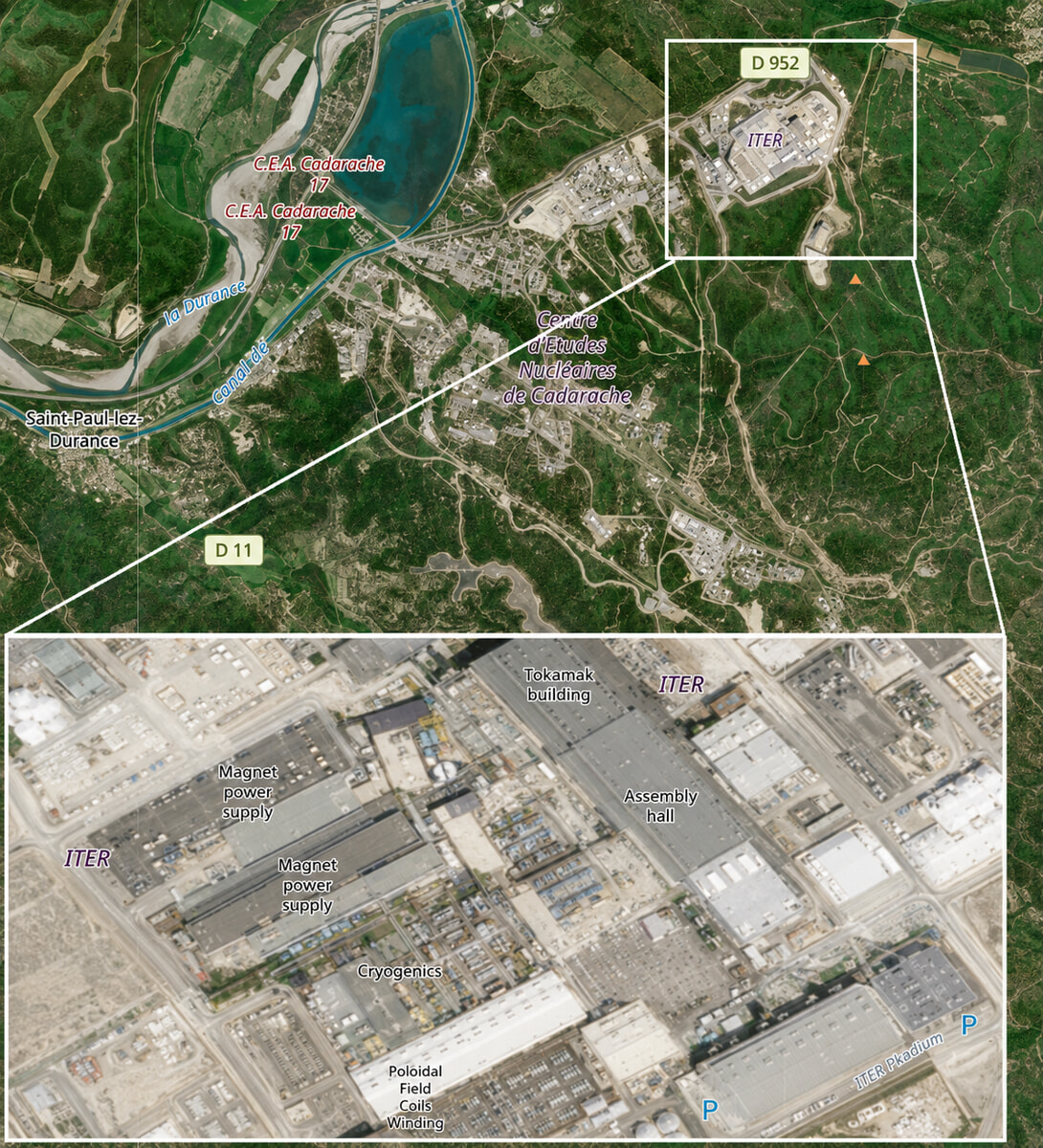
However, the complex multilateral governance of the project (involving seven global partners) and the fragmented international supply chains have progressively pushed the deadline forward. The ignition of the first plasma is now scheduled for 2033–2034, moving the actual deuterium-tritium fusion phase to the late 2030s. While participating in Iter’s scientific effort, with its national program China is adopting a more agile and concrete approach: by building a more compact but highly optimized intermediate reactor like Best, Beijing aims to develop technical skills and key production infrastructures that would guarantee it a monopoly in the creation of the technologies needed to build future fusion power plants, if and when Iter certifies their feasibility.
Thanks to the Craft infrastructure (Comprehensive research facility for fusion technology) – the maxi-technological hub created in Hefei to manufacture and test coils, tungsten divertors and cryogenic systems at home – China is consolidating the know-how and manufacturing standards of the entire supply chain. If fusion technologies were to reach commercial maturity in the next two decades, the West risks finding itself faced with a picture already seen with photovoltaics and batteries: Western scientific leadership accompanied, however, by a total dependence on Chinese factories, materials and patents for the construction of reactors.
Dossier is the exclusive subscription investigative section of The Vermilion. If you want to support our journalistic work and subscribe, Click here.