

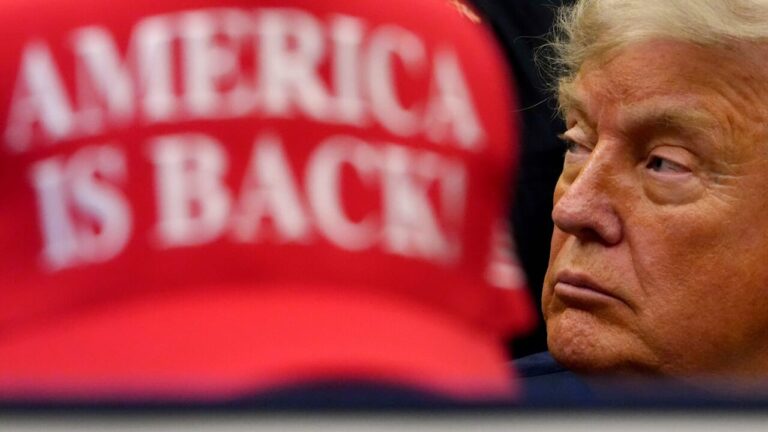
There Ceuta crisis it has rekindled the spotlight on the activity that important sectors of the Maga world, linked to the Trumpian universe, have implemented to influence European public opinion from an anti-European, anti-globalist and anti-immigrant perspective. Posts and invectives against Sánchez, until arriving at a real public tender in which the US Administration said it was willing to grant funds (from 1 to 3 million dollars for two or three projects that will be selected by September) to those in Europe who support issues dear to President Trump.
An activity that remained hidden for a certain period, but which is slowly emerging into the open. On the meaning, scope and effectiveness of this initiative and, in general, on what the US ultra-right is planning to influence European public opinion, Dossier The Vermilion asked some questions to Professor Mario Del Pero, one of the greatest Italian Americanists, professor of International History at the Sciences Po University of Paris.
Professor Del Pero, the news came a few days ago about the funding from the US Administration to entities in Europe that are committed to pursuing issues dear to President Trump. How do you frame this decision?
“The State Department does, so to speak, political diplomacy. It has always done so, only now it does so in a more ostentatious way. Previously, support for friendly political forces, especially in recent decades, was presented in a less explicit way, also due to the fear of being accused of external interference. While this administration does it under the spotlight.”
With what results?
“Apparently scarce, given how unpopular Trump and Trumpism are today, especially in Europe. Declaring explicit support for Le Pen, rather than some other political force, can be counterproductive to the goals you set yourself. We also observed this in the last Hungarian election.”
In Europe we have the idea of a substantially homogeneous Maga universe. Is that so?
“The Maga world, if we mean the Maga electorate, is a composite, heterogeneous world, not so interested in international politics, with strong anti-European and Europhobic impulses”.
undefined
Isolationists?
“Isolationism is not a useful category for reading the history of US foreign policy, also because the US cannot isolate itself. It has at least 128 bases and 700-800 military sites around the world, the dollar is a dominant currency, the majority in the foreign exchange reserves of central banks, it determines the prices of raw materials.”
So why this quest to influence the public opinions of others?
“The Maga were not promised isolationism, but extreme unilateralism, that is, the promotion of the national interest of the United States, whatever the cost, and in all possible ways. Foreign activity fits into this context.”
Is everyone still with Trump?
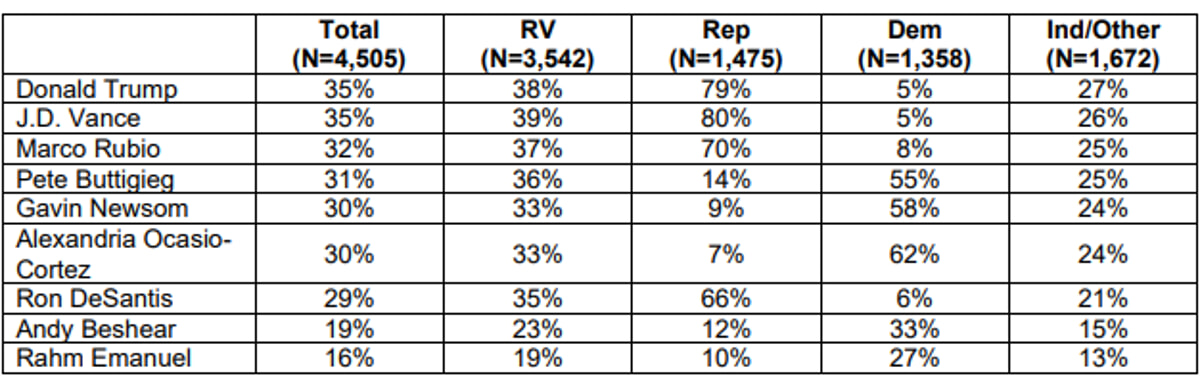
“If we look at the polls, Trump is a very unpopular president, like very few in the past, but also second the latest polls it has an unscratchable hard core of 33, 34, 35%. That is the Maga block.”
Is it united within itself?
“There is a clear divide between a Bannon which represents a populist base more linked to a certain post-industrial world and the great technoligarchs of Silicon Valley. Between them, in the middle, there is a world. Technoligarchs are, for example, anti-democratic, but they are not anti-internationalist. They operate on a global scale, they have companies, interests in China, in Europe, here and there. They love Trump because the White House supports deregulation, lowers taxes, defends them against the European Union’s attempts to regulate their activities or sanction their monopolistic or oligopolistic conditions. Trump composes these two worlds.”
Their hatred towards Europe explains their soft power action. Why do they hate us so much?
“Because Europe has decided to regulate the activities of digital giants or social platforms and the type of communication they can do”.
Is there more ideology or business?
“Both. There is an ideological element: Trump’s Western racial-supremacist nationalism is antithetical to the multicultural cosmopolitanism of the European Union. But there is also an economic dimension: Europe and the Digital service they try to regulate a highly deregulated market, a market in which Google makes 90-95% of the commercial profits from search engines in Europe.”
So the objective of these press and media support campaigns that they support is also to undermine the European Union.
“Exactly. The EU, with all its limitations, has, from a commercial point of view, the tools to hurt the United States. For them it would be much more practical and convenient to have bilateral relations with individual states, which are more easily bendable. The EU, in terms of foreign direct investments from the United States and in the United States, is by far the main partner of the United States”.
How do you judge the EU’s behavior towards Trump?
“For a year he tried to appease the US tycoon, to flatter him, moderate him, leverage his narcissism and thus gain time. The tariff issue is there to show us this. Since last January, however, things have changed a bit, also because there was the affair Venezuelanbut above all there was the story of Greenland. I believe that the crisis with Meloni is also very linked to that.”
Today the EU has a firm position towards Washington.
“Many European countries are heading towards electoral cycles and Trump is extraordinarily unpopular in Europe. No political force in Europe, even on the right, has any advantage in being associated with the US president. The fact that Meloni makes a grim face while shaking his hand or, in turn, flaunts the conflict with Trump at certain moments, as he has done in recent months, in recent weeks, we also explain from an electoral perspective”.
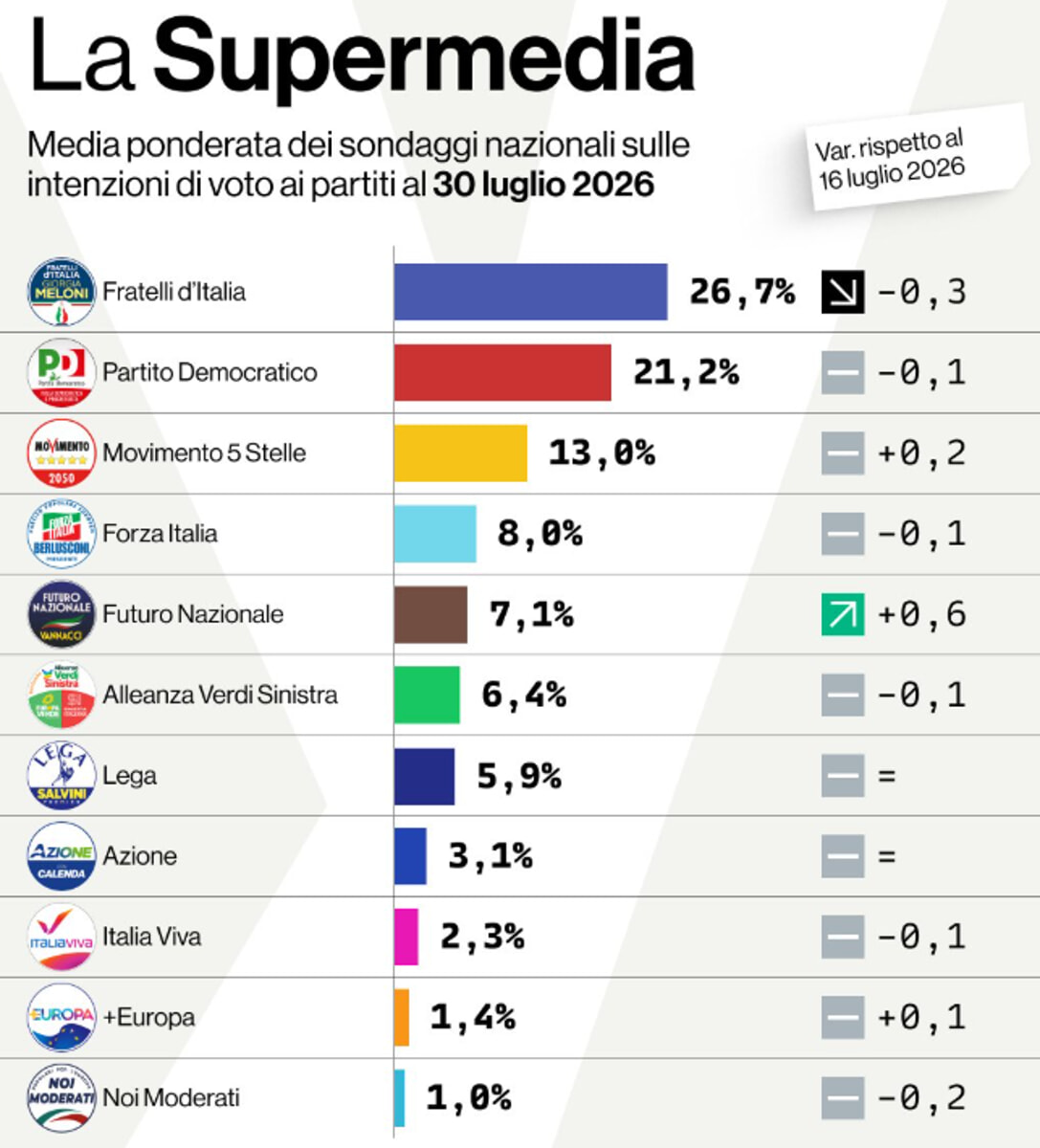
Who is Trump’s Italian interlocutor today? Vannacci?
“For Vannacci, it may be useful to be the Trumpian of Italy. After all, he is at 6-7% and that’s fine for him, as he doesn’t aspire to reach 30. The same thing happens in Europe, where minor ultra-right political formations carve out their own space with which to build conditioning power.”
Dossier is the exclusive subscription investigative section of The Vermilion. If you want to support our journalistic work and subscribe, Click here.